

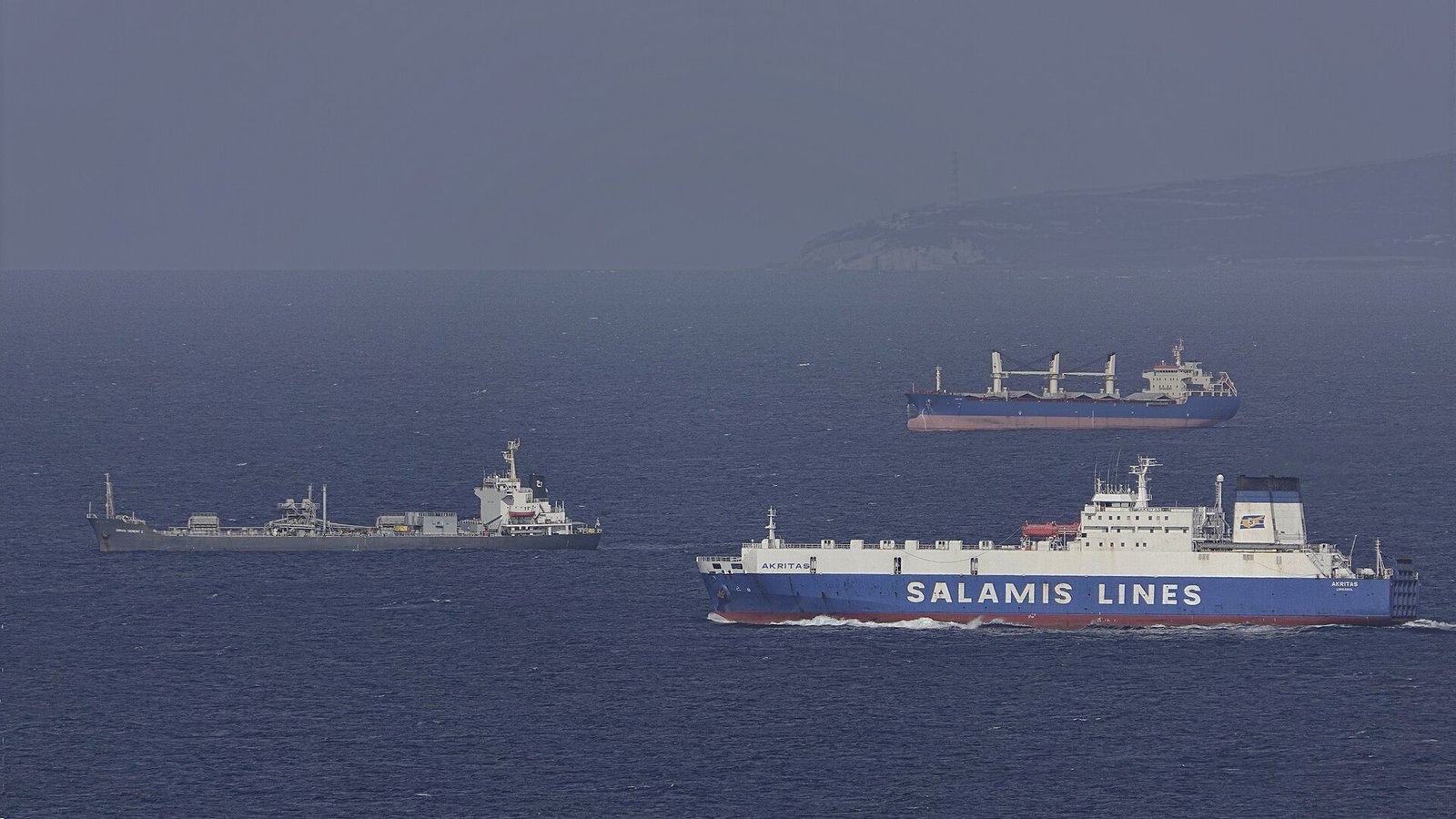
The Grain Corridor Agreement signed in Istanbul in July 2022 put Turkey’s mediating role in the spotlight. Our authors debated whether it is a real sign of regional power.
Can it be read as a great success for Turkey and proof that it is a regional power?
Taking the “Grain Corridor Agreement” as a case in point, our authors assessed whether Turkey, which has often featured on the international agenda recently, is an actor able to shape world politics with the roles it tries to play, beyond its domestic audience.
Salih Durmuş:
The grain corridor agreement is expected to contribute positively to a downward movement in global agricultural prices, or at least to curbing inflation. Countries in West Asia and Africa are among those that will benefit most from the current process. Poor African countries in particular are vulnerable to the threat of catastrophe in a severe food crisis.
Moreover, food security has now begun to be taken into account more in international relations, alongside energy security at the global level. In this context, Western countries and the UN described the agreement as a positive development, and between the lines Turkey’s mediating role was appreciated.
Indeed, in the current conjuncture, because of the sanctions and isolation imposed on Russia, the number of countries able to take on a diplomatic mediating role in solving the problems created by the war is limited. Turkey therefore holds a very important position, and the Turkish government is trying to take advantage of this to enhance its prestige. In fact, both because of its geographical position and because of its long-standing presence in international organisations, such as NATO membership and EU candidacy, Turkey really does hold a position that is one of a kind.
However, in recent years, because of the government’s attitude, its turn towards autocracy, its departure from the general principles of the rule of law and its conduct contrary to diplomatic tradition, the country’s image is unfortunately in a very grave state. The current image of Turkey, which does not comply with ECtHR judgments and ranks very low in indices of democracy, press freedom and the rule of law, unfortunately stands in the way of its being a respected regional power with international weight.
H. Murat Kadir:
Behaviours that can be counted among Erdoğan’s “political skills”, such as changing decisions quickly, reacting flexibly and avoiding responsibility, give him certain advantages in turning matters in his favour in complex foreign policy situations. We saw this in examples such as the influx of Syrian refugees, threatening Europe with opening the borders, or Pastor Brunson. Especially under the current conditions, in which the EU and the leading states depend on Turkey because of its geographical position, the Erdoğan style of foreign policy, ugly as it is, can now and then yield positive results, like a stopped clock.
The agreements known to the public as the Grain Corridor Agreement, which allow Ukrainian grain to be exported to the world by sea through a safe corridor, were signed in Istanbul recently at a ceremony also overseen by UN Secretary-General António Guterres. With the diplomatic role it played in ensuring communication and coordination between Russia and Ukraine, bringing the UN to the table and hosting the agreement, Turkey was praised by world public opinion, partisan and neutral alike. Indeed, Ukraine, one of the world’s two great granaries, which together with Russia supplies about 40% of the African continent’s wheat imports, will be able to export its wheat to the world as long as the parties remain faithful to their signatures. Above all, this means both preventing a likely food crisis in Africa and a return of global prices to at least their pre-invasion levels.
I do not expect this development to have a positive effect on domestic politics and the economic picture in Turkey or to change voter behaviour. For a noticeable change in the economic picture, painful remedies and fundamental changes in system and strategy are now more than a necessity. In the run-up to the elections, the AKP no longer has the means or ability to take political or economic steps beyond popular rhetoric and promises. A foreign policy without principles, based entirely on day-to-day developments or short-term interests, may have achieved a local success today, but in the long run it seems set to cause Turkey’s loss of prestige and political space to continue.
Mehmet Kılıçparlar:
Before answering the question, I would like to make this introduction. After Russia’s attempted invasion of Ukraine, a global food crisis began. Many countries in Africa and other regions were affected by this crisis. Turkey is also one of the countries most affected by it. According to data from the UN Food and Agriculture Organization (FAO), the food price index rose to around 160 after the attempted invasion. While about 20 million tonnes of grain were left to rot in Ukrainian ports, reactions from all over the world against Russia, and hence Putin, began to grow. In other words, both sides, Turkey included, wanted this agreement to happen.
After the attempted invasion, Turkey supported Ukraine while at the same time standing by Russia. Turkey is the only NATO country that maintains relations with both Ukraine and Russia. In such situations a country that can act as mediator is needed. In the current process, this role was given to Turkey by the West. Through Turkey, the West will thus not have severed its ties with Russia.
Putin wanted this agreement so as not to be “demonised” further in world public opinion, and Ukraine wanted it to sell the grain left in its hands and to revive its agricultural sector. In other words, Turkey was the only common meeting point of the parties. There was simply no other suitable ground for realising the agreement they wanted. That is why Turkey took a central position.
Turkey’s involvement in this agreement is of course a success, but it does not stem from its being a regional power. (Update note, November 2026: Russia withdrew from the agreement in July 2023, and the grain corridor in this form came to an end.)
Monthly · free
Compass of the Month
PUGAT’s monthly newsletter.
Read next


What is PUGAT? A non-profit community publishing independent analysis from Europe on security, migration and society in Turkish, German and English.
Go to the homepage
