

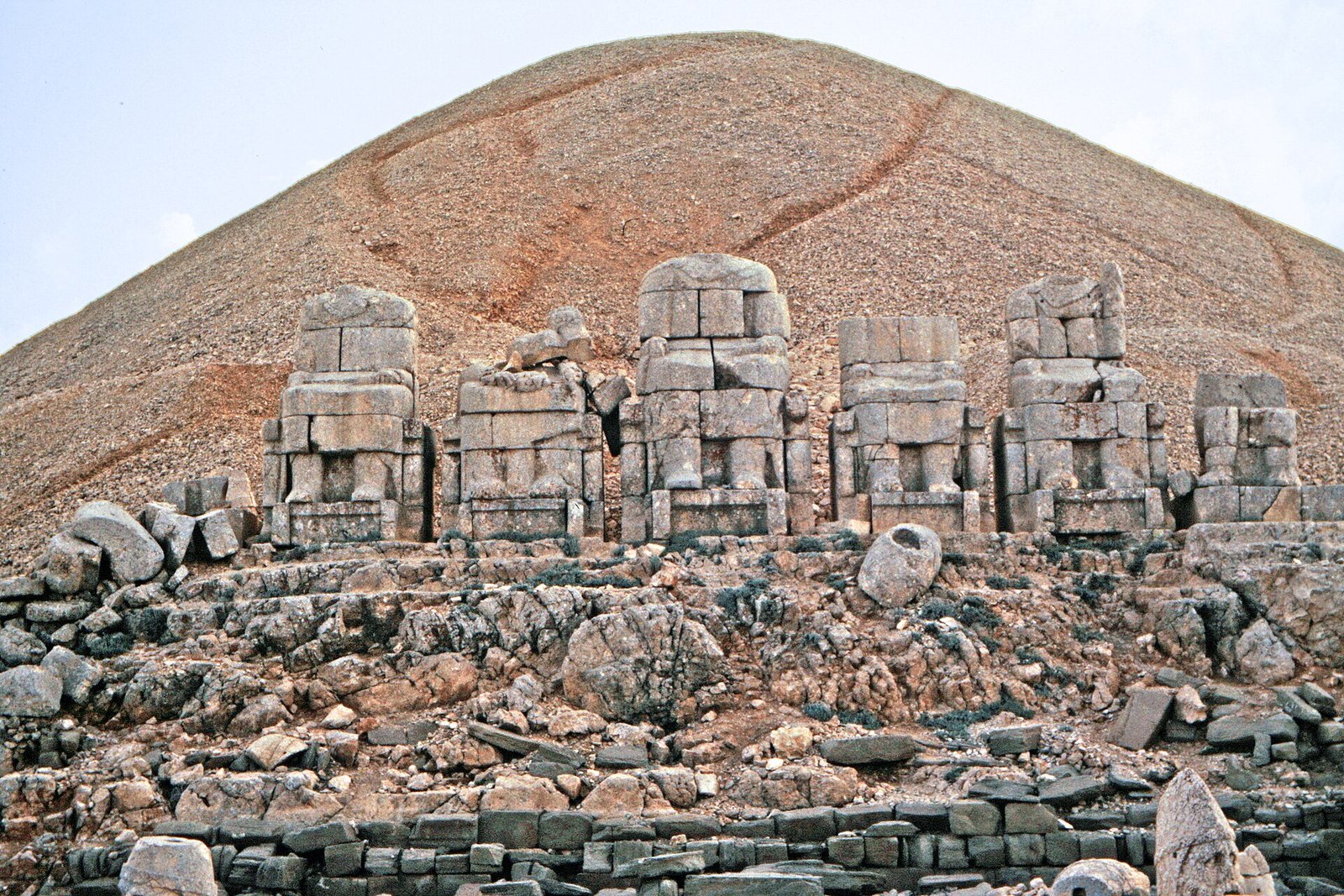
Politics that holds up a multinational civilisation as its model while feeding on nationalism verging on racism is a deep contradiction. The author criticises a style of government that claims to follow Mehmed the Conqueror.
There is a contradiction I will never understand, however much time passes: that those who build their politics on a civilisation which embraced dozens of nations, and those who support that politics, adopt nationalist views verging on racism. What do you think the reason could be: a failure to understand the Ottomans, or the exploitation of people’s sensitivities?
People’s love of and attachment to their race and nationality beyond reasonable limits not only brings no benefit but can turn into a disease that harms both society and the person’s inner life. To begin with, a person claiming superiority over others merely because of their DNA is in itself a pathological state. It is pathological because over time it leads the person to look down on others, to despise them and to regard everyone else as worthless beings obliged to serve them. In the recent past, because this disease took hold of a large part of humanity and because those who governed those communities exploited this weakness or shared it, the foundations of the bloodiest war in history were laid. With these senseless wars states collapsed and millions of people were killed.
Unfortunately, those who govern our country today say they take Mehmed the Conqueror as their model while running an administration reminiscent of Nimrod.
Skin colour, facial features and physical characteristics are no reason for pride over others, and neither should the deeds of one’s ancestors be a source of pride or shame. To make the point clearer, let me give this example: when I was a young pupil and a new teacher came to our class, he would ask the pupils some questions one by one. At this point he would make a very big mistake that no educator should make and ask about their parents’ occupations too. Pupils whose parents were educated or worked in respected jobs immediately became valuable in the teacher’s eyes, while the other pupils felt ashamed of occupations that perhaps even their families had not chosen. Like being tried and convicted for a crime never committed. Rather familiar, isn’t it?
Does Someone Stuck in the Past Have a Future?
Our elders often refer back to their youth, recall the old days with longing and, in particular, say that the Bayram festivals of the past were more beautiful. In my view, the romanticised past painted through the Ottoman Empire also stems from this longing for those days.
For many people, as descendants of an empire that spread across continents, living with the weakness of not having enough say within today’s borders and in the world is seen as shameful. So it is believed that some things would be put right if we lived by the rules or the government of that era. But the truth many overlook is that this is precisely the main reason why the Ottoman state and many similar states collapsed: failing to keep up with their age and its developments… Let me also point out that in the mighty state of that time, those who suffered the greatest hardships and had the lowest standard and quality of life were, once again, Turkish families and settlements. Hard as it may be to accept, a simple piece of research will show that most of the high-income people in the Ottoman administration came not from the Turks but from other nations.
Those who build their politics on nationalism promise the people environments they have never seen or lived in, but in which their ancestors are claimed to have lived at some time in the past. Some of it true, some of it false, the people always dream of living in times resembling the legends of the past. They dream of a utopia, painted rosy with hearsay, of a life that could never be reconciled with today’s living standards. Dream they may, but they want these things without knowing the conditions they would never accept once put into practice.
Can the Same Goals Be Reached with Different Behaviour and Character?
Because of the period in which my youth was shaped and the profession I have practised since childhood, I was raised as a nationalist attached to my history. Although I am loyal to and respectful of my roots, the expressions of longing for and admiration of the Ottomans, the Seljuks and other old Turkish states that I have heard so often recently have begun to strike me as off-putting and far-fetched. Because there are contradictions from top to bottom between those who use these arguments and the characters of the history I learned. Worse still, these contradictions are not confined to a narrow circle but have spread across a large part of society.
Shopkeepers who sell their customers faulty goods as if they were new, and who lure their neighbour’s customers to their own shop by trickery, yet lecture others on the commercial ethics of the age of Mehmed the Conqueror…
Politicians and bureaucrats who build their politics on humble living, on being servants of the people and promising never to rest in a warm bed, being as cruel as Nimrod, as arrogant as Pharaoh and as rich as Korah…
Judges who never stop praising the kadis who hid their mace under their robe and gave the sultan a lesson in justice, making people long for the greatest tyrants…
Journalists and artists who pride themselves on the fearlessness of figures like Nef’î, Omar Khayyam and Ziya Pasha in the face of the wrongs of the order becoming cogs in the machine and trumpeters of oppression: none of this matches history, nor is it consistent in terms of word and deed.
Remaining insensitive to all these fine virtues, using people who went down in history for these very qualities as tools for one’s own interests and boasting of being their descendants can surely be nothing but exploitation.
Of course, this picture also needs to be looked at the other way round. If only a simulation could be run for those who dream of living by the rules of the past while bearing the qualities of today, and we could watch it. I am sure that cautionary scenes would emerge. Then we would see how those who add new cities to the borders from behind their keyboards would desert from military service and hide, and how many people would walk the streets with their hands or tongues cut off…
Monthly · free
Compass of the Month
PUGAT’s monthly newsletter.
Read next


What is PUGAT? A non-profit community publishing independent analysis from Europe on security, migration and society in Turkish, German and English.
Go to the homepage
