

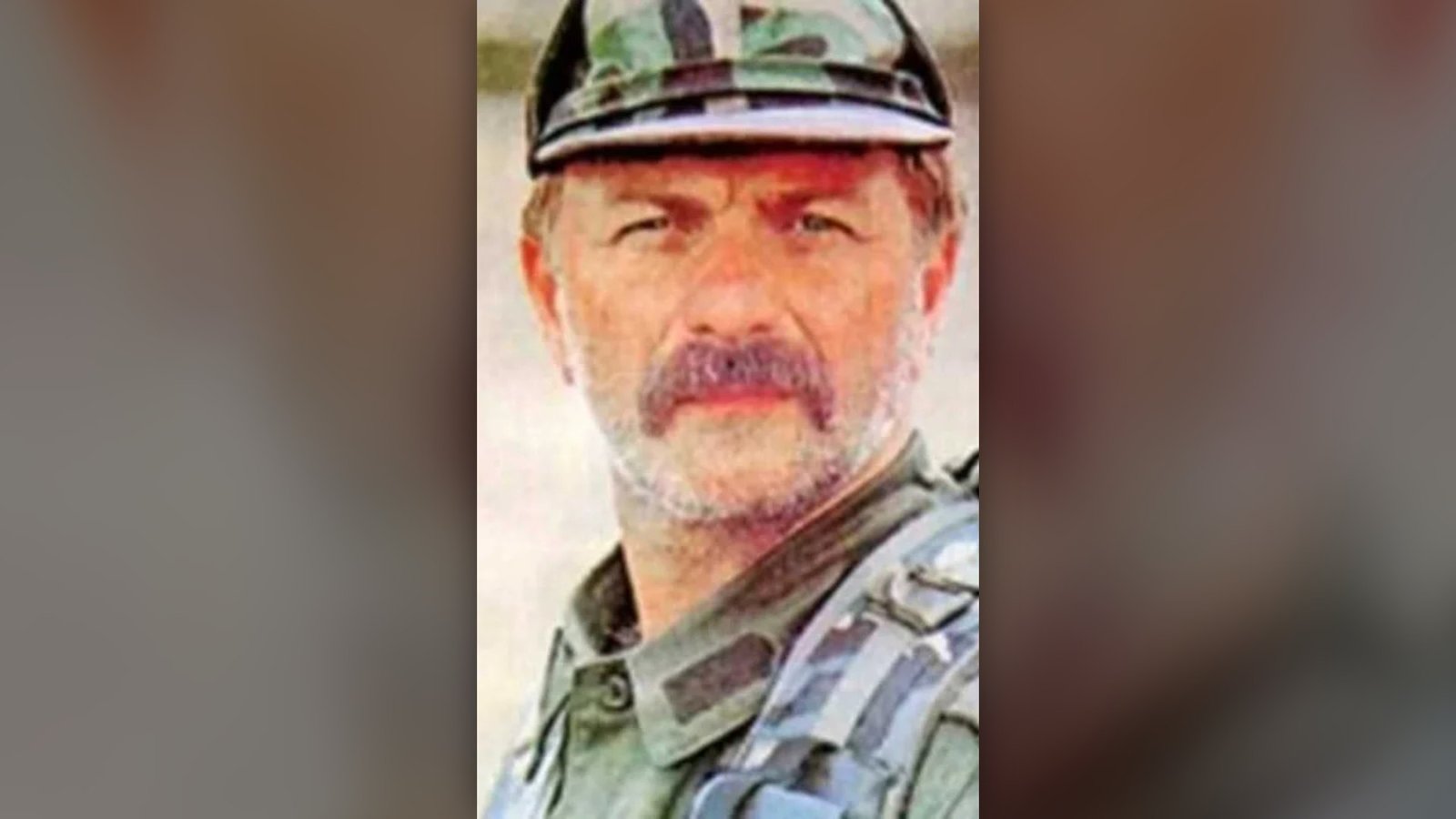
Confessions about the assassination of Necip Hablemitoğlu have put fugitive Colonel Levent Göktaş at the centre of the agenda. The author comments on the covert fight between deep-state cliques ahead of the elections.
Turkey’s agenda is heating up again: ahead of the coming elections, the covert fight between the old deep-state cliques and the Palace is slowly beginning to surface. The latest actor in this fight, in which psychological operations and perception games are being played to the full in every sense, is Levent Göktaş.
In the chain of confessions said to shed light on the background of the assassination of Necip Hablemitoğlu, the knot has come down to Levent Göktaş. Yet he has curiously disappeared. The secrets he is alleged to hold must be so dangerous that Göktaş being out of control seems to have unsettled his former comrades.
According to the claims put forward, those who shot the Kemalist academic Necip Hablemitoğlu in front of his home in Ankara were people linked to retired Colonel Levent Göktaş, who was tried in the Ergenekon case; these claims have not yet been confirmed by a court ruling. These claims are truly frightening for some, perhaps that is why, while some half-heartedly say “Let him come and surrender!” , others have launched a new perception campaign. The range is wide, from those who describe Göktaş as a Sufi who never parts with his prayer rug so as not to miss a prayer, to those who say Göktaş was never really a Kemalist. At this point Nihat Genç’s article in particular is a true masterpiece! After reading it, I said to myself that if I were him I would have titled it “My Gun, My Prayer Rug and My State”.
Levent Göktaş is an officer who served as commander of the Combat Search and Rescue (MAK) Regiment at the Special Forces Command. What distinguishes this regiment is that it is the most elite unit of the Turkish Armed Forces, and that its personnel, besides very tough physical training, receive advanced theoretical and practical intelligence training.
Göktaş was retired from his post as MAK regiment commander a year after the AKP came to power. As we later learned, he left the armed forces disgruntled. After he was detained in 2009 as part of the Ergenekon investigations, many journalists made programmes and wrote articles about Levent Göktaş in the vein of “Here is the story of a real Turkish Rambo” . After recent statements by Celal Ülgen, Göktaş’s lawyer in the Ergenekon cases, it was said that these programmes had been commissioned to talk Levent Göktaş, who had decided at the time to become an informant, out of the idea and to motivate him. Indeed, former head of General Staff intelligence İsmail Hakkı Pekin, speaking about Göktaş’s character in an interview, said that he was the type who liked to be praised and egged on.
That such a well-trained officer, the only one in the Turkish Armed Forces holding 3 medals for exceptional courage and self-sacrifice, should, after allegedly being used in many legal and illegal operations, readily want to become an informant and then give up the idea after being flattered with “why, you are the eagle of the mountains who brought the PKK to its knees” brings to mind the phrase “paper tiger”.
If we open up the paper tiger issue a little, we see that a simple but reliable perception operation has been used for years to create these fake heroes. The people chosen for the operation are given a title that resonates in society: “the hero who fights the PKK”. This title is a very handy mask. I have known many soldiers and police officers, from the smallest units to large headquarters, who wore this mask. Curiously, the most common trait of these people is that they lay heavy emphasis on nationalism. The cries of homeland and nation they hurl about freely inside the barracks turn into a “doctor’s note” before a risky mission. Another trait is that they like to be somebody’s man. They are always looking for a boss. Sometimes this is a superior commander outside the chain of command, sometimes a mafia leader who provides material benefits.
As for their rhetoric, it is the flashiest kind. They never stop talking about martyrdom. But in their view only the children of the poor should become martyrs. Because they share the view of the man who said “Military service is not a place to lie around”. Our nation quickly forgets its martyrs, but these hormone-fed heroes, far from being forgotten, sell climbing onto a rock as heroism for 20 years.
It is obvious that those who describe as a “personal mistake” the use, by flawed soldiers whose weaknesses are covered with fake stories, of their training to commit crimes are acting in bad faith. Using dirty officials is a requirement of the system they have built. They kill and sabotage for the forces behind the curtain that hold their strings. When they get into trouble, the system’s so-called journalists come to their rescue: Hear ye, this is a hero officer! He went in among 100 militants in the Ballıkaya area of Mount Cudi… What stories! Yet those who write about the hero of Cudi-Ballıkaya never write how many soldiers were martyred in that incident. Why? Because martyrs break the spell. For years we were taught that if a soldier’s life would be put at risk, if a child would be left fatherless and a mother childless, the leaders in command should not indulge in empty heroics. Death is in the nature of soldiering, but the men put in the shop window as heroes, far from finishing off the PKK, have carried out actions that increased terrorism. Worse still, society does not understand that they became visible by stepping on the bodies of martyrs.
To sum up: those who once brought onto the agenda, with his pistol, a figure who thanks to his high-level intelligence training changes from one guise to another, sometimes with a prayer rug, sometimes an arms dealer under his boss’s orders, sometimes the right-hand man of the Chairman of the Board of the newspaper Cumhuriyet, have now added a prayer rug next to his pistol. A structure reckless enough to have a Kemalist academic executed in the middle of Ankara has, for the first time, been caught like a rabbit in the headlights and has started talking nonsense.
Monthly · free
Compass of the Month
PUGAT’s monthly newsletter.
Read next


What is PUGAT? A non-profit community publishing independent analysis from Europe on security, migration and society in Turkish, German and English.
Go to the homepage
