

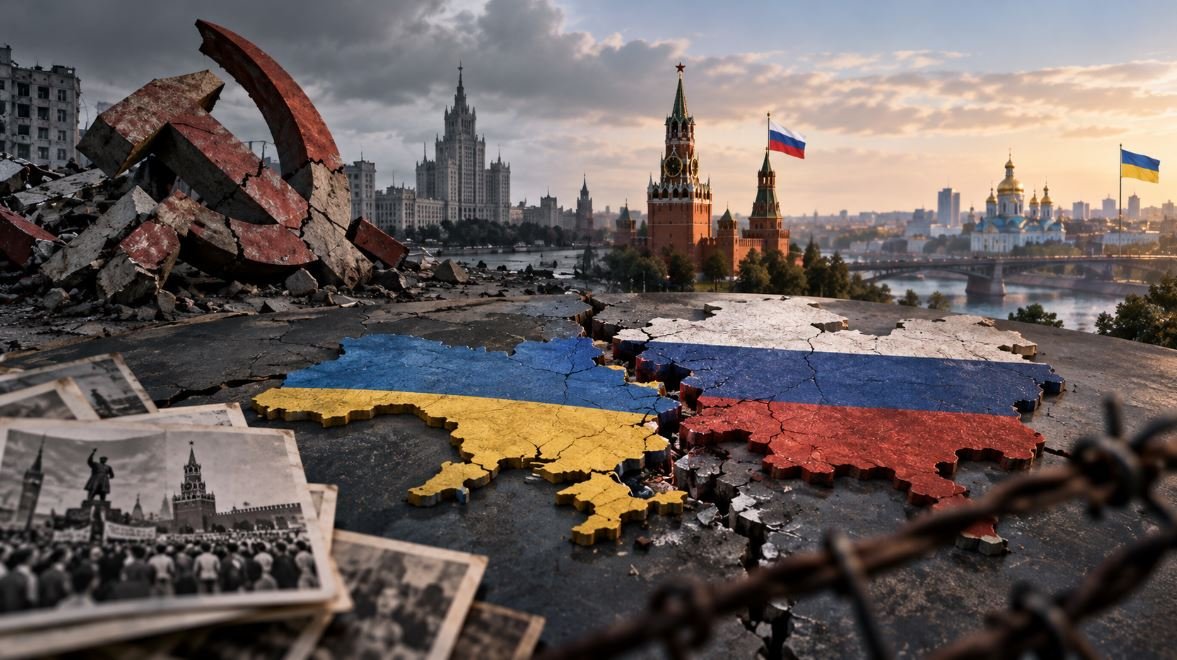
After the collapse of the Soviet Union, Ukraine held one of the world’s largest nuclear arsenals and handed it over in exchange for guarantees. A short history of Russia–Ukraine relations after the USSR.
The transfer of nuclear weapons
Ukraine, one of the countries that gained independence after the Cold War came to a complete end in 1991, was one of the world’s three largest nuclear powers. In the talks that began with the nuclear arms reduction process, the government in Kyiv handed over to Moscow, “on the condition of trust”, 1,900 strategic nuclear weapons and an estimated 2,650 to 4,200 tactical ones. The number of nuclear weapons Ukraine possessed at that time was many times greater than the combined total of countries such as China, France, the United Kingdom, India, Pakistan and Israel.

The fact that the 1992 Lisbon Protocol and the 1994 Budapest Memorandum turned out to be nothing but a deception shows that Ukraine must question both the Western countries and Russia once again.
Ukraine between the West and Russia
In 1991 the leaders of Russia, Ukraine and Belarus dissolved the Soviet Union and founded the Commonwealth of Independent States. Moscow thus aimed to maintain its influence over the former Soviet countries. The Kremlin also believed it could bind the former sister republics to itself through cheap natural gas supplies. This calculation did not work out. While Belarus formed a close alliance with Moscow, Ukraine turned towards the West.
In the first years after the collapse of the Soviet Union, there were disputes between Ukraine and Russia over the Black Sea Fleet in Crimea.
In October 1991, first the Ukrainian parliament and then President Kravchuk approved the decision to place the fleet under Ukraine’s control. Shortly afterwards, then Russian President Boris Yeltsin signed a decree stipulating that the Black Sea Fleet belonged to Moscow.
In July 1992, after the Ukrainian-flagged patrol ship SKR-112 sailed to Odesa, the two sides stepped back from the brink of armed conflict. The two countries’ failure to agree on how to share the aircraft carrier Admiral Kuznetsov heightened the tension further. After a while, once things had calmed down, the parties sat down at the table again.
In 1997 the presidents of the two countries, Boris Yeltsin and Leonid Kuchma, signed an agreement providing for the Russian Black Sea Fleet to remain in Crimea until 2017, as well as for friendship, cooperation and partnership between the two countries.
After Putin became president, the first major diplomatic crisis of the Putin era broke out between Moscow and Kyiv. In autumn 2003 Russia surprisingly began building a dam in the Kerch Strait towards Tuzla Island, which belongs to Ukraine. Kyiv saw this as “an attempt to redraw the border and annex Tuzla”. The crisis escalated steadily and was resolved only after a one-on-one meeting between the presidents. Construction of the dam was halted, but the post-Soviet friendship between the two countries was deeply wounded.
In Ukraine’s 2004 presidential election, Moscow backed Viktor Yanukovych. The Moscow-backed candidate was declared the winner against the pro-Western politician Viktor Yushchenko. The disputed election was rerun. At the end of the popular uprising that went down in history as the “Orange Revolution”, the opposition politician Yushchenko took the presidential seat. During his term Russia turned off Ukraine’s gas tap twice, in 2006 and 2009.
In 2008 then US President George Bush tried to include Ukraine and Georgia in a formal preparatory programme with the aim of NATO membership. Putin immediately objected. Moscow openly stated that it did not fully accept Ukraine’s independence. Germany and France blocked Bush’s plans. At the NATO summit in Bucharest, Ukraine and Georgia were promised membership, but no concrete date was set.
Since things were not moving quickly with NATO, Ukraine considered developing its relations with Western countries by signing an EU Association Agreement. A few months before the agreement was to be signed, in summer 2013, Moscow put heavy economic pressure on Kyiv and blocked Ukraine’s imports. Then Ukrainian President Viktor Yanukovych, who had come to power by winning the 2010 election, suspended the association agreement with the EU that was at the signing stage. This sparked massive opposition protests, and in the end Yanukovych had to flee to Moscow in February 2014.
Crimea
Crimea, which caused wars between the Ottoman Empire and the Russian Empire, passed to Russia in 1783 under Empress Catherine. The peninsula belonged to Russia until the Soviet leader Nikita Khrushchev gifted it to Ukraine in 1954.
Khrushchev, himself of Ukrainian origin, gave Crimea to the Ukrainian Soviet Socialist Republic on the 300th anniversary of the Treaty of Pereyaslav, which bound Ukraine to Russia.
This decision, not given much weight at the time because both countries were under the Soviet roof, gained serious importance for Moscow and Kyiv after the collapse of the USSR. The fact that the Black Sea Fleet, to which Russia attached great importance, remained in Ukraine, which risked moving closer to the West, became a matter of concern for Russia. The peninsula, the majority of whose population is Russian, was annexed to Russia in 2014 following a referendum. In the country, where anti-Russian sentiment among the public peaked, Russian-language education was banned, access to Russian social networking sites was blocked and Russian-language broadcasts in the media were restricted, the works of Russian writers such as Dostoevsky and Tolstoy were also removed from school curricula.
In the Donbas region (Donetsk and Luhansk) in the east of the country, where the Russian population and pro-Russian people predominate, there were armed clashes between largely Moscow-backed militia organisations and the Western-backed government in Kyiv.
In the fighting that turned the region into a bloodbath, tens of thousands of people, a significant proportion of them civilians, lost their lives. A large part of the region’s population emigrated. The cities’ infrastructure was badly damaged. The Russian-backed Donetsk and Luhansk “people’s republics” unilaterally declared their independence from Kyiv.
In February 2022 Putin, stating that Russia intended to continue behaving well towards all its neighbours, said: “I repeat, the situation with Ukraine is different. The reason is that, unfortunately, the territory of this country is being used by third countries to create a threat against Russia. That is all.”
Russia, the US and the United Kingdom, the parties to that agreement, made Ukraine a promise. The agreement also included assurances of security against threats or the use of force by Russia and the other parties against Ukraine’s territorial integrity or political independence.
Indeed, that agreement stresses that “the signatory countries will refrain from the threat or use of force against Ukraine and will seek action by the United Nations Security Council (UNSC) if Ukraine becomes a victim of a threat or aggression”.
In 2014 Russian forces’ annexation of Crimea, which belonged to Ukraine, and their subsequent support, with both weapons and troops, for the uprisings in the Donetsk and Luhansk regions brought that 1994 agreement back onto the agenda. When reminded of the Budapest Memorandum during this process, Putin said, “I did not sign that agreement,” making clear that he did not accept it. Ukraine had been thoroughly deceived by Moscow and had handed over its nuclear power to Russia for next to nothing. Putin’s nuclear threats against NATO also paved the way for Russia to set up the game as it wished.
If Ukraine had not signed that agreement with Russia and now possessed 6,000 nuclear warheads and weapons, would Putin have made these moves?
Monthly · free
Compass of the Month
PUGAT’s monthly newsletter.
Read next


What is PUGAT? A non-profit community publishing independent analysis from Europe on security, migration and society in Turkish, German and English.
Go to the homepage
