

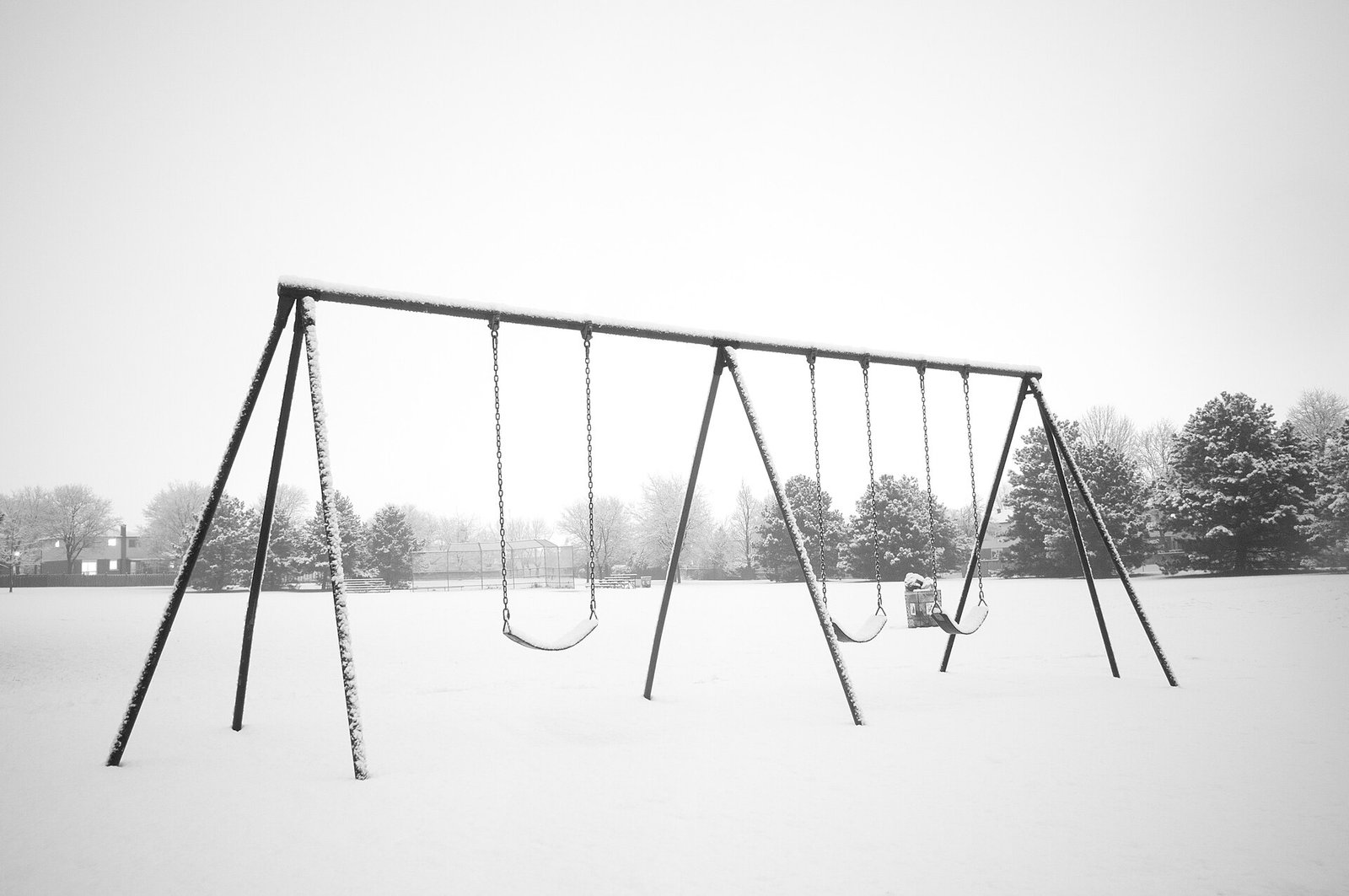
Behind the walls, a child whose chained father no longer recognises him. A story that tells, through a child’s eyes, of the families torn apart in the camps of East Turkestan.
He had drifted off far away again. Lately he drifted off often. His eyes could not see beyond the walls, but he was not a child to let anything clip the wings of his dreams. “If only I could get over these walls,” he would say every time. “Oh, if only I could fly…”
He would take his mother and his little brother and carry them back to their village. He had had enough of the hardships they were living through. He had begun to forget even that he was human, that they had once had a normal life. And who knows, maybe his father would come later too… Even if his hope dwindled with every passing day, one could not live without hope.
He had seen his father a few times since they had been separated. Sometimes he was doing heavy labour, sometimes cleaning. More than two months had passed since he last saw him. As always there was a chain on his leg, but this time he looked different. He had grown very thin and looked exhausted. Worst of all, his father had not recognised him. He simply could not understand it. He had called out to him again and again, and although his father looked at him, he did not recognise him. And there were so many things he had to tell him. Some of them he did not know how to say himself…
For months they had been held in this education camp, far from home. One night, just before dawn, their house had been raided and they had been brought here by force on buses. He could never understand why they had come all this way for education. He and many of his friends already went to school. His mother and father were too old for school, and his brother was very small. Their clothes and belongings had been taken from them, and they had all been made to wear overalls of one colour and one cut. Speaking their own language and praying were among the main reasons for punishment. Even their names had been changed; they had been ordered to use Chinese names instead of Uyghur ones. When they arrived, they knew no one. Every day new people were brought in and new buildings went up. Over time, along with some families from their village, the neighbours’ daughter, the big sister he loved so much, had come too. She was a very cheerful and capable girl. Of course he did not want her to be here, but he knew that without her this place would be much harder.
Their days had now settled into a routine and slipped by. He had grown used to the harshness of the guards and police, to being pushed and shoved. His teachers and supervisors were more polite and smiling. He had seen them angry only once. When a child in his class said “Alhamdulillah” after sneezing, they had rushed at him in a rage and told him never to say it again, or he would become a terrorist.
At school they listened to stories about the beauty and legends of Chinese culture, read books saying that belief in God and religion was wrong, and watched the speeches and performances of those who ruled the Chinese state. Everyone who taught them said that this education was necessary to make them useful members of society, and that in the end they would become moral individuals. Although he found the lessons mostly boring, he did not dare say so.
His favourite time at school was lunch. He had loved eating meat since he was little. Meat and chocolate were his weak spots. In fact, he was no different from other children in these weaknesses. He would think of the kawap[*] his father used to make and long for the old days. Although his mother warned him not to eat the meat, he had no choice. The breakfast they were given was tiny and did not fill him. Before lunch there was also a tiring PE lesson, and lunch was only ever meat. Having grown up in a farming family, he could tell meats apart by their smell. Its taste was like neither beef nor mutton. Still, he ate it with relish, and lately he had even begun to put on weight.
That day, when he returned from school to their room in the camp, he found his mother crying. For a long time there had hardly been a day when his mother did not cry or look sad. From the force and depth of her crying he understood that something serious had happened. Knowing that his mother would not answer even if he asked, he did not press her. Hoping to learn something, he went to his big sister’s cell. Her cell, always tidy and clean, was in disarray. She was sitting in a corner, sobbing. Her clothes were torn, her hair dishevelled, and there were bruises on different parts of her body. When she saw him, she raised her head and looked at him for a while. She seemed to be looking but not seeing. Then she took her head in her hands again and cried even harder. He did not dare ask what had happened. He sat beside her for a while. He heard her murmuring only two words over and over: The Black Room!
He did not know what “the Black Room” meant, but he had heard it mentioned a few times. It was something bad that left a frightening, sickening look on the faces of both the one telling and the one listening. That was all he knew.
From that day on, he never saw his big sister smile again. His mother no longer slept at night. Whenever he woke in the night, he found his mother crying or praying. Whenever the door of any cell opened or he heard a scream, she began to cry, trembling, and prayed even more fervently.
Some time after the “Black Room” disaster, they released his big sister. Because she had not eaten or drunk, she had grown very weak. She could not walk; the guards carried her out in their arms. Not long after, news came that she had taken her own life. He could never understand why his big sister, so attached to life, so cheerful and full of life, had killed herself. All he knew was that it all had something to do with “the Black Room”…
Time passed, those who came could not leave, and new people were constantly brought in. With every passing day the violence and the insults grew worse. Once he had seen an old man beaten almost to death before his eyes. As he ran to help, he was tripped by one of the guards and fell flat on his face. The guards stopped beating the man and started laughing at him. A Chinese man he had never seen before arrived at their cell with a few simple belongings and said he would now live with them. However much his mother cried and protested, she could not make herself heard. Every evening he came home drunk and wanted his dinner ready. After eating, he usually passed out. Otherwise he made life even more unbearable, shouting at and roughing up his mother and him. Once he had even slapped his little brother. He was trying to save his family from this man, whom he was sure he would hate for the rest of his life, but he could not find a way.
At school, new rules had come in. Health checks were carried out almost every day, and their height and weight were measured. After lessons they were mostly taken not to their cells but to dormitories where there were other children too. They were allowed to go to their families only on days without school. His mother had begun to worry about him too and often asked what they were doing. To him there was nothing to worry about, but he could not be angry with his mother either. Considering what had happened to them over the past months, her fear was perfectly natural.
That day was no different from the others, or if it was, he did not know it. It was Friday, and he had not seen his mother and brother for about a week. He realised he missed them both very much. The day before, he had seen a flower growing among the stones in the yard. He ate his breakfast thinking of picking that flower and taking it to his mother. “Maybe she will smile for the first time in a long while,” he sighed. His brother would surely want one too, but he could take him one next time. Before lessons began he ran to the yard, picked the flower and hid it inside his overalls. When he got to class, he took it out and put it in his desk drawer so it would not be damaged. Their teacher came in with a policeman. The policeman had a list and some papers in his hand. The names of several pupils in the class, his among them, were read out. They were told to stand up and follow the policeman. They walked through long corridors to the exit. They were put on a minibus and driven out of the camp.
He was frightened and excited at the same time. It was the first time he had been allowed outside since they arrived. The vehicle stopped in front of an old building in a desolate place outside the city, and they were told to get out. Inside, the building was laid out just like a hospital. Either it had been a hospital once or someone had later tried to turn it into one. In the rooms, doctors in masks, gowns and gloves were waiting. The unease growing inside him became stronger, and some children even began to cry. A man in ordinary clothes came over to them. After telling them not to be afraid and that everything was fine, he handed out the chocolates he was holding to the children. All their fear vanished, but when the doctor said they would each get a small injection, he became frightened again. He listened to the man while eating his chocolate. When he learned that they would be given chocolate again after the injection, all his fear gave way to joy. He had found the present he would take to his little brother. He knew that his brother, like him, had not eaten chocolate for a long time. He eagerly agreed and held out his arm. The injection was given, and before long he began to feel sleepy. Unable to hold out any longer, he fell asleep in the room where they were waiting…
In his dream he was playing in the stone yard in front of their cell in the camp. He saw that he had wings in place of his arms and tried to fly. He really could fly. He could fly, and he was rising towards the sky…
As he rose towards the sky, his body, closed with careless stitches, had been dumped on a dirty, rusty stretcher like an empty sack of skin with nothing inside but bones. His chocolate remained in the room where they had waited, his flower in his desk drawer, and behind him, his mother and brother, heads bowed in grief.
He never woke from that deep sleep; he never returned to his village, his cell or his school. No one heard from him. Those who asked found no answer. As if such a child had never been born, as if such a person had never lived… He was simply the unregarded result of an oppression that supposedly never happened.
He had no name. And even if he had, what would it have mattered! Apart from a handful of the forsaken, no one wondered about him or asked after him. He had neither a grave nor a shroud. He vanished in merciless hands.
[*] Uyghur: a dish of small pieces of meat roasted on a skewer
Monthly · free
Compass of the Month
PUGAT’s monthly newsletter.
Read next


What is PUGAT? A non-profit community publishing independent analysis from Europe on security, migration and society in Turkish, German and English.
Go to the homepage
