

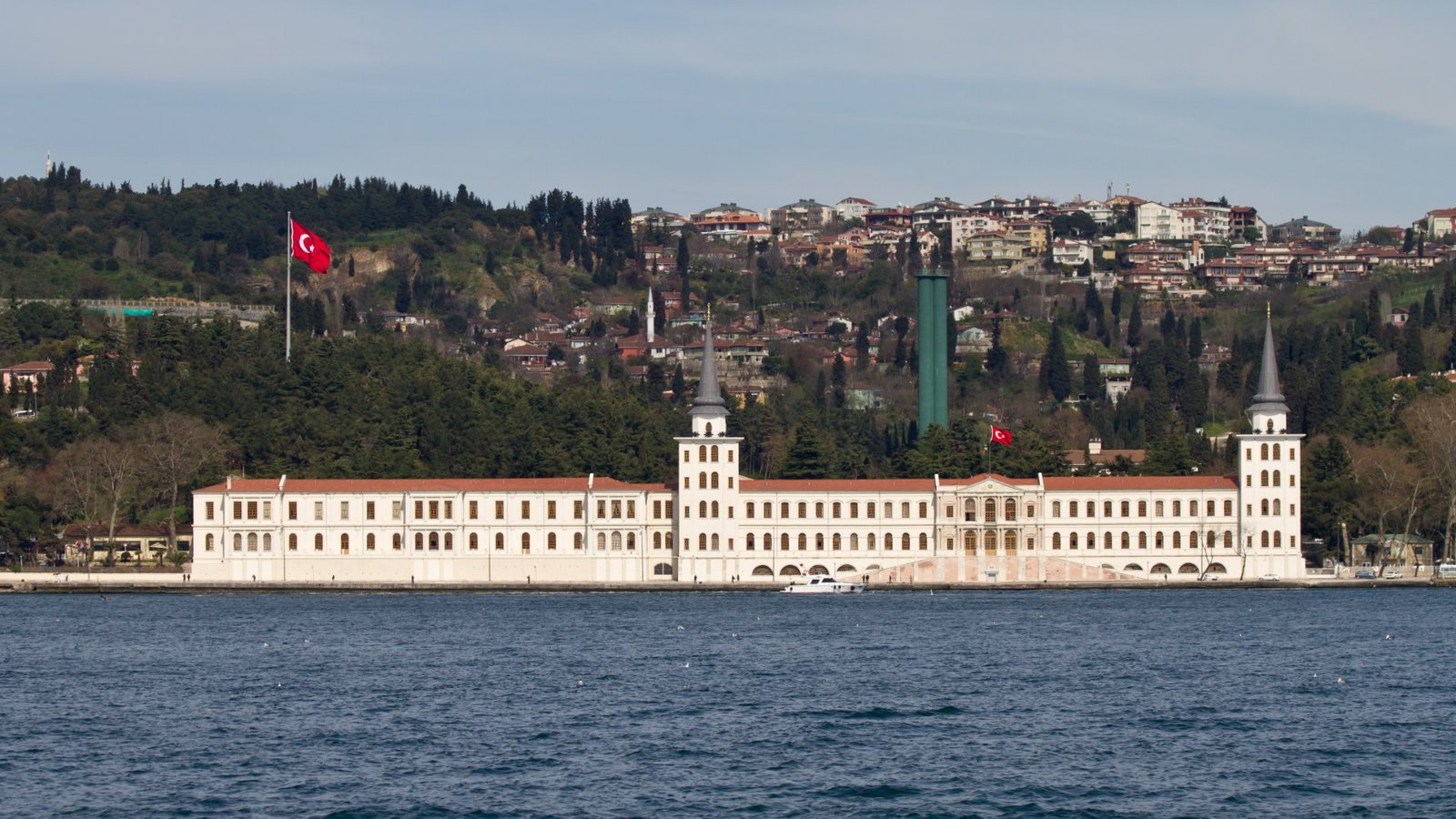
Military cadets and conscript privates were “children of the state”, under the state’s protection. The author questions, from a legal standpoint, the situation of the military cadets tried after 15 July.
Image: Eusebius / Wikimedia Commons, CC BY 3.0
Children who suffer violence or are ostracised by their families should, if necessary, be taken into care by the state by force and, with all their needs met under this protection, turned into individuals useful to society. This is one of the state’s duties of “protection”!
But what happens if a child in the state’s care is subjected to violence by the state? To whom does this child tell his troubles, or who protects him? At law school, when our professors spoke of the function of justice, they used to say: “If meat goes bad, you salt it, but what happens if the salt goes bad?”
I am talking about the “children of the state”. Children whose family is the state… Some of them are children who entered military schools at an early age and came to regard the state that took them under its protection as mother and father; others are children entrusted to the state, with henna nights and to the sound of drum and zurna, to do their compulsory military service in the most productive years of their lives.
We all know them! I am talking about military cadets, privates and some trainee officers.
At present nearly 500 military school cadets, nearly 250 trainee lieutenants and nearly 150 privates, many of them tried with life sentences in the 15 July cases, are being held in prison. We know them from the closure of their schools by emergency decrees, from the summary expulsion of 17,000 people, from the lynching of Murat Tekin and Ragıp Enes Katran by civilians on the Bosphorus Bridge, from the never-ending cries of Melek Çetinkaya and the other cadets’ mothers, and from the silence, or very feeble reactions, of politicians and civil society.
The Past
Yes. The “children of the state” are suffering violence and cruelty at the hands of their mothers and fathers, while the rest of society says “the state must know what it is doing” or, thinking “they are the parents, they love and they beat”, hardly considers interfering in family matters.
With the words “But they too pointed guns at the people!”, thousands of children and young people are being left breathless on the basis of a few isolated incidents on the night of 15 July. Legally, these military cadets, trainee officers or privates can only be “witnesses” in these cases, except for crimes they committed individually. Even if they were somehow placed in the dock, depending on their situation a decision of “no penalty to be imposed” or “acquittal” should be given.
Most of these children did not even take up arms that night. Whether privates or military cadets, they cannot be expected to have had knowledge of a military operation to which they were assigned. Under the “need-to-know principle”, it was not even possible for any of them to be given this information. None of them knew about the coup. These children accepted the orders given by their commanders or superiors with a routine “sense of duty”, without knowing that this was a coup attempt, and acted accordingly. They had no authority to take initiative and were in no position to act against orders or question the order given. All that aside, many groups of cadets were put on buses on the grounds that “there is an exercise” or under the name of “training”. Consequently, these persons should bear no criminal liability either.
There is a basic rule in criminal law. If the perpetrator has fallen into an unavoidable error as to whether the act constitutes a wrong, in other words, if he acted in the belief that his action was not unlawful, did not constitute a wrong and was legitimate, and if this error was unavoidable under the circumstances he was in, he can no longer be pun-ish-ed (Article 30/4 of Turkish Penal Code No. 5237). In determining whether the error was unavoidable, the person’s level of knowledge, education and the social and cultural environment he is in are taken into account. It is impossible that even the inexperienced judges hastily put on the bench of the criminal courts do not know this.
So what is the problem that the judiciary, one of the three main organs of a state “living its golden age”, has with these cadets? Why are such sentences as life and aggravated life imprisonment, impossible to accept in reason, conscience and law and diametrically opposed to criminal policy, deemed fit for these children? Why is the state treating its own children this way?
In my view, the answer to this question lies in the numbers.
Numbers Do Not Lie
Although nearly six years have passed, the 15 July events are still full of darkness. The government, which has now become the state, knows well that the bigger and more terrible it portrays this event to the public, the more it will profit from it, and so far it has succeeded in doing so. That is why both the first figures given about 15 July and the figures emerging from the trials are of great importance.

Now, based on the figures and for the reasons I will explain below, I will show how the “group of the inexperienced, the unauthorised and the unranked” have been used purely as “filler material” in public opinion regarding the coup trials. After all, numbers do not lie!
Let us now examine these figures in a little more detail.
Immediately after 15 July, the Turkish Armed Forces announced that 8,651 personnel had taken part in the coup attempt. Of this figure, 14 per cent (1,214 people) were military cadets and 19 per cent (1,676) were privates and corporals. In total, 33 per cent, that is, one in every three, consisted of privates or cadets with no authority whatsoever.
Moreover, this figure does not include nearly 700 trainee lieutenants, excluding those from the War Academies, many of whom had been soldiers for only three to five months and had next to no weapons training or military experience! Including those tried above all in the Gendarmerie Schools Command case (257 gendarmerie trainee lieutenants), the Akıncı Base case (79 Air Force trainee lieutenants), the Army War Academy case (156 trainee lieutenants) and some other coup cases, with a total of about 700 trainee lieutenants, the proportion will grow even larger and exceed 40 per cent.
Until the trials took place, that is, in the first figures given, this tactic worked, and thanks to these privates, cadets and trainees the number of soldiers who took part in the coup was considerably inflated. Without the numerical support of the “children of the state”, the number of soldiers involved in the coup would have been 40 per cent lower, and that would not have been a satisfying explanation for the public.
Another numerical datum is that, as a result of the trials, sentences were handed down to a total of 4,890 defendants. Their distribution by rank and sentence is briefly as follows.

Looking at the chart and the table, it can be seen that these three groups (trainee lieutenants, military cadets, corporals/privates) cover a very wide area. Among those sentenced to aggravated life and life imprisonment, the share of these three groups in the total is 23.5 per cent, and for fixed-term prison sentences it is 8.6 per cent. This means that one in every four people (1/4) sentenced in the coup cases consists of military cadets, privates or trainees who knew nothing of the event, had no authority, no rank, no experience, no initiative and no capacity to question the orders given.
The Talat Aydemir Attempt and the Deceived Cadets
So should it have been like this? Could the state have shown a different reflex or taken a different initiative in this situation? To answer this, I looked at the stance taken after the attempts of Colonel Talat Aydemir (22 February 1962 and 20 May 1963), described as Turkey’s first failed coup attempts.
As is well known, the cadets of the Army War Academy played a major role in these attempts. As a result of these two attempts, of 1,459 War Academy cadets, 75 were sentenced to 4 years and 2 months of heavy imprisonment, 91 to 3 months’ imprisonment, and 1,293 were acquitted. The court requested that 635 people, including second-year cadets who had been acquitted, be removed from the academy. These convicts were stripped of their cadet status and barred from public service for life. Of the 824 first-year cadets, 18 were convicted and 806 acquitted. It was decided that the acquitted first-year War Academy cadets would continue their education. The cadets removed from the academy were exempted from paying compensation by a special decision, and additional university places were later opened for them.
The War Academy cadets who took part in the coup led by Colonel Talat Aydemir knowingly and willingly (with direct intent), aware that the operation was a coup, were won back for the state at that time.
Among the 1,459 cadets expelled from the army for involvement in the coup led by Talat Aydemir, covering the entire classes of 1963 and 1964, were İsmet Solak (columnist for Hürriyet), Süleyman Genç (former MP), Ertöz Vahit Suiçmez (former MP), Selahattin Taflıoğlu (former MP), Hakkı Koşar (former taekwondo world champion), Atilla Örsel (President of the Turkish, European and Balkan Gymnastics Federations, Deputy Chairman of the Istanbul Chamber of Commerce Assembly), Savaş Süzal (Washington correspondent of Sabah), Fethi Tunç (former governor), Ali Rıza Konuralp (State Security Court judge), Namık Aydınoğulları (former head of the Prime Ministry Inspection Board), Hüseyin Dinçer (board member of Türk Telekom), Prof. Ergül Han, Prof. Abdullah Gül, Prof. Ali Zaimoğlu, Prof. Dr. Tahsin Akalp and countless scientists, professors, senior bureaucrats, athletes, journalists and politicians.
I am aware, of course, that the state mindset and circumstances of that period are not the same as today’s. However, at that time the state knew how to adopt a constructive policy and win its “own children” back for society.
Now I wonder: how were these children, who knew nothing of the coup on 15 July, any different from the state’s other children?
[1] The main cases in which trainee lieutenants were tried include: the Gendarmerie Schools Command case (257 gendarmerie trainee lieutenants), the Beştepe Gendarmerie General Command case (around 40 gendarmerie trainee lieutenants), the Akıncı Base case (79 Air Force trainee lieutenants), the Etimesgut Armoured Units School and Training Division Command coup case (more than 40 trainee lieutenants), the Army War Academy case (156 trainee lieutenants), the Army Aviation Command coup case (34 trainee lieutenants identified), and the 58th Artillery Brigade and Artillery and Missile School Command coup case (mostly trainees, but no exact figure could be obtained).
* In total, decisions of “no penalty to be imposed” were issued for 964 defendants.
** I believe that as the trials continue, especially at the Constitutional Court and ECtHR stages, conviction rates will fall further.
*** The figures given for trainee officers are not exact and consist only of those that could be identified.
Monthly · free
Compass of the Month
PUGAT’s monthly newsletter.
Read next


What is PUGAT? A non-profit community publishing independent analysis from Europe on security, migration and society in Turkish, German and English.
Go to the homepage
