

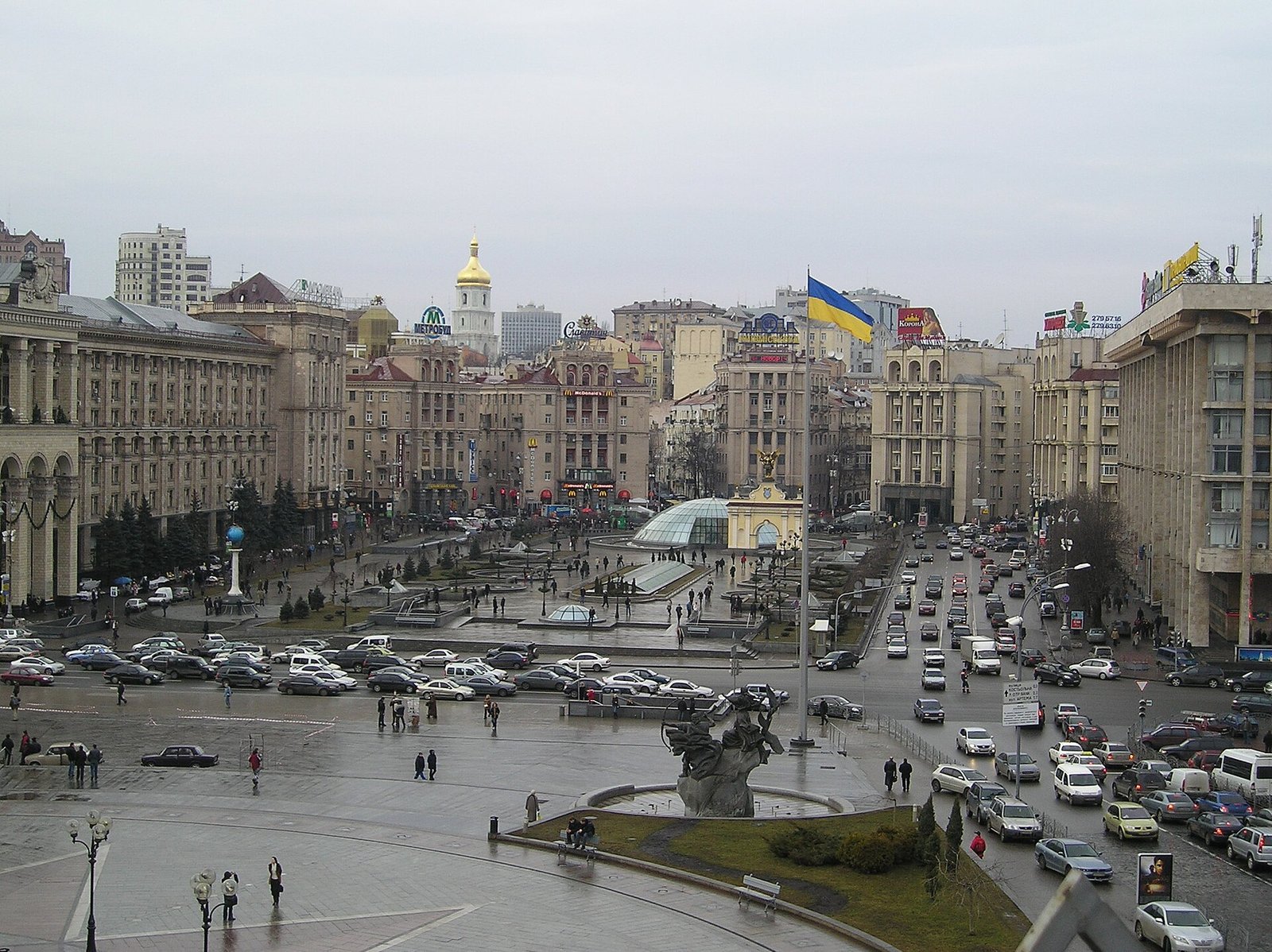
Expecting a swift victory, Putin ran into Ukraine’s resistance. The author recalls similar historical examples of arrogance and underestimating one’s opponent.
“We will cross the Dardanelles in five minutes and have our five o’clock tea in Istanbul.”
“We will soon enter Damascus and perform our Friday prayers in the Umayyad Mosque.”
We have all heard the words above, and I am sure many of you know who said them. Both men faced the bitter realities of self-confidence, arrogance and underestimating the other side. The rulers were responsible for the overconfidence, but it would not be wrong to say that the people, more than those who prepared these outcomes, had to face the bitter prescription.
I do not know whether Vladimir Putin made a similarly ambitious remark before the Russia–Ukraine war. What has happened since shows that he was at least as ambitious and self-assured as those who said the words above. He would reach his goal in a short time and, keeping the world’s reaction at an acceptable level, come one step closer to his long-standing aim of re-establishing the Soviet Union. According to the general view, Putin expected that some time after the war began, Ukrainian President Zelensky would be ousted and replaced by a president who could be steered as he wished. The candidate to replace him was probably even ready. Indeed, Russia had previously applied this kind of policy in Belarus, Crimea and Chechnya and had succeeded. For these reasons Vladimir Putin, a true expert in psychological warfare, intimidated the rest of the world before the war even began and made Ukraine feel to the marrow that it was alone. In this way he planned to get results quickly. He was so sure of himself that, instead of sending his elite units to the front, he launched the operation with units made up of raw recruits.

The War’s Greatest Handicap: Ignoring People Who Will Fight for Their Homeland
In my view, the most decisive factor Putin failed to take into account was the resistance and courage of the people. In fact, I think the rest of the world did not expect such a struggle from the Ukrainian people either. For every country and organisation that hesitated to give open support before the war began came over time to support Ukraine openly. Some provided military and financial aid, while others began to show which side they were on by imposing sanctions on Russia.
Everyone knows the effect of psychological factors in war. Especially for soldiers fighting at the front, even momentary states of mind can be decisive. Although the Russian side began the war with psychological and military superiority, as reaching the goal was delayed and images of resistance came from the field, this superiority began to shift towards the Ukrainian side. With every minute that passed, Ukrainian resistance grew like a snowball into an avalanche, while signs of low morale, regret and despair began to appear among Russian soldiers. So much so that Putin and his team showed they were in such difficulty that they threatened countries involved in the war, even indirectly, with nuclear weapons. The fact that they lost, very soon after the operation began, the political environment and cool-headed approach they had managed so well before it is also a sign that unexpected problems arose. Russia’s failure to anticipate the resistance and struggle that would emerge in the area of operations is also a sign that not enough fieldwork was done or that other countries were more successful. Another possibility is that Russia’s target is not just Ukraine. If preparations have been made for such a scenario, it means there is a danger that the war will be much longer, with more stages and more bloodshed. I hope it was not undertaken with such an aim. In conclusion, the war began with Russia’s clear superiority, but Ukraine, led by Zelensky, won the first round.
Although the visible dimension of the war continues in Ukraine’s favour, it cannot be denied that Russia has also made important gains. First of all, considering the areas and critical facilities it has seized, it seems close to a result. In particular, its capture of certain important cities is only a matter of time. Then again, if no final result is achieved, the gains made are of no importance.
Russia Achieved What NATO Could Not
One of the most important effects of the war was that it led other countries to review their own perceptions of security and threat. This revealed the importance of organisations such as NATO and the EU, which are inclusive and deterrent in terms of both defence and cooperation. So to speak, the danger of an environment in which wolves are ready to snatch unprotected lambs became visible. Although this is the last thing Russia would want, it laid with its own hands the cornerstones of new NATO accessions. In addition, by giving countries sufficient justification for defence spending, it secured for arms-producing countries such as the US, Israel and Germany a customer potential that will last for years. Not only did it destroy in a single move the project of breaking up NATO it had quietly pursued for years, it also brought together even countries that did not look kindly on each other, like relatives who unite in times of trouble.
The longer Ukraine’s resistance lasts, the greater the scale of Russia’s losses will be. Russia, which has already suffered serious damage not only materially but also psychologically and sociologically, will sink deeper into chaos if the fighting turns into guerrilla warfare. Thousands of foreign volunteer fighters have already come to Ukraine. These numbers are likely to grow further. My guess is that most of these fighters are professional soldiers or agents sent by other countries who know guerrilla and irregular warfare. In the region, fighting alone is not enough. To secure the participation of the civilian population and increase the world’s support, broadcasts about the destruction Russia has caused are also needed. Of course, this is the work of experienced professionals. For the US and Europe, every day Ukraine resists is a gain. Of course, this war has many aspects that affect the US and Europe negatively. The refugee crisis, oil and gas problems and the disruption of the supply of many agricultural products are chief among them. Still, all these problems are seen as “the lesser evil”. And they are not considered more important than living through a new Cold War and Russia gaining more power in the region and the world.
A New World War?
Considering that Russia has lost power in every sense since the day the war began, it is clear that the US, by not entering the war directly, is the side that is gaining. With its aggressive identity, Russia has drawn the reaction not only of the world but also of its own citizens. As the embargoes affecting people’s lives increase, popular support will decline and the tone and strength of the reactions will grow. It must be said that the US in particular has applied “soft warfare” very well at this stage. The fact that it announced the sanctions and embargoes as if it had been waiting for this moment for years is also a sign that it was prepared for what was to come. In any case, as one that has shed blood and had its blood shed for years, its entry into hot conflict is viewed with antipathy both in the world and at home.
Still, time will tell whether this stance of the US, which has not openly declared war even though such an opportunity has arisen against its greatest rival, is a step back or a drawing back for a punch. What we do know is that the world cannot withstand a world war waged with these technological capabilities.
Monthly · free
Compass of the Month
PUGAT’s monthly newsletter.
Read next
What is PUGAT? A non-profit community publishing independent analysis from Europe on security, migration and society in Turkish, German and English.
Go to the homepage
