

Russia’s attack on Ukraine has reopened the debate on the place of war in international law. The article examines the law of war and the rules on the protection of civilians.
The Ukraine–Russia war that began on 24 February is still going on. As is well known, Russia had recognised as independent people’s republics the Donetsk and Luhansk regions, which lie on Ukrainian territory but are controlled by pro-Russian armed groups. Subsequently, on the pretext of taking these two regions under its protection, it attacked Ukraine, on whose border it had long been massing its armed forces.

In this article, leaving the political causes and consequences aside, we will try to examine the place of war in international law in the light of the current Ukraine–Russia war.
The law of war, in the broad sense, is the body of rules that determines the acceptable grounds for going to war (jus ad bellum) and the limits of conduct during war (jus in bello). The latter is also called international humanitarian law.
International Conventions
The international law of war is grounded in human rights. The primary aims of the conventions governing this field are to protect the civilian elements in an area from armed conflict by distinguishing civilians from armed forces, and to ensure that all measures necessary to prevent or minimise possible harm to civilian elements in war zones are taken. Matters such as prisoners of war and war crimes are also regulated in this framework.
The main conventions in this field are:
- The four Geneva Conventions of 1949,
- Additional Protocol I of 1977 to the Geneva Conventions,
- The Hague Conventions of 1907 regulating methods of warfare,
- Other norms of the international law of war
Accordingly, Russia’s attack on Ukraine fits the definition of an “international armed conflict”, first and foremost under these four conventions. Under the Geneva Conventions of 1949, to which both sides are party (the most fundamental conventions setting the standards that armed forces and humanitarian organisations are expected to observe in national or international conflicts), and their Additional Protocol I, the Russian units that violated Ukraine’s borders can be defined as an “occupying force”. Moreover, under these same conventions, the fact that the Donetsk and Luhansk regions within Ukraine’s borders declared their independence and that Russia recognised it does not change the fact that Russia’s operation is an occupation.
On the other hand, the international conventions governing human rights apply not only in peacetime but also in times of war, including armed conflicts and occupations.
These conventions can be listed as follows:
- The European Convention on Human Rights (ECHR),
- The UN International Covenant on Civil and Political Rights (ICCPR),
- The UN Convention against Torture and Other Cruel, Inhuman or Degrading Treatment or Punishment (CAT),
- Other international conventions governing human rights.
These conventions, to which both sides are also party, govern fundamental human rights such as the prohibition of torture and inhuman and degrading treatment, the prohibition of discrimination and the right to a fair trial. (Update note, November 2026: Russia was expelled from the Council of Europe in March 2022 and ceased to be a party to the ECHR on 16 September 2022.)

Although restrictions on certain human rights are permitted in war and states of emergency to the extent the situation requires, fundamental rights such as the right to life, the right to protection from torture and other ill-treatment, the prohibition of incommunicado detention, the duty to ensure judicial review of the lawfulness of detention, and the right to a fair trial must be respected in all circumstances.
Military and Civilian Targets
The aim of a military action is limited solely to “military objectives” and may in no case include “civilian objects”. Military objectives consist of “elements that provide a military advantage”, such as enemy soldiers, weapons, ammunition, military buildings, buildings used for military purposes in wartime even if not built for them, and military vehicles and equipment.
Civilians are regarded as military targets only when they take a direct part in hostilities. Apart from that, no civilian element that is not recognised as a military objective may be targeted in a military conflict.
Not only non-combatants but also civilian structures such as homes, workplaces, places of worship, hospitals, schools and cultural monuments may not be targeted unless they are put to military use. Indeed, if there is doubt as to whether an object is military or civilian, it must be presumed to be civilian and kept off the target list.
First of all, the law of war prohibits attacks on civilian objects and all attacks that are not directed at a specific military objective and fail to distinguish between military and civilian. Indiscriminate attacks are those that treat points in an area where civilian elements are also present as military objectives and regard them as a single military target.
Accordingly, attacks must be directed solely and clearly at military objectives, and civilian elements must not be harmed. If the destructive power of the weapons to be used would also cause possible harm to civilians, or if there is a risk of the target being missed, they must absolutely not be used. For example, certain mines and cluster munitions have been strictly banned by international conventions because of the risk that they may also harm civilian elements.
Armed Conflict in Populated Areas
International humanitarian law does not prohibit fighting in populated areas where civilians live, but the presence of civilian elements in those areas places serious responsibilities on the warring parties. First of all, the parties must take steps to minimise harm to civilians, exercise the utmost care to protect civilian elements and take every feasible measure to prevent or minimise such losses. To take these precautions, military forces should not be deployed in densely populated areas and should avoid engaging in combat there.

In no circumstances may military elements deliberately use the presence of civilian elements to shield themselves from military counter-attacks; otherwise the civilian elements used in this way are deemed to have become military targets for the other side.
As in every war, in the Ukraine–Russia war too, the matters requiring the greatest attention are EWIPA (the use of explosive weapons in populated areas), which includes threats such as heavy artillery fire and aerial bombardment with wide-area destructive effects, indiscriminate attacks that fail to distinguish between civilian and military elements, and disproportionate attacks.
Attacks targeting cities and other residential areas in war zones are lethal, injurious and psychologically damaging for large numbers of civilians. Damage to other civilian elements, such as hospitals, schools and infrastructure systems, not just to civilian citizens, has similar effects in the short and long term. For this reason, international organisations such as Human Rights Watch constantly call on warring parties not to engage in armed conflict in populated areas and not to use heavy explosive weapons there that could also affect civilian elements.
The question of prisoners of war (POWs) is governed by the (Third) Geneva Convention. Accordingly, prisoners of war are chiefly members of the armed forces who fall into the hands of the enemy in an international armed conflict, militias meeting the conditions set out in the convention, persons who accompany the armed forces without being members of them, civilians who take up arms en masse, and journalists accompanying the armed forces. Prisoners of war may not be prosecuted for having taken part in hostilities, only for war crimes they have committed.
Wounded or sick prisoners must receive the same health care as the members of the armed forces of the detaining party. Moreover, as a requirement of fundamental human rights, female prisoners of war must always be treated with respect, and those with the status of children must receive the special treatment their particular situation requires.
From the moment they fall into enemy hands, prisoners of war have certain fundamental rights and duties. For example, the detaining party must treat them with human dignity and must not deliberately kill them, deliberately cause serious harm to their bodies or health, subject them to inhuman and cruel treatment, torture them, insult them, impose collective punishment on them, try them for war crimes they did not commit, or deprive them of their right to a fair trial merely because they are enemy prisoners. Any breach of this always constitutes a war crime.
It is known that parties often use prisoners for reprisals. Yet reprisals against prisoners of war are absolutely prohibited. Even as prisoners of war, their human dignity, a core right as in every situation, must be protected; their images must not be shared with the media, and these prisoners must not be used for political purposes.
Deprivation of Liberty
The (Fourth) Geneva Convention addresses the detention of civilians by one of the warring parties. The convention permits people to be deprived of their liberty only for imperative reasons of security. Persons deprived of their liberty must be provided with humane conditions such as adequate food, water, clothing, shelter and medical care; women and men must be held in separate quarters, and children separated from their families must be accommodated separately from adults, with the necessary measures taken.
War crimes are violations of the law of war committed during war, deliberately or recklessly, for example by failing to distinguish between targets. Examples of war crimes regulated by various international conventions, above all the Geneva Conventions and the Statute of the International Criminal Court (ICC), include hostage-taking, using civilians as human shields, deliberate, indiscriminate and disproportionate attacks on civilian objects, and collective punishment. In addition, in accordance with the general principles of criminal law, planning or inciting a war crime, attempting to commit a war crime, and aiding or abetting a war crime are also among the forms of liability in trials under the law of war.
Here a separate parenthesis must be opened for military commanders and civilian leaders, who bear the main responsibility for war crimes. In addition to their individual responsibility, these persons are also responsible, in proportion to their authority and responsibility in the chain of command, for taking the necessary measures to prevent war crimes and punish those responsible.
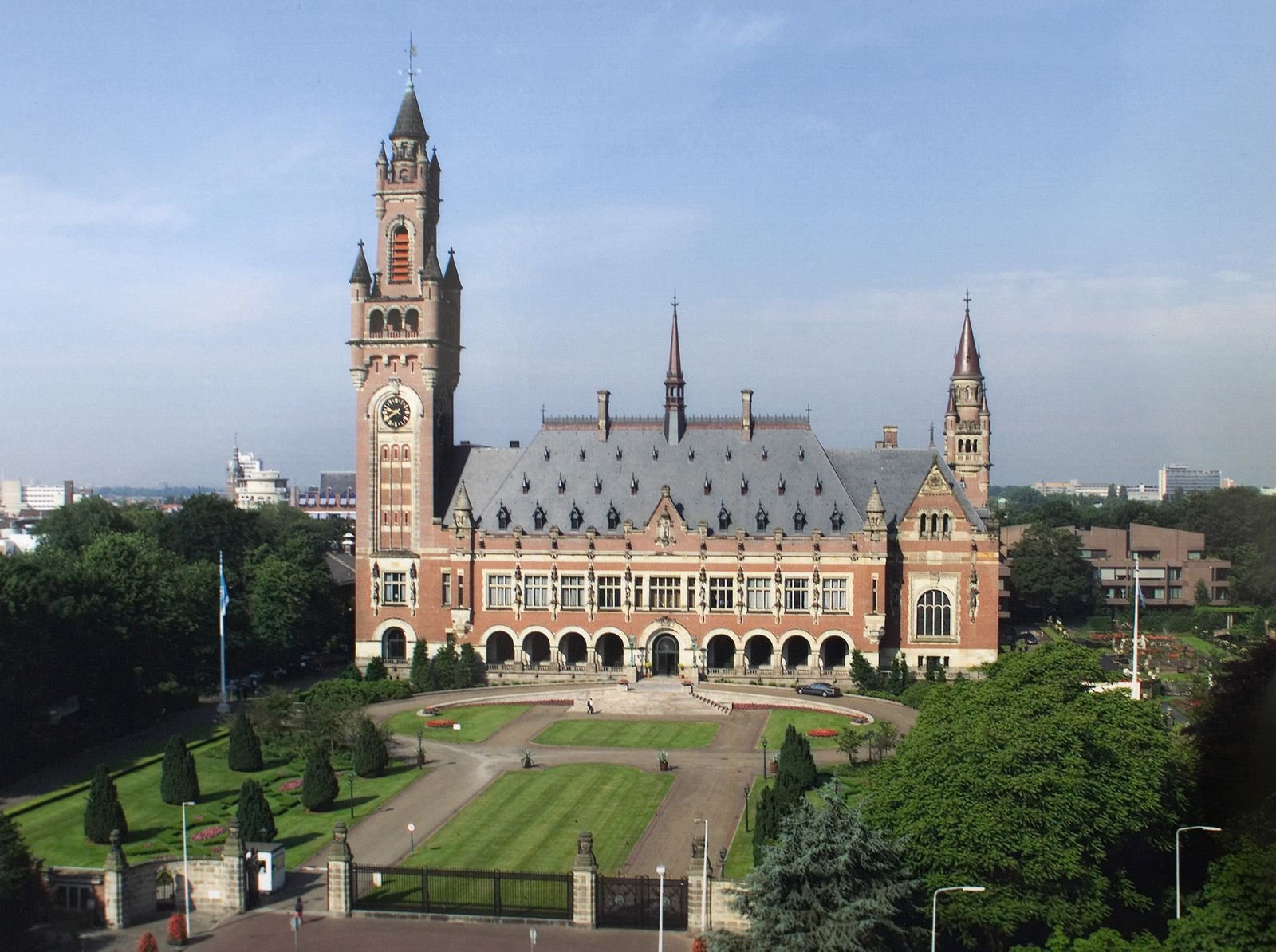
The main international court where war crimes are tried is the International Criminal Court (ICC) in The Hague, the Netherlands. The ICC is an international court with jurisdiction to investigate, charge and try persons alleged to have committed genocide, crimes against humanity and war crimes on the territory of a state party to the Rome Statute, which established the court, or by a national of a state party.
In the case at hand, let us note that Russia and Ukraine are not ICC members. However, through declarations made in 2014 and 2015, Ukraine accepted the court’s jurisdiction over crimes allegedly committed on its territory since November 2013. (Update note, November 2026: In March 2023 the ICC issued an arrest warrant for Vladimir Putin over the unlawful deportation of Ukrainian children to Russia. Ukraine became a party to the Rome Statute on 1 January 2025.)
Furthermore, certain grave crimes that violate international law, such as war crimes, genocide and torture, can be investigated and prosecuted in a country under the principle of “universal jurisdiction” even if they do not fall within that country’s domestic jurisdiction. For example, like many other countries, Turkey considers itself competent, on the basis of the First Part of the Special Provisions of the Turkish Penal Code (Articles 76-80), to try genocide or crimes against humanity committed anywhere in the world.
Monthly · free
Compass of the Month
PUGAT’s monthly newsletter.
Read next


What is PUGAT? A non-profit community publishing independent analysis from Europe on security, migration and society in Turkish, German and English.
Go to the homepage
