


As Russia massed 100,000 troops on the border, negotiations led nowhere and Ankara offered to mediate. The article assesses the crisis before the invasion and Türkiye’s role.
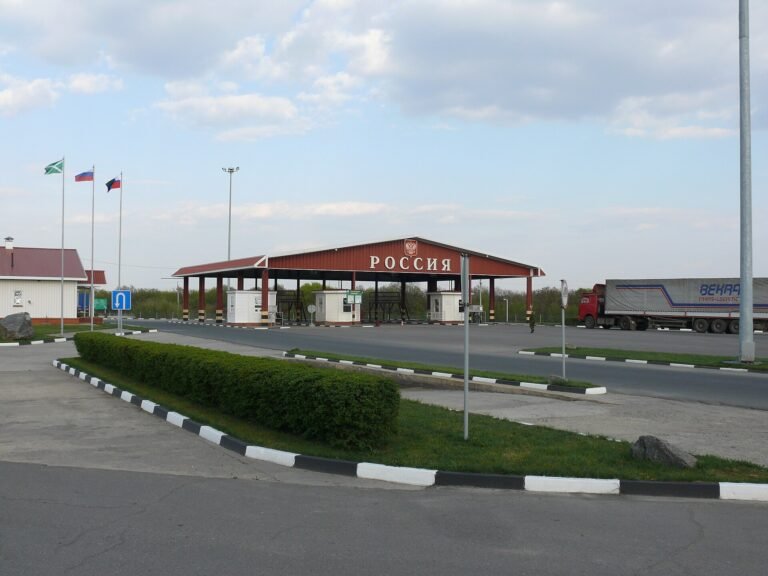
For months the whole world has been asking when Russia will start a war against Ukraine. After all, it is known that Russia has deployed around 100,000 troops on the Ukrainian border and keeps holding exercises there. Meanwhile, negotiations aimed at preventing a possible war are continuing.
While President Putin and Foreign Minister Lavrov conduct the negotiations on Russia’s behalf, countries such as Germany and the United Kingdom, led by US and NATO officials, have joined the process on Ukraine’s side.
As a result of all these efforts, the parties left the table without agreement, and President Recep Tayyip Erdoğan made a statement announcing that he wanted to mediate between Russia and Ukraine to resolve the problem.
Let us open up the crisis between the parties a little…
How Did It Come to the Brink of War?
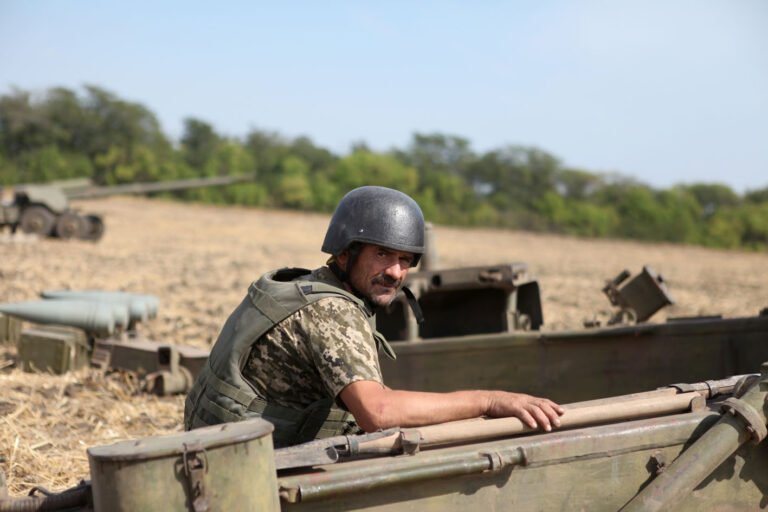
After Russia annexed Crimea in 2014, clashes broke out between the Ukrainian army and Russian-backed separatists. Although Russia said it did not support the separatist groups, Russian soldiers were seen taking part in these clashes with their insignia removed. In the end, more than 15,000 people lost their lives.
At the end of 2021, first Ukraine’s appeals to the US, NATO and European Union countries, and then Western intelligence reports, revealed that Russia had deployed tens of thousands of troops on the Ukrainian border and had thereby stepped up its support for the separatists in the Donbas region. In addition, it was announced that the Russian army would hold a joint exercise on the Ukrainian border together with Belarus, another of Ukraine’s neighbours.
By 2022, as claims of war became more concrete, many countries, above all the following countries and organisations, conducted diplomatic contacts aimed at preventing a possible war.

NATO–Russia Talks
Most recently, NATO and Russian officials who met on 12 January left the table without agreement. Russia tied the solution of its problems with Ukraine to its plans regarding NATO’s structure and future. Instead of how the Ukraine problem could be solved, it focused on changing NATO’s structure.
That is to say, at the meeting on preventing a possible war with Ukraine, Russia raised demands that NATO and the US not set up military bases in former Soviet countries and in countries that are not NATO members, not use the infrastructure of these countries for any military activity and not engage in military cooperation with them. In fact, by stressing that NATO should withdraw from Romania and Bulgaria, Russia showed that it had not sat down at the table to reach an agreement.
US–Russia Talks
After the meeting between US Secretary of State Blinken and Russian Foreign Minister Lavrov, the US side stressed “the importance of continuing diplomatic efforts to reduce tensions caused by the Russian military build-up”. The US side also stated that if Russia crossed the Ukrainian border, the US and its European allies would form a united front against Russia.
US officials also claimed that Russia was laying the groundwork to “create a pretext” for invading Ukraine, and said this included “acts of sabotage and information operations” that would put the blame on Ukraine.
These claims recalled the words of MİT Undersecretary Hakan Fidan, said in order to legitimise a possible Turkish operation in Syria: “I’ll send four men to the other side and have them fire eight missiles into an empty field. That’s not a problem. A justification can be produced.”
Other Reactions to Russia
In the Germany–Russia talks, Germany announced that it would work to make functional again the negotiation process known as the “Normandy Format”, launched in 2014 within the framework of the Minsk Agreement with the participation of Germany, Ukraine, France and Russia.
German Chancellor Olaf Scholz also warned that Russia would pay a heavy price if it intervened militarily in Ukraine. Noting that political and economic sanctions would be on the table, Scholz added that the Western allies were in agreement on this matter.
British Prime Minister Boris Johnson also stated: “If Russia makes any kind of incursion into Ukraine, on any scale, make no mistake, it will be a disaster not only for Ukraine but also for Russia. It will be a disaster for the whole world. Britain will stand by Ukraine’s independence and territorial integrity.”
The President of the European Commission said that if Russia attacked Ukraine, the European Union (EU) would “impose massive economic and financial sanctions”.

Erdoğan’s Mediation Move
While all this was happening, President Erdoğan made an interesting statement. Saying that Türkiye has good relations with both Russia and Ukraine, he said: “We can be an intermediary for peace to prevail between the parties.”
So can Türkiye really mediate between Russia and Ukraine and bring about peace? To answer this question, we first need to examine the concept of a “mediator” a little.
A mediator must above all be impartial and must not have a “subordinate–superior” relationship with either party. In addition, when the process becomes deadlocked, the mediator must put forward new ideas to break the deadlock. The mediator must enjoy respect among the parties and, when necessary, be able to persuade one country to make concessions to the other.
Dwelling on just these few points makes it clear that it is deeply ironic for the Erdoğan government, which was unable to show any reaction against Russia or even make a tangible statement despite dozens of Turkish soldiers being killed in air operations, to want to mediate between Russia and Ukraine!
What kind of respect, unknown to the public, does President Erdoğan command before Russian President Putin? Was it not Russian President Putin who kept Erdoğan waiting at his door for minutes? What could Erdoğan, who has also destroyed his own country’s prestige, make Putin accept against Russia’s interests?
We must not forget that in his mediation between Azerbaijan and Armenia, Putin seated the two countries’ leaders, Aliyev and Pashinyan, opposite him, and that it is again Russia that is mediating the ongoing normalisation process between Armenia and Türkiye.
Looking at all this, for Russia there could be no more sensible mediator than Erdoğan, who has positioned himself at Putin’s side. Because in the name of peace, he would bring Ukraine under Russian domination without even the need for an invasion. Just as he has been trying to pull Türkiye out of the Western orbit and lock it into a bloc with Russia.
Monthly · free
Compass of the Month
PUGAT’s monthly newsletter.
Read next
What is PUGAT? A non-profit community publishing independent analysis from Europe on security, migration and society in Turkish, German and English.
Go to the homepage
