


Should a law still be applied if it is clearly unjust? The Radbruch Formula, developed after the Nazi era, still sheds light today on the tension between law and justice.
As we all know, one of the most fundamental principles of universal law is the rule “no crime and no punishment without law”. That is, all matters constituting crimes and the penalties prescribed for them are regulated by law. But can the legislator act contrary to justice or oppress a particular group or class through the laws it makes? It is here that the Radbruch Formula, which holds a very special place in modern legal philosophy, fills a very large gap.
The Radbruch formula is a very important doctrine that restored the sense of trust in the law that many people had temporarily lost. The Radbruch formula, unfortunately a concept that emerged from very bitter experiences in history, became an effective source that ultimately ensured justice was done, however late. In this context, it played an important role in the administration of justice in the courts established after the Second World War.
First, it is worth considering the originator of the formula and the environment in which the idea took shape. Gustav Radbruch served two terms as Minister of Justice in the German Weimar Republic between 1921 and 1923. Through his work during his tenure he made many contributions to the reform of German criminal law.
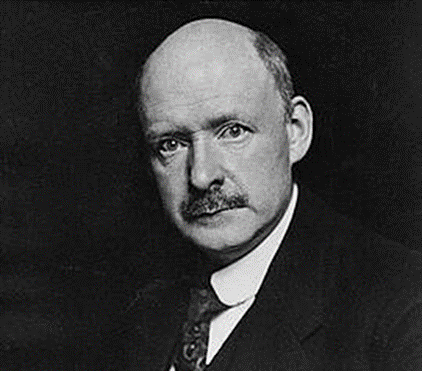
Subsequently, he chose academic life and withdrew from politics. When Hitler came to power, he was removed from his university post because he was declared “politically unreliable”. With the end of the Nazi regime, he returned to his university post. It was in this period that he also produced the works on which his recognition as one of the most influential legal philosophers of his time, that is, of the 20th century, still rests.
According to G. Radbruch, who through his work was the intellectual father of Article 7(2) of the European Convention on Human Rights, when the deviation from justice reaches an intolerable level, laws lose their legal validity in the face of justice. For in that case the law in question is not based on equality, the essence of justice, and, because justice was deliberately denied when it was made, it is entirely contrary to justice and to the nature of law. These laws, which degrade people, make inhuman treatment possible and disregard human rights, have no legal character. Nor is there any statute of limitations with regard to remedying, even partially, the grave consequences of such a law or prosecuting those responsible.
According to Radbruch, whoever abuses their power of command over persons obliged to obey them with the intent to commit a crime is indirectly a criminal. Persons who use judicial mechanisms as an instrument are also indirect perpetrators. Indirect perpetration is very clear and evident for a person who knows the political fanaticism of the time, the existing pressure of the government and the political leanings of the office of criminal judge. For example, a person who, by denunciation, hands someone over to Hitler’s politicised criminal justice knows that he is handing him over not to a judicial process with legal guarantees that will reach a just decision and establish the truth, but to an arbitrary practice. Many people closely witnessed this process.
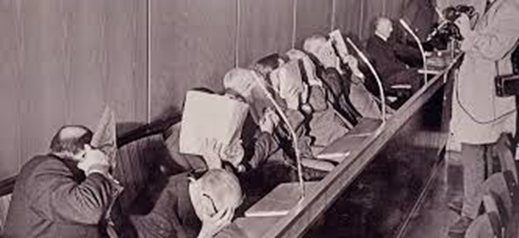
According to Radbruch, inhuman judicial decisions do not relieve judges of responsibility on the excuse that “applying the law is the requirement of duty; the law must be applied”. For judges can avoid applying laws that are contrary to justice, unacceptable and intolerable by resigning. Resisting such laws and injustice is both the right and the responsibility of the judges concerned. In short, it would be a mistake to expect a just decision from judges who are not themselves free at every stage of the decision-making process.
One of the cases in which the Radbruch formula was applied has gone down in legal literature as the “grudge informer” case. A woman married to a soldier, who was in a relationship with someone else and wanted to get rid of her husband, denounced him in 1944 on the grounds that he had criticised the Nazi regime and made insulting remarks about Hitler. Under the law in force, making insulting remarks about Hitler and the regime was a crime. The soldier was tried by a military court and sentenced to death.
The soldier, who served some time in prison, was not executed because of the war. He was sent back to the front. After the end of the Nazi regime, the soldier filed a complaint against his wife. The woman was tried on the grounds that by wrongfully denouncing her husband she had caused him to remain in prison. Although the woman argued that her denunciation of her husband was in accordance with two laws of 1934 and 1938 and that she had therefore exercised her legal right to complain, the court of appeal convicted her under the German Criminal Code of the crime of “unlawfully depriving a person of their liberty”.
In this example, the court disregarded the Nazi-era denunciation laws, finding them contrary to justice and conscience. Had these laws been accepted as valid, the woman’s denunciation would have been found lawful and she could not have been convicted under the 1871 criminal code.
In another case, a court official named Puttfarken denounced a man named Götting for writing “Hitler is a mass murderer and responsible for the war” on a toilet wall. Götting was found guilty both of this act and of listening to foreign radio, and was executed. Puttfarken was later tried at the Thuringia Assize Court for this denunciation and sentenced to life imprisonment.
In the judgment convicting Puttfarken, the first question the court sought to answer was whether this act was lawful. Puttfarken said he had denounced Götting because of his National Socialist convictions. Yet even in the Nazi era there was no such duty to denounce. Götting’s act had nothing that threatened the security of the state. For these reasons, Puttfarken had not helped justice to function. For when making the denunciation he knew that he was handing Götting over to the partial court of an arbitrary power, lacking legal guarantees that would reach a just decision and establish the truth. He also knew beyond doubt that in those years a person summoned to court to defend himself would never be left alive.
The second question to be answered in the case was whether any fault could be attributed to Puttfarken for his act. Puttfarken had in fact admitted that he intended to send Götting to his death, and some witnesses confirmed this. Even though the death sentence was passed by the court, Puttfarken used the court as an instrument to achieve his aim and, although he was an indirect perpetrator, was later punished for complicity in murder.
Another case is that of two executioner’s assistants being sentenced to death. Two executioner’s assistants named Kleine and Rose actively carried out many executions for payment. Although they could always have avoided these acts, they chose to do this horrific work solely to earn money, committed crimes against humanity and paid for it with their lives.
The events of this terrible period, less than a century ago, unfortunately evoke what is happening in the judicial process in today’s Turkey. Of course, some judges who cannot even look into the eyes of defendants who are in fact innocent when announcing the decision devoid of justice that they have been ordered to give, or think they are obliged to give, tell those close to them that they have no other choice, to ease their consciences. Probably one of the most common situations in the future will be this: today’s jurists, who are militants of the regime, will say they are innocent, that they had no other choice, and will try to blame others. It is precisely for this reason that every word, insult and arbitrary act, every torture and ill-treatment used by members of the judiciary, law enforcement and prison staff in today’s trial processes must be recorded in full. As far as possible, everything must be put on record. For many things are happening that are contrary not only to law, morality and state traditions but even to humanity. It is likely that these will seem very exaggerated and unreal to future generations.
In all likelihood, those who will face the greatest trouble in this regard in the future will be the people who informed on innocent people and acted as secret witnesses to make the work of the regime’s courts, which have no legal evidence, easier. Many people, just as happened in Germany in the past, face much heavier criminal sanctions, the simplest being “deprivation of liberty”. For these people know full well that they handed over the persons about whom they made statements, and about whom they did not know whether they had committed any crime, to the arbitrary, politicised judiciary of the regime devoid of legal guarantees, and that these persons would be unjustly punished.
Monthly · free
Compass of the Month
PUGAT’s monthly newsletter.
Read next



What is PUGAT? A non-profit community publishing independent analysis from Europe on security, migration and society in Turkish, German and English.
Go to the homepage
