

From neighbourhood to Crimea, from the Black Sea Fleet to NATO: we explain the Russia–Ukraine question in 15 questions.
Q1: Are Russia and Ukraine neighbours?
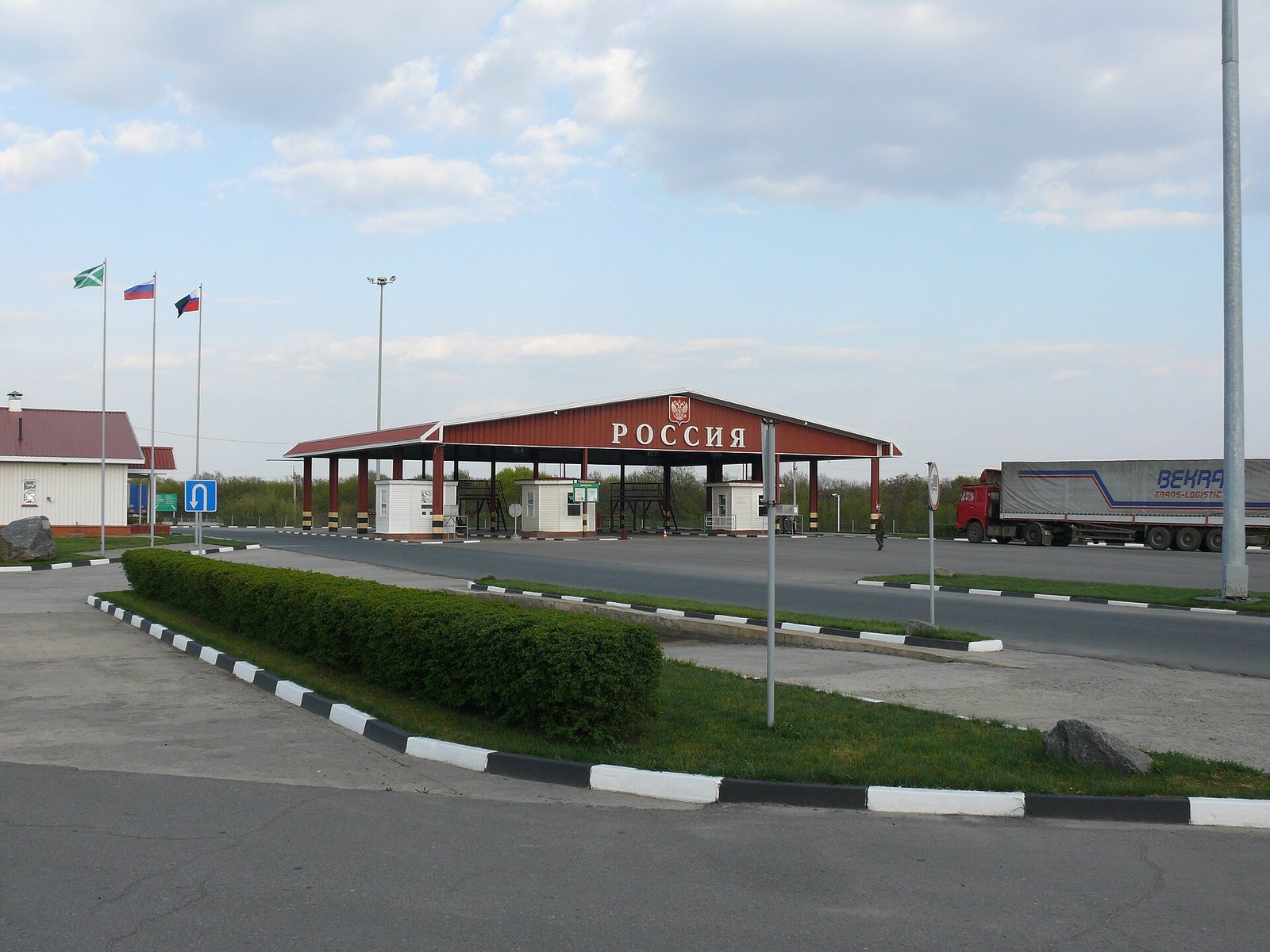
Russia is the country with which Ukraine has its longest land and sea border. Ukraine has a 1,974 km land border and a 321 km sea border with Russia.
Q2: What were relations between Russia and Ukraine like in the past?
The Ukrainian People’s Republic began to be recognised by other countries in 1917. Ukraine, one of the founding republics of the Soviet Union in 1922, acted after this as if it were a single state with Russia under the roof of the Soviet Union.

Q3: Since when have problems arisen between Russia and Ukraine?
Ukraine, which declared independence in 1991 as the Soviet Union entered its process of dissolution, then began to have problems with Russia.
Q4: What problems began to emerge with the collapse of the Soviet Union?
The first dispute concerned the Black Sea Fleet in Crimea. First Ukraine decided that the fleet would come under its control. At the same time Russia also decided that the fleet would come under its control. Although it was later partly resolved, it went on record as the first tension. Although various problems arose after this, they were resolved one way or another.
Q5: What is the Crimea problem? Why can the parties not agree on Crimea?
The Crimean peninsula was under Russia’s control until 1954. In 1954 the Soviet leader of the time took Crimea from Russia and placed it under Ukraine’s control. Since both countries were part of the Soviet Union at the time, Russia did not attach importance to this. But with the collapse of the Soviet Union, Russia began planning to take back Crimea, which it regarded as its own. In 2014 Russia declared that it had annexed Crimea and that Crimea was henceforth its territory. Although this decision was not recognised by other countries, including Ukraine, Crimea came under Russia’s control in every sense and remains so.

Q6: How do the Ukrainian people view Russia?
It can be said that in the Donbas region in eastern Ukraine the proportion of the Russian population is high (about 38-39 per cent according to the 2001 census) and that Russian speakers form the majority. After Ukraine left the Soviet Union, the number of anti-Russian Ukrainian nationalists increased considerably across the country. Across the country there are about 30 per cent Russians or people who sympathise with Russia. The other section is those who say the country should turn towards the West.
Q7: What is the Donetsk and Luhansk problem in the Donbas region of eastern Ukraine?
After Russia’s annexation of Crimea in 2014, the local assemblies of Donetsk and Luhansk, which belonged to Ukraine, took a decision in 2014 and unilaterally declared their independence. Clashes between the Russian-backed separatists in this region and the Ukrainian army had continued since 2014. Most recently, Russian President Putin decided to recognise the “Donetsk People’s Republic” and the “Luhansk People’s Republic” as states.
Q8: How do Ukrainian leaders view Russia?
In Ukrainian politics there are two wings, the “pro-Western” and the “pro-Russian”. Leaders from both wings have held the presidency. But pro-Russian presidents in particular openly tried to steer Ukraine towards the side they felt they belonged to. In 2013, when the pro-Russian president Viktor Yanukovych refused to sign the Ukraine–EU Association Agreement, anti-government protests began in the country and President Yanukovych had to leave the country. After that, the “pro-Western” opposition came to power. The annexation of Crimea and the declaration of independence of Donetsk and Luhansk under Russia’s direction also came after this period.
Q9: What is Ukraine’s geopolitical importance?
Ukraine is important for both Russia and “the West and NATO”, first of all because it was a state of the former Soviet Union. Because of its geographical location, it currently serves as a buffer between NATO and Russia. Considering that NATO was founded against Russia, Ukraine’s NATO membership could be a terrible scenario for Russia. Its own borders would also become NATO borders. For the West/NATO, Ukraine coming under Russia’s sway would make the European Union countries neighbours of Russia. That would not be a pleasant scenario for the West either.

Q10: Is Ukraine in Russia’s sights because it will join NATO?
That is Russia’s rhetoric. Russia wants a commitment from NATO that Ukraine will not become a NATO member, but NATO rejects this demand. Ukraine, for its part, has wanted to join NATO for years. The same NATO that said no to Russia did not accept Ukraine’s request with various excuses rather than saying no to Ukraine directly, and promised “solidarity”.

Q11: Is Ukraine’s possible NATO membership the only problem?
Of course not. Through this rhetoric Russia wanted to create an opportunity for itself to invade Ukraine. Russia cannot stomach a former Soviet country not being under its control. Even if NATO had given the guarantee Russia wanted, Russia would probably still have sought to invade Ukraine on a different pretext. Russia also wants to have its hands full and to be a playmaker in the transition to a new world order.
Q12: What do you mean by a new world order?
With the collapse of the Soviet Union, the world moved from the “bipolar” order of the Cold War to a “unipolar” order in which the US was the superpower. In a possible new order, there will again be a move to a “bipolar” system. One of these poles is the “Atlantic Pole” led by the US, the other the “Asia-Pacific Pole” led by Russia and China. Russia is keeping a firm grip on its side of this possible order. Russia is resorting to every means to bring as many countries as possible into its pole.

Q13: What level is Ukraine at as a military power?
It is very hard to call Ukraine a “military power”. They still use Russian-made warplanes, air defence systems and other equipment left over from the Soviet Union. The modernisation of the army has not been fully achieved. As the reason for not admitting Ukraine, NATO argues that Ukraine is below NATO standards and must achieve the necessary integration.
Q14: Can Russia succeed in its attempted invasion of Ukraine?
If we look at the figures, Russia is at a much more advanced level than Ukraine as a military power. Russia’s military spending is about 10 times Ukraine’s, its number of soldiers about 4 times, its number of armoured vehicles about 5 times and its number of warplanes more than 10 times. Taking all this into account, we can say that Ukraine has a very hard task.
Q15: Russia suffered serious losses on the first day; will this continue?
Russia is attacking and Ukraine is defending. It is normal for Russia to suffer more casualties, because it is trying to seize territory. But if in the coming days the areas Russia seizes increase, it will be able to inflict serious casualties on the Ukrainian army. In that case Russia’s casualties will probably decrease.
Monthly · free
Compass of the Month
PUGAT’s monthly newsletter.
Read next

What is PUGAT? A non-profit community publishing independent analysis from Europe on security, migration and society in Turkish, German and English.
Go to the homepage
