

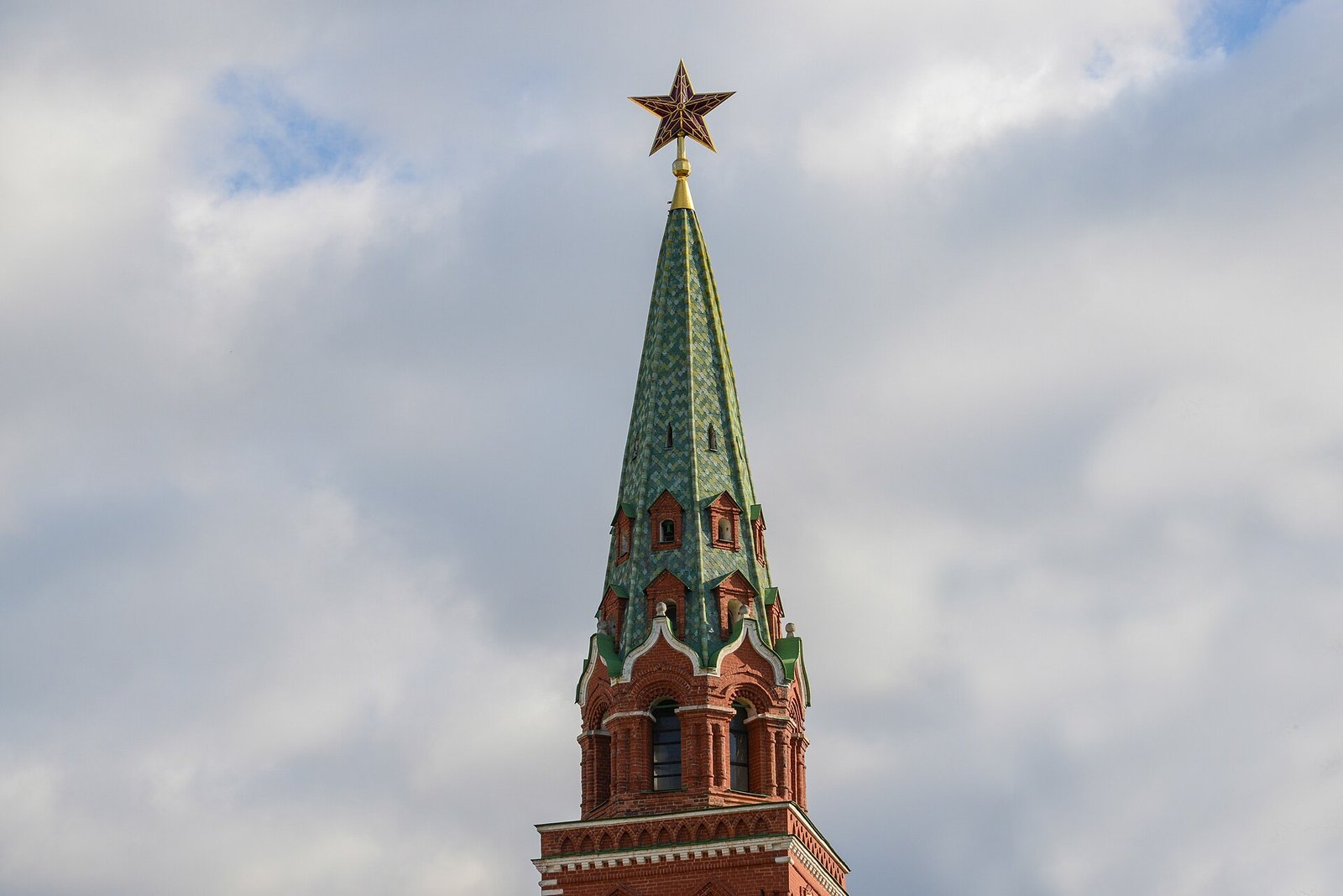
Can the harsh and angry characters of Russian literature also be reflected in a country’s way of governing? The author argues that Russia is trapped in its own vicious circle of Soviet nostalgia.
There is a character profile that appears in almost all the classics of Russian literature. The hero is badly off and tyrannises his household. He is strong, burly and harsh in appearance. Though he has no money, he drinks a great deal, picks fights with those around him and returns home after a beating from the neighbours, this drunken man.
If a portrait has taken such a place in books, films and clichés, it has truly become a characteristic of that region. Certain behaviours can sometimes turn into a national trait and even determine the form of government. As a well-known saying puts it: “You are governed as you are.”
Enough time has passed since the start of the war to make a reasoned analysis. Although we cannot draw a clear conclusion about the outcome, many points look very clear. Whatever the outcome of this war, considering the situation before it began, we can say that the losing side is plainly Russia and Vladimir Putin. In my view, even Putin would wish he could erase all that has happened, go back to the day the operation began and never have launched it. I think this picture will become clearer when we look at what has changed for the parties to the war and in the balance of gains and losses.
Among the parties to the war other than Russia and Ukraine, we can list the US, NATO, Europe, China and Turkey. We can set out some observations and predictions, though not about all of these actors. Although rulers seem to be the most decisive factor in analyses and forecasts about the parties, Covid-19, economic problems and citizens’ attitudes also play an important part.

The Biggest Loser: The Neighbourhood’s Brawling Drunk: Russia
- At a time when the world economy is going through a serious bottleneck because of Covid-19 and shortages of raw materials, a long war is not something any country can support. Even countries such as China and Iran, with which it has ideological and military ties, gave no support beyond press statements and provided no military or financial aid. Its expectations of these countries, with which it has friendships of necessity even if they do not like each other, were also dashed.
- Considering the many factors that affect the outcome, such as intelligence preparation, planning, execution, morale and motivation, trained personnel, management, equipment and logistical support, it must be said that the operation has been quite unsuccessful. Weak management and lack of intelligence in particular brought an air of panic over time. That Ukrainians are among the world’s most willing citizens to fight for their country is not the result of a poll that has emerged today. Even in the best-managed operation against Ukraine, the losses an army exposed to guerrilla warfare would suffer with such weak planning would reach enormous numbers.
- Thanks to years of successful and difficult diplomacy, Russia and its leader Vladimir Putin had won sympathy both in the world and in Europe and had dispelled at least some of the gloomy air of the Soviet Union. Putin and his team, instead of regaining the prestige they had recently lost in Syria, took a darker and more destructive path. This aggressive attitude turned into an antipathy great enough to be directed not only at the Russian state but even at its citizens all over the world. It brought Russia’s opponents together on a common denominator and also proved the necessity of NATO, whose existence it had opposed for years.
- It has begun to face sanctions from almost every country and organisation in the world. Although they are used to sanctions from the past, no country can cope with sanctions like these at this time. There is an effective list of sanctions in almost every field, from economy to politics, from military to defence, from sport to art, from health to food. As these sanctions make citizens’ social and economic lives harder, the already weak support for the operation will over time turn into total opposition and revolt.
The Victim Country: The Drunk’s New Underdog: Ukraine
- Just as Ukraine began to free itself from the influence of the Soviet Union, it found itself in the middle of a conflict this time. Ukraine, which has suffered for years the pain and hardship of being squeezed between East and West, has now become the new arena of the US–Russia confrontation. It is allowed to join neither the EU nor NATO. As if it were not enough that it cannot decide for its own country, it must now fight against an invasion.
- Against an enemy with far superior military power, it is pursuing an honourable and intelligent defence. How much longer it can resist is unknown, but even if Russia’s invasion succeeds, it seems it will go on making its enemy regret it with guerrilla tactics.
- Ukraine, which supplies many of its region’s food needs and some metal resources, has suffered, even in the best outcome, a setback, a loss of labour and destruction that will take years to make good. Even when it enters a recovery phase with support and aid, it will have to come under the sway of countries and organisations expecting privileges and something in return.
The Unlucky Man: Europe, the Innkeeper Tired of Brawls
- Europe, which secures peace and tranquillity in its region with difficulty, is trying to avoid any scenario that would spark conflict. Especially at a time of economic and production difficulties, war means a complete nightmare.
- Everyone knows that wherever there is war, Europe is the final destination of migrants. Since the start of the war, millions of Ukrainians have sought refuge directly in European countries, also because of proximity. Although they must accept the migrants on humanitarian grounds, it is plain that this will place additional burdens on the countries’ economic capacity and strain their administrative structures.
- Although it is not directly responsible for the war, its faults cannot be denied, both in terms of weak diplomacy and of knowingly feeding the monster. Because it has not taken sufficient steps to secure renewable energy and metal products by other means, it finds itself constantly feeding Russia and, however unintentionally, supporting it. It even recently emerged that some European countries had sold it arms.
The Big Winner: The Neighbourhood’s Big Brother, the US
- Since its Civil War, apart from the attack on Pearl Harbor in the Second World War and the 11 September attacks, it has seen no destruction or bloodshed of war on its own soil. It has always entered wars with the ease of “a man whose own home and workplace are not burning”, and with this ease it has generally acted aggressively. In return for this aggressive attitude, it has drawn the antipathy of the whole world. It is obvious that it knew of the attack on Ukraine in advance and was better prepared than Russia. Although it seems more moderate and constructive than its usual behaviour, it may be the only country that wants the war to drag on.
- The US, which will support Ukraine in proportion to how long the war lasts, will of course want something in return for this aid afterwards.
- It will earn large revenues from selling military equipment and weapons to countries that will review their defence needs as a result of this Russian attack. Considering that it has already received many orders, it would not be wrong to say that the big winner is the US.
- Although it already has many bases around the world, countries wary of Russia will gladly open their doors to new US bases and military facilities.
The Loser in Every Case: The Man in the Middle, Turkey
- It is truly remarkable that whatever happens in our region, our country bears the negative consequences. From the conflicts in Syria, Afghanistan and Ukraine, our share has been either refugees or economic hardship. In regions where people do not fight for their own country, we lose soldiers killed and wounded without making any gains. So to speak, the slightest clash anywhere will now be reflected in our country as price rises.
- Turkey, which until recently produced almost every product, is now struggling because of food products that are not coming from Ukraine, and naturally prices are rising. The abandonment of production policies and the lack of support for farmers are making their effects strongly felt.
- Because of flawed politics and the weaknesses of its rulers, no strong stance can be taken against either the US or Russia, so it draws the reaction of all sides.
- Because of its location and the reckless employment of refugees, it has been exposed to a migration burden far above an acceptable level, and continues to be. Because it has no standards for accepting refugees and carries out no checks, it harbours a great many criminal people prone to crime. As the number of migrants has reached a level that will affect the demographic structure, it faces the threat of civil war and conflict in the near future.
- It seems that the armed drones sold to Ukraine will bring more harm than financial income. The fact that every Russian tank hit serves as an advertisement may soon cause hostility from Russia.
This war also has a dimension that looks back to the past. The ambivalent attitudes of the US, Europe and many organisations have once again come to light. When the bloody struggles they waged in Syria, Afghanistan and many parts of the world spread to Europe through Ukraine, they behaved more moderately and calmly. The essence of it is that, in the eyes of some, the blood shed and the lives lost in the Middle East, the Balkans and Africa have been shown not to be valued enough. Could such measures and sanctions not have been taken to stop the bloodshed in Syria, Afghanistan, Bosnia, Kosovo, Azerbaijan, Yemen, Myanmar and many other regions?

In conclusion, Russia, sadly, once again could not escape its characteristic identity and its past. Poisoned and driven by power, it has begun shedding blood again. In the end, the ambition and recklessness of its rulers will put its citizens in a difficult position. He who falls by his own hand may not weep, but the curses of the mothers and children who weep because of him will not go unanswered…
It must also not be forgotten that deposing tsars and making revolutions is also among Russia’s characteristic traits. How much longer the people can withstand the sanctions is unknown, but the rulers should not trust their positions too much either…
Monthly · free
Compass of the Month
PUGAT’s monthly newsletter.
Read next

What is PUGAT? A non-profit community publishing independent analysis from Europe on security, migration and society in Turkish, German and English.
Go to the homepage
