


As the US and NATO withdrew, the Taliban took Kandahar and Herat with almost no resistance. Who is the loser in Afghanistan?
With US and NATO forces beginning to withdraw from Afghanistan, the Taliban forces are advancing with unstoppable momentum. Having taken control of a large part of Afghanistan, the Taliban forces are meeting almost no resistance along their lines of advance.
Afghanistan’s major cities are falling to the Taliban one by one. According to reports from the region, Kandahar and Herat have also fallen to the Taliban. Social media posts say that the Taliban forces, which took Herat without a fight, have captured Ismail Khan (75), the former governor of Herat and warlord known as the “Lion of Herat”.
The presence of the international coalition in Afghanistan, which lasted some 20 years, came to an end with the US and NATO forces’ decision to withdraw. US President Joe Biden announced that US forces would withdraw by August-September 2021.
During this period, although no exact figure can be given, trillions of dollars have been spent and are still being spent. In terms of human resources, more than 2,400 US soldiers, more than 3,800 contractor employees, 66,000 Afghan soldiers and police, more than 1,000 soldiers from NATO and other allied countries, more than 47,000 Afghan civilians and more than 50,000 people from the Taliban and opposition forces lost their lives. These figures do not include deaths caused by disease, lack of access to food, water and infrastructure, and other indirect consequences of the war. There are also tens of thousands of wounded. More than 20,000 US personnel alone were wounded, for example.
In addition, millions of people were driven from their homes, children were orphaned and women widowed. Shortages of the most basic infrastructure, such as electricity, water and sewerage, and streets in ruins can be seen everywhere. Afghanistan is now a country with very few means left to give hope for the future. In short, a vast 20 years, all but unlived, spent in hunger, deprivation, stress, poor living conditions and, for some, the daily fear of death.
In the agreement reached between the Taliban and the US in February 2020, it was decided that US and NATO forces would withdraw. In return, the Taliban and Afghan forces would not allow Al-Qaeda, ISIS and other international terrorist organisations to use Afghanistan to threaten and attack other countries.
*****
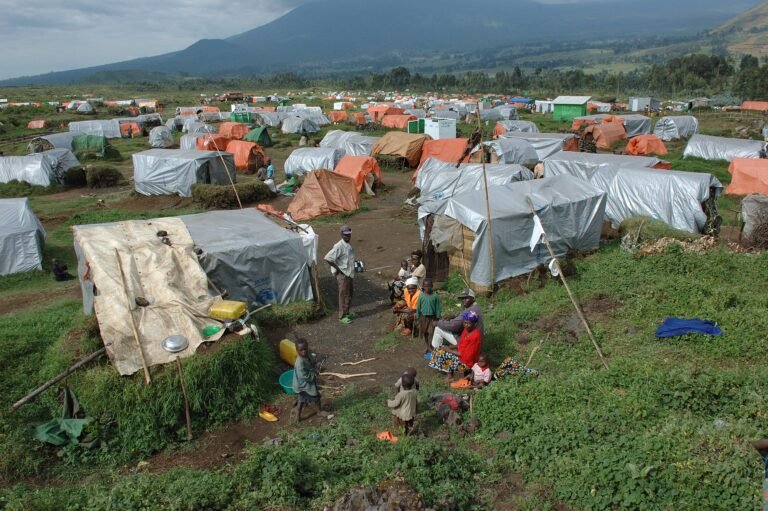
The start of the US and NATO withdrawal from Afghanistan increased the Taliban forces’ self-confidence and gave them a sense that, after twenty years of war, they were finally victorious. The unexpectedly rapid advance of the Taliban forces, acting on this feeling, is causing fear and panic among the Afghan people. This anxiety is greater especially among those who had or still have contact with NATO and US forces and among almost everyone who does not accept Taliban rule. Most of the population, not feeling safe, is leaving the areas where they live. With this new wave of refugees, many Afghan citizens have reached the borders of neighbouring Pakistan and Iran. The ultimate goal of the refugees, who meet their short-term shelter and security needs there, is to reach European countries, which are safer for them, via Turkey, the transit route.
It can hardly be that Western civilisation, which with its policies has for years been teaching the world lessons in social engineering and has been the cradle of almost all sociological and psychological theories, could not foresee that such a social development would follow the war.
*****
Although hundreds of conspiracy theories have been developed about the US’s sudden withdrawal from Afghanistan, what is certain is that this large US force withdrawn from Afghanistan will not remain idle. Given the fact that nature abhors a vacuum, and within the scope of the “Grand Strategy”, we will probably see in the very near future, perhaps within 1-2 years, where and how the US and NATO forces withdrawn from Afghanistan will set sail as their new target. It is also inevitable that this “Grand Strategy” will have effects we can describe as the butterfly effect or the indirect approach.
The most basic question that comes to mind: Could this withdrawal decision not have been postponed until after the coronavirus pandemic?
Nearly 4 million Afghans are expected to leave the country. Has anyone considered these people’s health, the economic and social problems they will face in the countries they go to, and the social and economic burdens and health problems they will carry there?
Europe’s biggest agenda item right now is putting a new lockdown programme into effect with the arrival of the fourth coronavirus wave. Whispers are circulating that this process will last about 9 months. The biggest contribution European Union states will make against the refugee crisis stemming from Afghanistan is to give economic aid to transit countries such as Turkey and thus support the refugees’ sheltering and adaptation to social life in these countries.
Iran, the refugees’ first stop on the way west, has serious economic problems and is directing the refugees who arrive towards Turkey.
In Turkey, the social reactions of a public whose hardship has grown with the country’s economic problems in recent years, especially towards Syrian refugees, are escalating day by day. It is obvious that integrating this new wave of refugees into society and working life will bring new problems. The security dimension of the matter is the subject of another article.
*****
So does Turkey, a transit route for some and an opportunity to start a new life for others, have any plan or foresight for this wave of refugees? Will Turkey, whose economy has deteriorated badly in recent years, be able to provide these refugees with the necessary humanitarian support? No one knows. But the truth is that this wave of refugees will affect Turkey’s economy negatively in the days ahead, and Turkey will once again be left alone on the matter of Afghan refugees.
The countries that went to Afghanistan claiming to bring peace, democracy and the principles of universal human rights left the country behind them with a huge social problem. Although many countries are affected by the refugee problems, the biggest loser of the 20-year war in Afghanistan, and the one that keeps on losing, is the Afghan people themselves.
Monthly · free
Compass of the Month
PUGAT’s monthly newsletter.
Read next

What is PUGAT? A non-profit community publishing independent analysis from Europe on security, migration and society in Turkish, German and English.
Go to the homepage
