

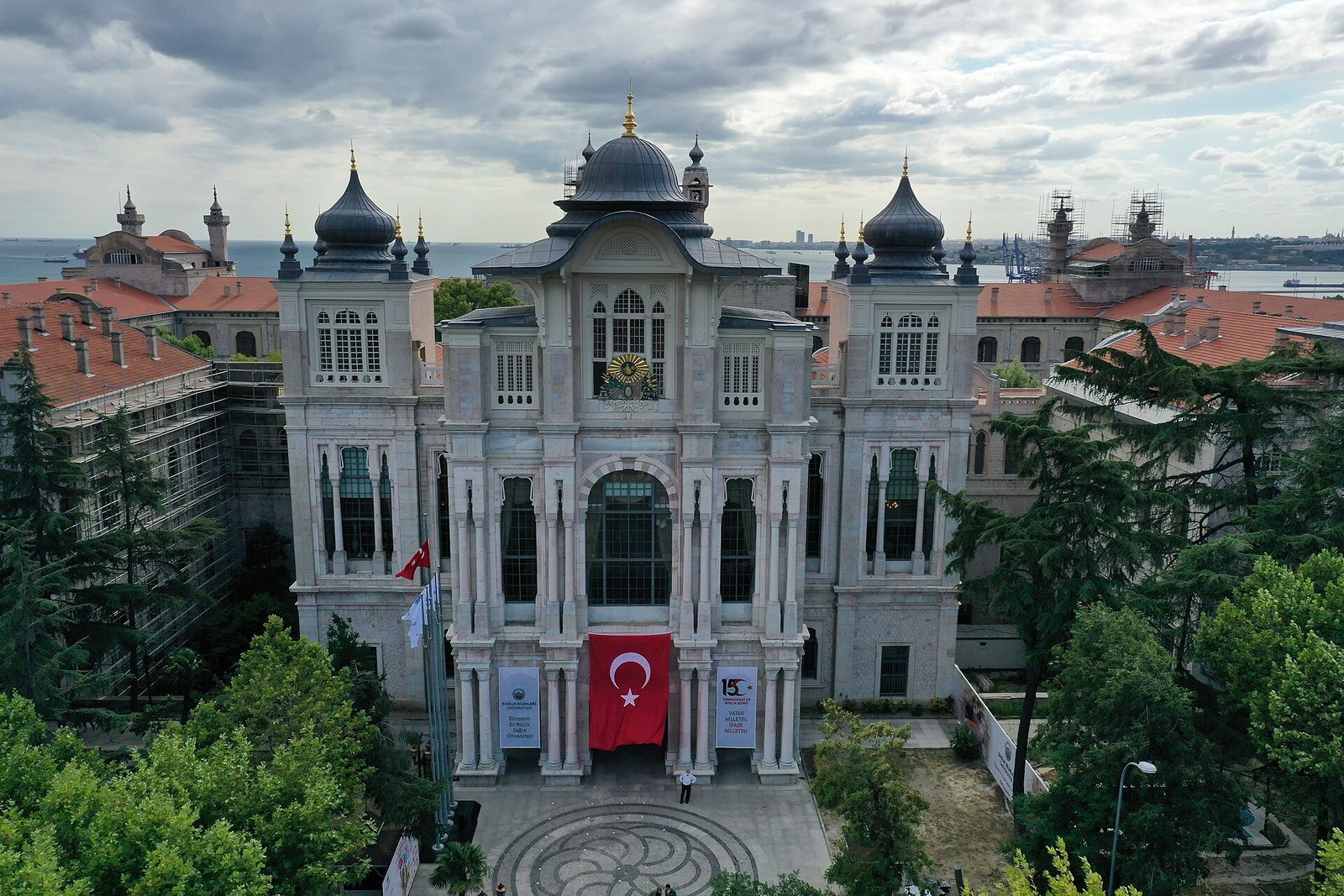
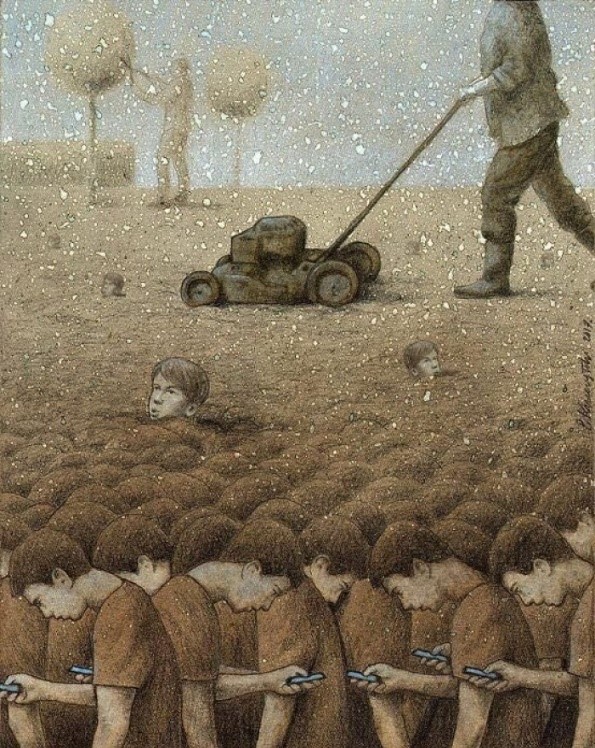
The aim of science is to improve life, but some governments use the social sciences for their own agendas. The first part of the Intellectual Capacity series describes how the individual's intellectual capacity has been mown down.
Improving the quality of life and bettering society are among the aims of science. Yet, as if precisely so that these aims would not be realised, certain politicians and governments, from the past to the present, have abused the social sciences and their methods to suit their own agendas of personal interest. Very often, in order to bring about the desired change in the behaviour and attitudes of the masses and to stay in power, efforts are made to design an ideology with political goals.

The first actor targeted on the road to success is the individuals who make up society. In this series, by examining the efforts of those in power to break down or transform “the individual” and how the individual operates his mechanism of protection and defence, we will discuss certain findings and proposed solutions.
In our previous series we touched on mass communication methods, used as the most effective tool along with technology, and how ill-intentioned actors skilfully turn them into instruments, and we tried to reinforce the state of ‘awareness’ with examples.
Now we will look at the indispensable components of awareness and judgement: ‘education, accumulated knowledge and intellectual capacity’.
In this context, by setting out the minimum equipment that individuals, who in fact carry out a kind of oversight of the country’s administration, should have (or are desired to have), we will also examine what can be done for social development through the individual.
We think that the ground covered on this subject will also allow us to better portray how and why the current government has for years been trying to make society and future generations ignorant.
In fields that require experience or technical knowledge, everyone wants an expert to be in charge. That is, we want the person operating on us to be a competent doctor, the one repairing our car a good mechanic, and the one looking after our child a successful teacher.
In this sense, we also want the civil servants, managers, bureaucrats and politicians who will serve in the institutions and administration of a whole country to be competent in their work.
Before turning to the current situation, it is worth mentioning some concepts. Can we assess whether the candidates placed before us, among whom we are asked to choose, are fit and competent to take office?
What state are our filters for measuring the performance they show in fields such as the economy, education, health and foreign policy if they are elected?
Do we have sufficient intellectual accumulation, education and perspective to carry out these tasks properly?
The question in this context is this: Do elections or changes occur when social demands cross a certain threshold? Or are they dominated by a limited number of intellectuals who awaken this sense of need in society at large?
Another question is this: Do we think enough about how those in power abuse the understanding of democracy at the centre of the paradigm of state government, and practices such as elections? Even the most important criticisms of the philosophers of antiquity concentrated on this subject.

Our Mental Processor and Operating System
Intellectual capacity, the building block of social consciousness, is, to put it in textbook terms, our ability to think in a disciplined way, to learn, to plan and to execute. In a sense it can also be thought of as our processor and operating system.
To understand or explain the concept of intellectual capacity, it will also be useful to take a very brief look at the concept of “vision”. The word vision is of French origin. Its dictionary meanings include sight, appearance and broad, far-sighted view. It is the resultant of the different efforts at development made and the awareness gained over time.
A person cannot choose among things he cannot see and know thoroughly, nor produce sound judgements. He cannot walk properly on a road he cannot see. If he is colour-blind, he sees the rainbow incompletely. In short, those without vision have no mission either. In this context we can say that the backbone of intellectual capacity is formed by personal development, accumulated knowledge and education.
In our next article, we will discuss the concepts of the educated person and education, which the powers that be, suffering from power poisoning, perceive as the greatest obstacle and potential threat to themselves.
Part Two: The Questioning Society and the Government’s Report Card
Monthly · free
Compass of the Month
PUGAT’s monthly newsletter.
Read next

What is PUGAT? A non-profit community publishing independent analysis from Europe on security, migration and society in Turkish, German and English.
Go to the homepage
