

Incompetent rulers find no place for themselves in questioning societies. The second part of the Intellectual Capacity series looks at the questioning society and the government's report card.
Incompetent rulers find no comfortable field of office for themselves in societies that question and do not obey blindly. That is why a body of voters that is well equipped, knows what it wants, draws on different sources and also functions as a mechanism of oversight poses an open threat to those in power who intend to exploit all the country’s resources.
Because if a significant part of society goes through an effective education process, widens the bounds of its judgement, leaps over the high walls of propaganda built with so much effort and makes contact with reality, the social hypnosis may end sooner than planned.
So those with this mentality, as soon as they take office, identify themselves with the legal personality of the country, treat every criticism as a personal attack and harp on about the survival of the country.
The situation is similar in one-man regimes. When there is the irresistible comfort of a system that stays online, there is no point in risking (!) the survival of the nation by educating generations who read, research and open up to the world.
In contrast to these unappealing examples, ideal and modest rulers who truly see their office as a means of serving society, and the duty they perform as public service rather than a sultanate, strive to raise society to their own level because they understand that development is possible only together. They have no policy of making the masses ignorant. Nor do they need one.
This is broadly the picture in societies. So what kind of voters and society does the government in Turkey want beside it? Is it keen for its citizens to receive a good education and become citizens of the world? To answer these questions, we must first listen to what the data say.
Excerpts from the AKP Government’s Report Card
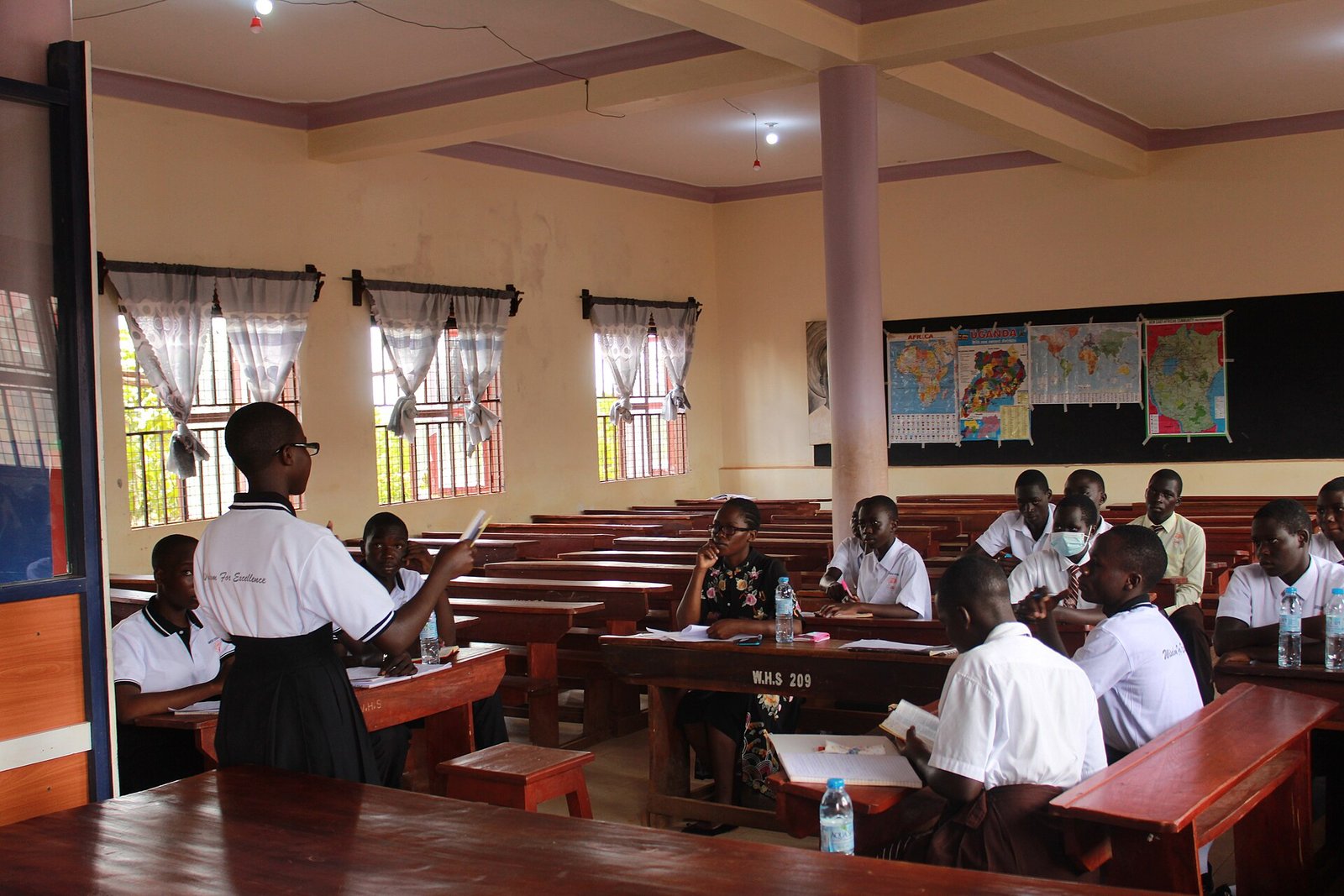
In education, Turkey ranks 101st out of 137 countries in the world education quality ranking published by the World Economic Forum in 2018. It cannot manage to rise out of the percentile occupied by Mozambique, Nicaragua, Tanzania, Ethiopia and Cambodia.
In the ranking that considers the quality of primary education, it is even further behind than in the overall list. In the list where countries are scored from 1 to 7, Turkey, with a score of only 3.1, ranks 105th out of 137 countries. The other countries that scored 3.1 along with Turkey are Guinea, Ethiopia, Bangladesh, Honduras, Georgia and Kuwait.
In the ranking of the world’s top 500 universities, according to Webometrics data, Middle East Technical University appears at 494th place, while Istanbul Technical University could only find a place at 567th. We are looking at a picture that says “you can see for yourself, no need to explain”. What do you think the outputs of this education system, which has died without anyone to mourn it, will be?
In this situation, if you are saying “the ship is taking on water, now we have to jump into the sea”, you still have a lifebuoy. And that is reading, one of the greatest locomotives of our efforts at personal development. The world of thought of people who read deepens (especially through reading in different languages and from different sources), and they begin to understand the cause-and-effect relationship between events better. This trait is in fact another name for questioning. Reading is also the antidote to the manipulation and perception management that populist and Machiavellian politicians so often resort to.
Unfortunately, the data say nothing good on this subject either. According to the data of the United Nations Educational, Scientific and Cultural Organization (UNESCO), of which 195 countries are members, Turkey ranks 86th in the world in its rate of book reading. It is in the same category as poor African countries.
According to TÜİK, the Turkish Statistical Institute, books rank 235th on the list of needs in Turkey. While the world average spent per person on books is 1.3 dollars, in Turkey this figure is a quarter of a dollar.
According to other data in the study, people in the country, who spend an average of 3 hours a day on the internet, devote only 1 minute to reading books. These statistics show clearly, leaving no room for debate, where we stand on reading.
So what do we spend our time on? The answer lies in the table of pride(!) you are about to read. The media monitoring agency Ajans Press carried out a study on television viewing habits in the light of data compiled from the Radio and Television Supreme Council (RTÜK). According to the study, Turkey broke the world record for daily television viewing with 330 minutes. Celebrity news and TV series are the most watched programmes. Oh, and let us not forget the media outlets that, crying “strike up the Mehter band”, present with gusto and a musical backdrop the world’s most impartial and accurate news (!).
“The general population doesn’t know what’s happening, and it doesn’t even know that it doesn’t know.” (Noam Chomsky)
Knowing that TV is so beloved by the national will, those in power will of course not miss this advantage and will use it to the last drop.
The mentality that gives university seats to vice-rectors who can say “As the reading rate rises I get palpitations; I have always trusted an ignorant public” also speaks for the education report card above and the intention behind it.
As far as can be seen, there are serious blockages, at both institutional and individual levels, in the areas where quality information enters people’s minds and behavioural change is brought about.
In the part so far, we have identified some of the pillars that form the mental infrastructure of visionary, intellectual individuals, who are in the position of guarantor in establishing and preserving a healthy social order, and how attempts are being made to destroy them.
(To be continued)
Monthly · free
Compass of the Month
PUGAT’s monthly newsletter.
Read next

What is PUGAT? A non-profit community publishing independent analysis from Europe on security, migration and society in Turkish, German and English.
Go to the homepage
