Will History Repeat Itself and Start a Third World War?
The League of Nations could not preserve peace between the two world wars. The war in Ukraine raises the question of whether the UN will share a similar fate.

Topic
Security policy, counter-terrorism, intelligence and defence in Europe and Turkey, from the individual’s sense of security to the strategies of states.
The League of Nations could not preserve peace between the two world wars. The war in Ukraine raises the question of whether the UN will share a similar fate.
The war in Ukraine has increased the importance of the Middle Corridor, which bypasses Russia in China’s Belt and Road project. This makes Turkey a critical transit country.
Terahertz imaging systems integrated into UAVs promise to detect weapons and explosives from a distance and so distinguish more accurately between the innocent and a threat.
Integrating terahertz imaging into UAVs as a payload could help detect certain concealed weapons and explosives at an earlier stage, within the technology’s limits.
Terahertz waves can image the inside of objects and what lies behind them, with less harm than X-rays. This part explains the basics of the technology and its uses in security.
Since 2016, rhetoric that eases the acquisition of licensed firearms has eroded the principle that the monopoly on violence belongs to the state. Individual armament is turning into a security problem in Turkey.
The terahertz band, lying between microwaves and infrared, can, under suitable measurement conditions, read the “spectral fingerprint” of certain explosives. This part explains the physics of the technology and its fields of application.
Built on human rights and the rule of law, the European Union is being tested by its own values in the face of migration and war. The first part of the Wild West series.
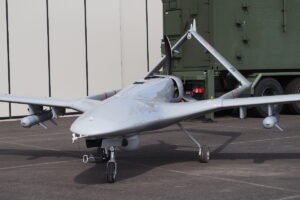
Since the 1990s we have been living in the “age of the UAV”. Unmanned aerial vehicles reduce the asymmetric advantage of terrorist organisations and give security forces the upper hand in intelligence.
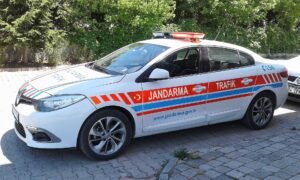
The Gendarmerie Commander’s interview puts the post-15 July counter-terrorism concept of “destroying it at its source” in the spotlight. The author assesses the statements in light of the gendarmerie’s last six years.
Asymmetric threats that exact a heavy price at low cost are among states’ greatest security problems. The first part of the series examines the role of intelligence against these threats.
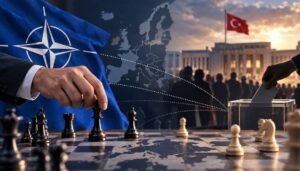
Removal from the F-35 programme and sanctions on critical weapons systems disrupted the modernisation of the Turkish Armed Forces. The author reads Türkiye’s stance on NATO enlargement in the light of these sanctions.
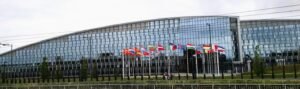
Russia’s invasion of Ukraine brought Sweden and Finland, after decades of neutrality, to NATO’s door. The author reads Ankara’s objection through the lens of domestic politics and electoral calculations.
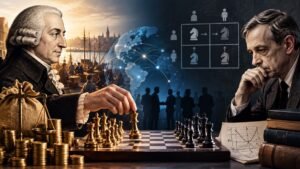
Adam Smith’s individual self-interest and John Nash’s equilibrium are two ideas that have shaped humanity’s fate over the last three centuries. The author reads both approaches through today’s international conflicts.
The KDP and the PKK are two movements born of the idea of an independent Kurdish state whose paths later diverged. Operation Claw-Lock, launched in April 2022, has brought the balance in the Turkey–KDP–PKK triangle back onto the agenda.
Topics
Latest articles