The West’s Eastern Outpost
Membership won with blood shed in Korea, missiles bargained over in the Cuban crisis, embargoes and the S-400. Turkey’s NATO journey is a story of trust and suspicion spanning more than seventy years.

Topic
Security policy, counter-terrorism, intelligence and defence in Europe and Turkey, from the individual’s sense of security to the strategies of states.
Membership won with blood shed in Korea, missiles bargained over in the Cuban crisis, embargoes and the S-400. Turkey’s NATO journey is a story of trust and suspicion spanning more than seventy years.
When the Soviet Union collapsed, NATO lost its enemy. The alliance redefined itself through new missions stretching from the Balkans to Afghanistan and through eastward enlargement, while relations with Russia swung from partnership to confrontation.
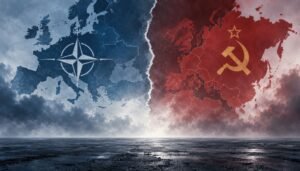
For forty years Europe was divided between two armed blocs, yet the great war never broke out. NATO’s role in the Cold War lies in the logic of deterrence that created this strange balance.
A physicist who carried the secrets of the atomic bomb to Moscow, promises made at Yalta and a city fed from the air for months. Within four years, yesterday’s allies split into two camps and NATO was born.
From the outside the SDF may look like a homogeneous structure, but it is a fragile coalition resting on Arab tribes. At a time when US support is weakening and power has changed hands in Damascus, this alliance is unravelling.
The clash with an ISIS cell in Yalova shook the perception that “the organisation is no longer effective”. Having lost territory, ISIS is in a phase of “strategic patience” with silent, localised cells; the real question is when, and to whose benefit, these cells are set in motion.
Fatih Altaylı’s 1997 interview with Öcalan was published 28 years later. The leader who said “I will not touch Turkey’s borders” turned, on İmralı, into a theorist of stateless democracy: contradiction or strategic evolution?
The Ashkenazi cadre of the newly founded Israel was a stranger to the Arab world. Mizrahi Jews who spoke Arabic as their mother tongue became intelligence’s most valuable resource, but at the price of having their identity instrumentalised.
Druzism is a belief system, but with their strong identity the Druze are perceived almost as a separate people. With influence far beyond their numbers in Lebanon, Syria and Israel, this community holds a critical position in Syria’s new balances.
What happens if the US withdraws from Syria? The article assesses the SDF’s manpower, weapons capacity and ability to resist a possible Turkish operation in a scenario where US protection is lifted.
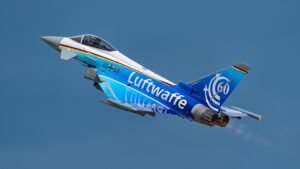
For years Germany kept its distance from selling Eurofighters to Turkey; in the end it gave its approval. The decision points to a pragmatic turn in a European security balance changed by the Russia–Ukraine war.
According to guest author Hakan Güngör, there is a fundamental change in PKK actions: two-person teams, strategic targets in the metropolises and a strategy of fear aimed at an emotional rupture in society.
Founded in 1982 with Iranian support, Hezbollah has become an armed force stronger than the Lebanese army. With its rocket and anti-tank arsenal, guerrilla experience and tunnels, how long can it hold out against Israel?
Shared by eighteen religious communities, Lebanon is economically bankrupt and has hardly a functioning army. How did its sectarian system of government, demographic change and foreign interventions produce this fragility?
On 17 September 2024, Hezbollah’s pagers exploded simultaneously. The incident showed how the global supply chain can become a means of attack and how exposed states are to such risks.
Topics
Latest articles