

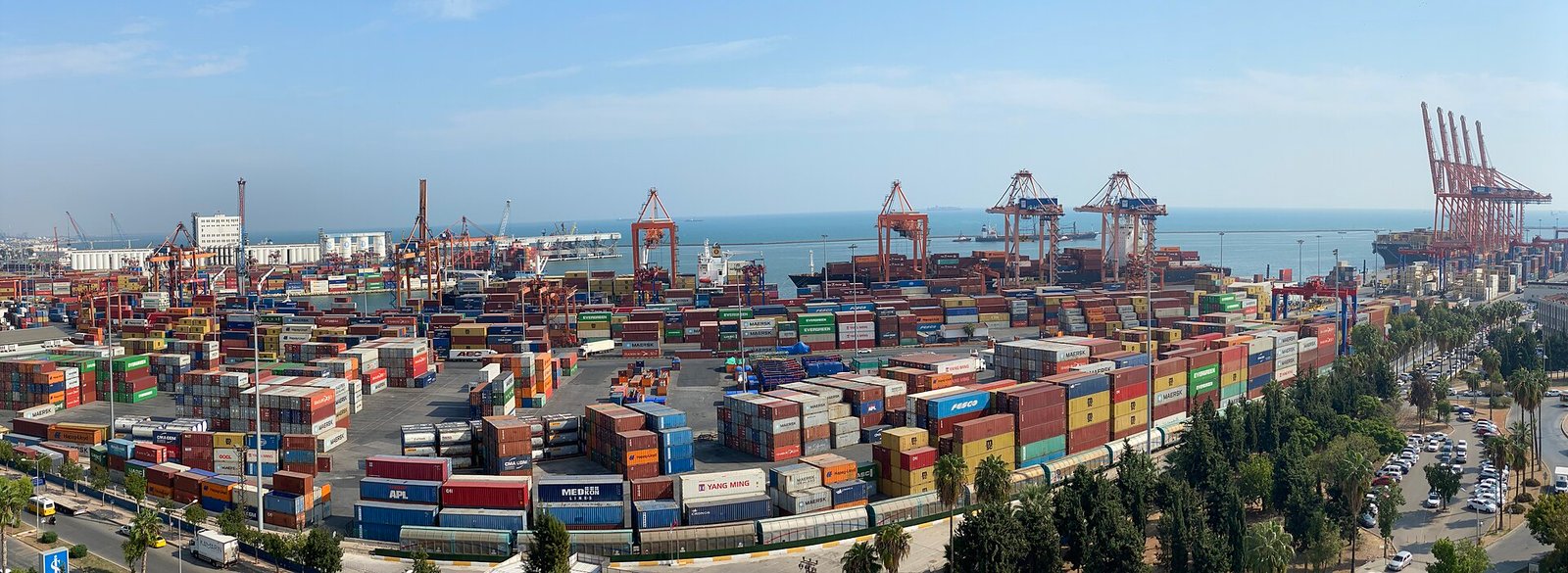
In June 2021, hundreds of kilos of cocaine were seized at Mersin Port six days apart. The author questions the issues behind these mysterious seizures and the relationship between law enforcement and the mafia.
Before this article, I was in fact preparing one on the relationship between law enforcement and the mafia, which has lately taken centre stage in Turkey and does not look likely to drop off the agenda any time soon. When I looked at Twitter to follow Turkey’s agenda, a news item I saw led me to prepare this article first.
I saw a tweet by Trade Minister Mehmet Muş. The tweet read: ‘Last night (the night of 22 June), as a result of the careful work of the Customs Enforcement teams, 463 kg of cocaine was seized.’ For a moment I had déjà vu. Only 6 days earlier, Minister Muş had also announced that 1 tonne of cocaine had been seized at Mersin Port by Customs Enforcement teams. This was the largest amount of cocaine ever seized in Turkey at one time.
As a law enforcement officer, I wholeheartedly congratulate the Customs Enforcement Teams. It is clear that they achieved this success through careful and dedicated work. But what caught my attention is that the drug smugglers had drugs seized a second time in the same week and in the same place. As a result of the experience I gained in my professional life, I want to draw attention to the other side of the coin. In fact, this coin has three sides.
Let us start with this observation: Nowhere in the world is a tonne of cocaine seized by chance. To understand the reasons, it is worth taking a brief look at the drug trafficking traffic in the world.
At the top of international drug trafficking come heroin and cannabis. The main production area of these poisons, which have buyers all over the world, is the region known as the “Golden Crescent” in the Afghanistan-Iran-Pakistan triangle. Turkey, Europe and America are important regions in the shipment chain. There are 3 routes known to be widely used in this drug traffic. These are the Balkan route, which includes Turkey, the northern Black Sea route and the southern route, where sea transport is preferred.
When we look at synthetic drugs, production and shipment are reversed. Because synthetic drugs are produced with the support of technology, they are mostly of Western origin and are shipped from west to east. The market for synthetic drugs is formed, besides Europe, by Turkey and the Middle East. Synthetic drugs routed through Europe and the Balkans are sent first to Turkey, and from Turkey to cities in the Middle East, especially those known for their nightlife.
As for cocaine, South American countries lead its production. Crossing the ocean, cocaine is sent to Europe, the Balkans and Turkey, and then to the Middle East. It has even been much discussed in our country lately with the comparison to “icing sugar”. Let us recall: Nearly 5 tonnes of cocaine seized on 9 June 2020 at the Colombian port of Buenaventura came back onto Turkey’s agenda after Sedat Peker’s statements, and Interior Minister Süleyman Soylu, answering questions on a television programme, defended himself by citing the drugs seized by the police and gendarmerie.
Now to this latest cocaine seizure announced on the Trade Minister’s Twitter account. The law enforcement units of the Interior Ministry were not part of the seizure. Why? As I said at the start, this coin has three sides. The first and best-known side of the coin, and this is usually the case, is that if someone lets you seize a certain amount of drugs somewhere on a tip-off, you know that dozens of times that amount is being moved along another route.
Years ago, in Adana, where I served, my personnel and I dealt with more than a thousand drug trafficking cases. In interviews with the people we caught we learned that the reason drugs are seized every time at the checkpoints the police and gendarmerie routinely monitor is that the smugglers want to prevent the relevant law enforcement units from shifting their attention to other routes. In other words, they are knowingly made to fall for the trick. As long as law enforcement gets results from the existing checkpoints, it concentrates its weight on these points. And the smugglers carry on their business using the new routes and methods they have developed.
The second side of the coin is a kind of PR exercise. Officials in a cornered security bureaucracy say “look, I can seize large quantities of drugs” in order to escape the crimes they have somehow become involved in. The absence of the Interior Ministry’s law enforcement units from this latest operation, whose result the Trade Minister announced himself, suggests that the activity will be limited to seizing the drugs and will turn into a superficial investigation that does not allow examination of to whom and how the seized drugs were coming and going. This points to a serious weakness in the state’s security bureaucracy.
Now to the third side of the coin: The power struggle between ministries.
The Interior Minister himself said recently that tonnes of drugs are smuggled into Turkey every year. We have police and gendarmerie intelligence units attached to the Interior Ministry and organised in 81 provinces. A system has been set up in which the state is managed almost from a single hand in obtaining intelligence and in which all intelligence obtained is gathered, interpreted and processed in an intelligence pool. Law enforcement units (police and gendarmerie) are supported by the judicial authorities in carrying out preventive policing as never before. Almost none of their requests to the judicial authorities are refused; from another point of view, the country has been turned into a complete police state.
Law enforcement units have very important resources in personnel, equipment, technology and information for fighting drug trafficking. That a large quantity of drugs was seized at one time not by law enforcement but through the care and dedication of the Customs Enforcement units is as much a weakness of the Interior Ministry’s law enforcement units as it is a success for the customs officers. It is not acceptable. Besides, the primary duty of the Customs Enforcement Directorates is not to make up for the Interior Ministry’s shortcomings.
There is a very important principle in strategy: “Strategic mistakes cannot be corrected by tactical successes.” Unless law enforcement units, which have many strategic resources, properly fulfil their primary duties, who these seized drugs came from, who they were going to and the network of relations in this traffic will remain hidden. And all that will be left for us is to console ourselves with the numerical size of the few tonnes of drugs seized. Our young people will continue to be poisoned and to have their lives darkened, and the pockets of the drug barons and the politicians they collaborate with will continue to fill.
Monthly · free
Compass of the Month
PUGAT’s monthly newsletter.
Read next


What is PUGAT? A non-profit community publishing independent analysis from Europe on security, migration and society in Turkish, German and English.
Go to the homepage
