

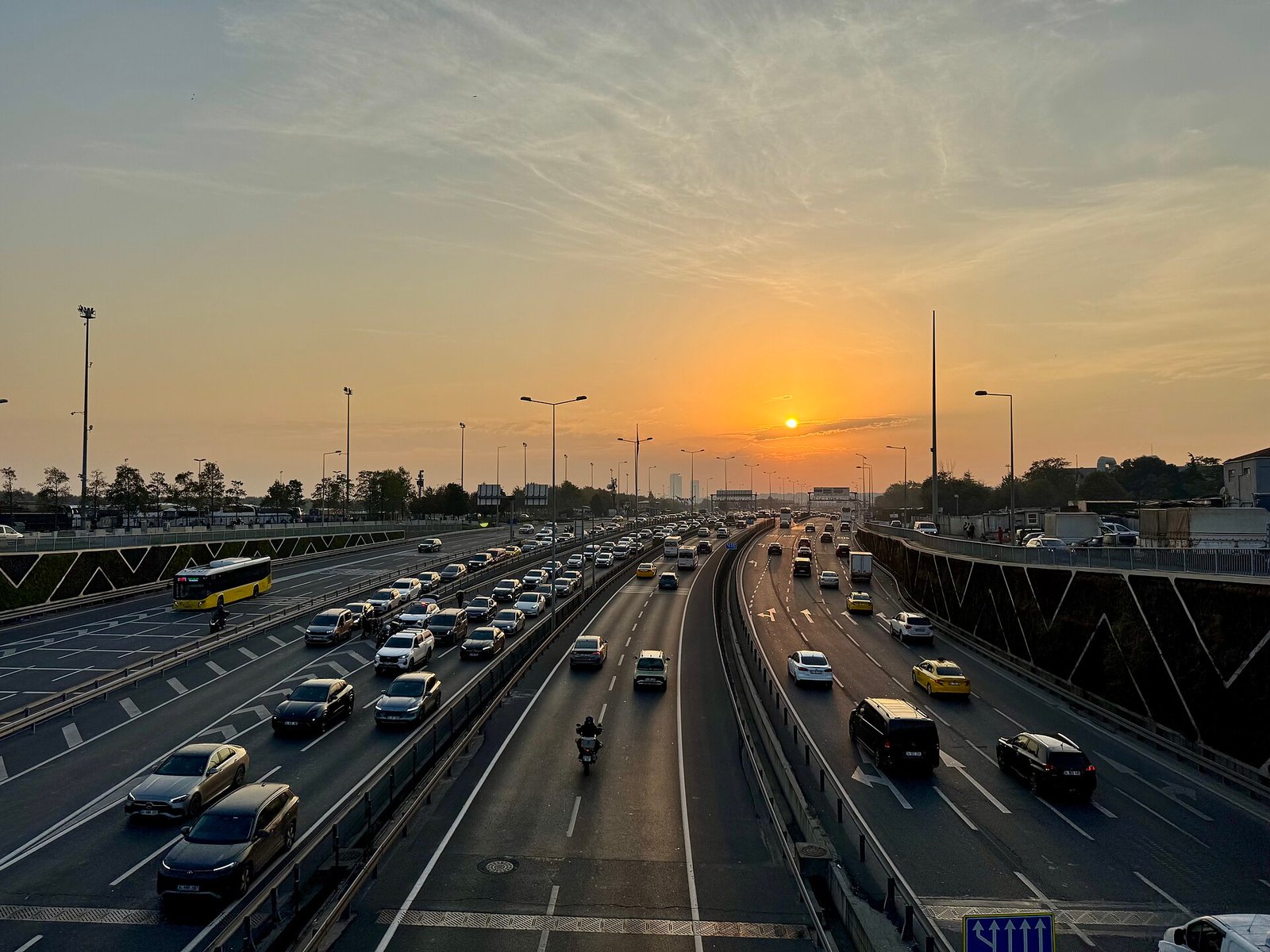
The view of Syria turned overnight from a brotherly country into an enemy one, and millions of Syrian migrants became the most visible result of this policy. Turkey’s migration test is a mirror of its domestic politics.
You will remember the wonderful performances of Kemal Sunal and Metin Akpınar in the film “Propaganda”. It is a comedy-drama telling the story of families divided by newly drawn borders. Empires that ended with the First World War, the new borders that emerged and, with them, new areas of trouble… The separation and reunion of relatives living in Syria and Turkey, divided by the border, feature in news programmes every religious holiday: so many Turks went to Syria, so many Syrians came to our country.

Recently, after forming a circumstantial alliance with the MHP, the AKP has both sharpened its political Islamist rhetoric and practices and begun to pursue far-right policies. Syria has been one of the areas where these policies have become clear. Ever since Hatay joined Turkish territory, many of our citizens have still held the belief that the other side of the border will one day join Turkey as well. They dream that these lands were ours anyway and should be ours again.
Because Syria was for years a haven for PKK terrorism, its leadership is not Sunni and the Kurds in northern Syria want a semi-autonomous administration like the one in northern Iraq, the AKP, also using the nationalist rhetoric it took over from the MHP, suddenly turned Syria, which it had described as a friendly and brotherly country, into an enemy country.
During this period the AKP made contact with the Sunni opposition in Syria, brought them to Turkey and, under the train-and-equip programme, worked to turn these fragmented elements into a regular army by giving them military training and equipment. In the same period, allegations also emerged of contacts with ISIS/Daesh, which had appeared in Iraq and Syria.
To support these policies, it declared Assad an enemy and put into circulation rhetoric showcasing “Turkey’s power”. To strengthen this rhetoric, Erdoğan tried to consolidate his voters with the statement “We will go to Damascus as soon as possible and embrace our brothers there with affection. That day is near. God willing, we will recite the Fatiha at the tomb of Saladin and pray in the Umayyad Mosque.”

The AKP Government and Syrian Migrants
At the time when the AKP was “producing justifications” for going into Syria, I was serving as a plans officer at the General Staff. When events in Syria heated up, I worked in the “National Joint Plans Branch”, which in particular followed developments in Syria and prepared plans. Against the AKP’s propaganda that “we will pray in the Umayyad Mosque” within hours, we informed the Prime Ministry many times in official correspondence that the operation would not be that easy. We saw that time proved us right, but being right could not prevent the wrong political decisions that cost us dozens of fallen soldiers.
The public learned how the Turkish army was dragged into this quagmire from the audio recordings of a meeting at the Foreign Ministry that were published on the internet. In this recording, the then Deputy Chief of the General Staff Yaşar Güler can be heard saying that MİT’s efforts to send weapons and ammunition to anti-government groups in Syria should be supported and that, if instructed, they could have weapons produced by the Mechanical and Chemical Industry Corporation. In the same meeting Güler can also be heard telling Davutoğlu that the TSK was “a tool you need at all times”.
Erdoğan’s chief adviser İlnur Çevik, for his part, stated during a CNN Türk broadcast in 2018 that the government’s real aim in Syria was economic.
As a result of this adventure of Erdoğan’s, which dragged both countries to the brink, millions of refugees lost their homeland and had to migrate to Turkey. According to data from the UN Refugee Agency (UNHCR), in addition to around 3.6 million registered Syrian refugees, there are some 320,000 persons of concern of other nationalities in Turkey. This figure does not include Syrians who have been granted citizenship.
Their use as cheap labour in the economy has led to Syrian refugees being allowed to settle into the labour market in an irregular way. The AKP, which also opposes sending Syrians back for economic reasons, revealed the rationale for this stance through the statement by the AKP’s Özhaseki about the refugees: “They keep industry on its feet; you cannot send them back.” For in worsening economic conditions, solutions are sought to meet employers’ need for cheap workers.

The Turkish People and Syrian Migrants
When the Syrian adventure began, the people of Turkey, influenced also by hospitality propaganda, welcomed the Syrians with good feelings and saw them as a cheap human resource to meet the need for labour.
This migrant population, which at first met the need for cheap labour especially in the construction sector, became concentrated in certain areas and ghettoised as a result of misguided settlement policies.
The influx of Syrian migrants was not managed properly by those in charge, and as a result a large proportion of the newcomers supported one another by settling where their relatives and acquaintances lived.
Over time a large part of the public began to think of profiting from this migration. On the one hand rents were raised, and on the other they were asked to work for low wages. Especially in the construction sector this cheap labour was exploited to the full.
Misguided settlement policies in the cities reached a point that disturbed the local population. As a result, for example, attacks were carried out on Syrians’ homes and workplaces in Altındağ in Ankara.
When economic and social problems emerged and nationalist rhetoric began to rise on the streets as well, the “they are our guests” rhetoric so often voiced at first faded, and Syrians began to close ranks in the areas where they lived. This in turn changed citizens’ initially positive and helpful attitude.
The opportunity for cheap labour that the government offered the public through Syrian refugees gradually ceased to be profitable for citizens and began to become a burden. High rents eventually turned into homes handed back in a ruined state, and cheap labour into rival businesses set up and run by Syrians.
Our people, who did not see the mistakes while earnings were good, suddenly turned against migrants when things went badly.
The Opposition and Syrian Migrants
Looking at the approach of the opposition, with its differing views, to the migrant issue, it can be seen that all the opposition parties approach the matter in Erdoğan’s wake.
The CHP has taken the view that Assad is a leader defending his own country. The argument that the migrants who have come will be sent back to their country as soon as possible is voiced frequently. This creates a “they will sell us out to Assad” mindset among Syrian migrants.
The İYİ Party announced its policy on the migrant issue on 6 September 2022 under the heading “National Migration Doctrine”. In the statement made by İYİ Party chair Meral Akşener under the slogan “Decisive and Planned Return Is Not Far Off”, a plan was presented to return the migrants to their homeland by 1 September 2026.
When talking about the Future Party, its chairman Ahmet Davutoğlu deserves particular mention, because he is one of the main actors in the Syrian migrant problem. For this reason Davutoğlu, in order to better defend his own period, is trying to divide the migration problem in two. Calling the problem regular and irregular migration, Davutoğlu accuses the AKP of bringing irregular migration to Turkey. Davutoğlu, who was more or less the person chiefly responsible for Turkish foreign policy between 2009 and 2016, may have chosen such rhetoric to soften the criticism of his own period, but it is absurd to expect a Syrian whose country has been dragged into war to migrate in an orderly manner. The training of the opposition in Turkey at the start of the problems in Syria, and the alleged support for ISIS/Daesh elements in Syria in terms of weapons, money and fighters also coincide with Davutoğlu’s time as prime minister.
The HDP approaches the issue through the lens of Kurdish identity and pursues a policy defending the self-government rights of the Kurds in the region. Although the HDP has tried to frame its recent rhetoric under the heading of “human rights”, the focal point of its real message is the thesis that this migration was intended to affect the Kurdish population in the region. In 2016, when the Syrian refugee issue was on the rise, Alevi villages in the area reacted to a temporary shelter centre set up in Kahramanmaraş for 25,000 Syrians, and the HDP took the lead in organising this reaction and turning it into protests. The HDP, which at the time opposed the settlement of Syrians in the area on the grounds that it “threatened the Alevi presence”, began in the three years that followed to describe reactions against Syrians as “racist, nationalist and othering”.
The Victory Party produces nationalist rhetoric, both because of the nationalist identity of its chairman Ümit Özdağ and because it is seeking nationalist votes in the coming elections. In line with this, its members repeat at every opportunity that Syrian migrants have no place in Turkey and that they will send these migrants back if they come to power. It should be borne in mind that, as a result of this rhetoric, incidents like the sad events in Altındağ in Ankara may sadly increase.
Whether forced or willing, millions of people living in Syria had to migrate. As someone who has experienced being a migrant myself, I do not believe anyone would gladly want to become a migrant. It is not a fair approach for a country that caused this situation to then complain about this migration. Approaching the migrants who come to the country only in line with political aims will do nothing but have a negative effect on them. What must be done is to create a humane standard of living for these migrants. That is the policy that serves the country. Alongside the approach of the AKP, which bases all its calculations on extending its political life by another term, the approach of the opposition parties is also paving the way for refugees to turn even more towards the AKP. For on one side stand parties that threaten to send them back at every opportunity, and on the other a ruling party that has given them citizenship and provided job opportunities.
(Part 4: Cross-Border Operations in Syria – to be continued)
Monthly · free
Compass of the Month
Once a month: five points from Europe’s security and migration agenda and the month’s PUGAT articles, in your inbox.
Newsletter sign-up opens soon.
Read next


What is PUGAT? A non-profit community publishing independent analysis from Europe on security, migration and society in Turkish, German and English.
Go to the homepage
