


The war in Ukraine has increased the importance of the Middle Corridor, which bypasses Russia in China’s Belt and Road project. This makes Turkey a critical transit country.
The Ukraine–Russia war continues to affect the whole world. The war is increasing the importance of the “Belt and Road Initiative” and thus of the Middle Corridor, which includes Turkey.
While Europe and the US have sided with Ukraine by imposing numerous sanctions on Russia, China took a neutral stance on the war Russia launched against Ukraine and did not formally condemn it. In a statement to this effect, Chinese Foreign Minister Wang Yi once again reiterated that China is neutral on the war in Ukraine. Minister Wang Yi said: “China is not a party to the Ukraine crisis, but we are neither standing by nor adding fuel to the fire; our position will not change, and we insist on dialogue”. He also stated: “The impact of the Ukraine crisis is profound, and all parties should seriously learn lessons from it”.
Seen in the context of the “Belt and Road Initiative” (formerly known as One Belt, One Road), this stance of China becomes even more important for Turkey.
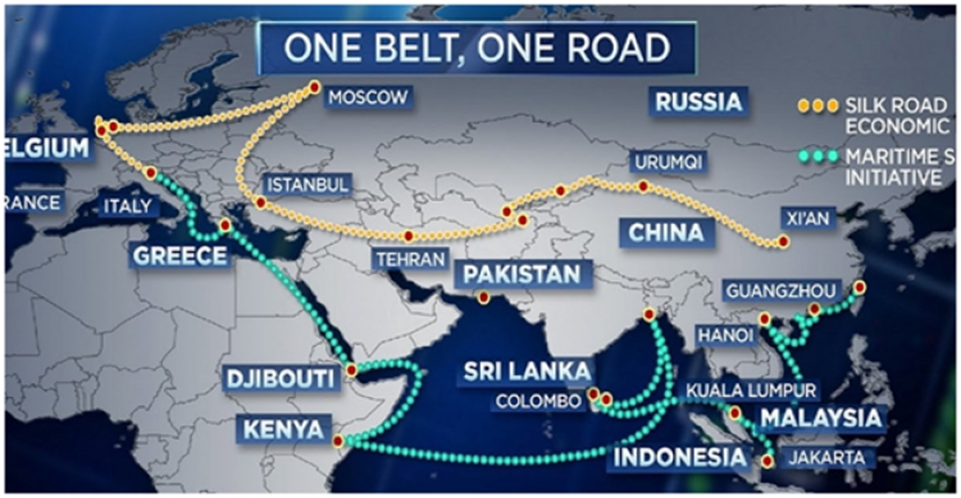
As is well known, China announced this project in 2013, and so far the number of countries that have signed cooperation documents under it has exceeded 140, and the number of international organisations has exceeded 30. China aims at international integration through transport networks, energy networks and telecommunications and presents the project as the project of the century.
The project defines six main economic corridors. The routes covered by the project can be summarised as follows:
- China – Mongolia – Russia
- New Eurasian Land Bridge
- China – Bangladesh – India – Myanmar
- China – Central and West Asia (the route that includes Turkey)
- China – Indochina Peninsula
- China – Pakistan
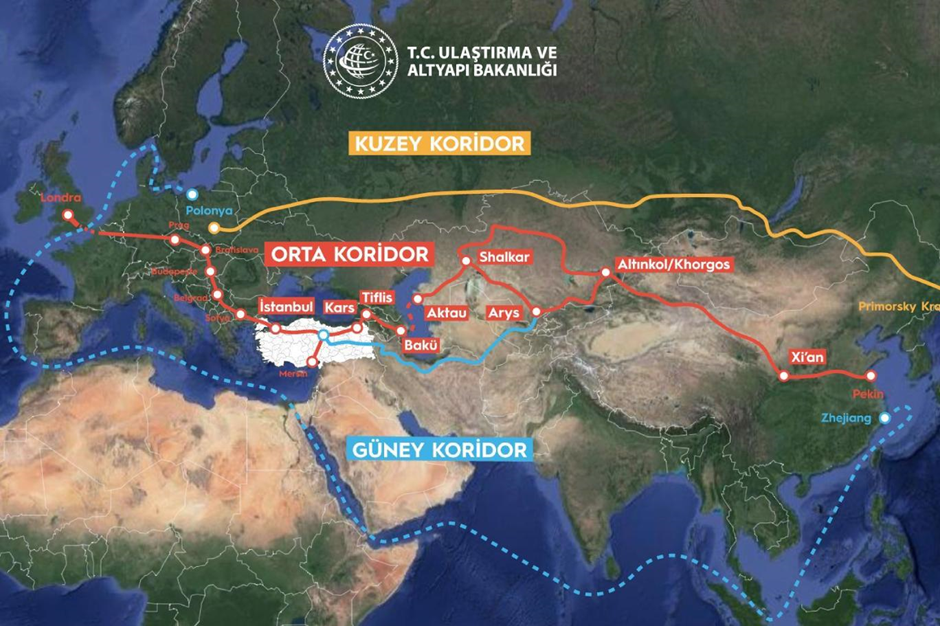
Under the project, the Northern Corridor (which consists largely of railway lines passing through Russia) cannot be used as efficiently as before because of the war. A solution to this problem in the short term is considered unlikely. (The Northern Corridor is shown on the map with a yellow line)
The Southern Corridor, used as a sea route, has not been much favoured until now for specific security and economic reasons. Although the sea route still has a cost advantage, its long transit times and these security problems keep alternative routes on the agenda, especially for shipments where delivery time is decisive. (The sea route, the Southern Corridor, is shown on the map with a dashed blue line.)
Since the war has made the Northern Corridor harder to use and the Southern Corridor cannot meet every need for the reasons explained above, it can be expected that China will try to make the Middle Corridor even more active in the coming period. In this context, China will consider exporting more via the line running from the Central Asian countries across the Caspian Sea to Azerbaijan, Georgia and Turkey. Turkey is one of the key countries on this route. (The Middle Corridor is shown on the map with a red line.)
Turkey’s Place and Importance in the Project
- The trains enter at Kars and reach Istanbul over the existing railway lines in Anatolia, and from there Edirne.
- Turkey is seen as an important partner in the project, both for shortening distances and lowering costs and for increasing interaction between cultures.
- The most critical link of the project in Turkey is the crossing of the Bosphorus. Freight trains currently cross from Asia to Europe through the Marmaray tunnel; the Yavuz Sultan Selim Bridge was designed to carry rail traffic, but the bridge’s railway connection has not yet been completed. Once the bridge’s railway connection is completed, Istanbul’s freight capacity between Asia and Europe is expected to increase considerably.
- Under the project, Turkey and China are becoming two countries that complement each other in economic, cultural, security, logistical and geopolitical terms.
China’s Concerns about Turkey
The shortage of experts and staff who know Chinese in Turkey, and Turkish in China, leads to an insufficient flow of information about the project between the two countries and prevents the project’s targets from being reached.
Turkey’s direct involvement in regional events because of its geopolitical priorities causes China to keep its distance from Turkey.
In China’s view, although Turkey is a relatively politically stable country, it is very difficult for it to stay out of the great turmoil of the Middle East next door. The current Syrian crisis, the unrest in Iraq and the situation of ISIS in the region seriously threaten the security of both the region and Turkey. The fact that one of the routes of the “Belt and Road” project will pass through troubled countries in the Middle East and through Turkey exposes China to geostrategic risk.
Points Turkey Should Watch
At present Turkey is far from the improvements and infrastructure investments it needs to make for the project. For example, it is far behind the 25,000 km railway network that was supposed to be completed by the end of 2023. The Çandarlı Port project is still not at the desired level.
As a partner on the Middle Corridor, Turkey could seize the opportunity to become a very important partner for China in the future if it fulfils its obligations. But this also brings some risks. For instance:
- The fact that cheap Chinese goods become quickly and easily available in Turkey may harm Turkey’s SMEs and industrialists.
- Welcoming China without setting out rules to protect Turkish industry may leave the Turkish economy open to invasion by the Chinese economy.
- China’s policy of gaining political advantage through debt diplomacy requires the project to be considered together with foreign policy.
Conclusion
With smart political and economic steps during the crisis, Turkey can both help other countries in the world suffer less economic damage from the war and become an important power in the region by consolidating a strategic partnership with China.
The most important point Turkey must not overlook in the steps it takes under the project is that it should not use this opportunity as material for elections and domestic politics with concepts such as “Islamic Unity” or “Turkic Brotherhood”. Instead, it should strengthen cooperation with the countries of the region (for example Greece) (such as technical and administrative arrangements to facilitate transport, transit and customs procedures).
Monthly · free
Compass of the Month
PUGAT’s monthly newsletter.
Read next


What is PUGAT? A non-profit community publishing independent analysis from Europe on security, migration and society in Turkish, German and English.
Go to the homepage
