

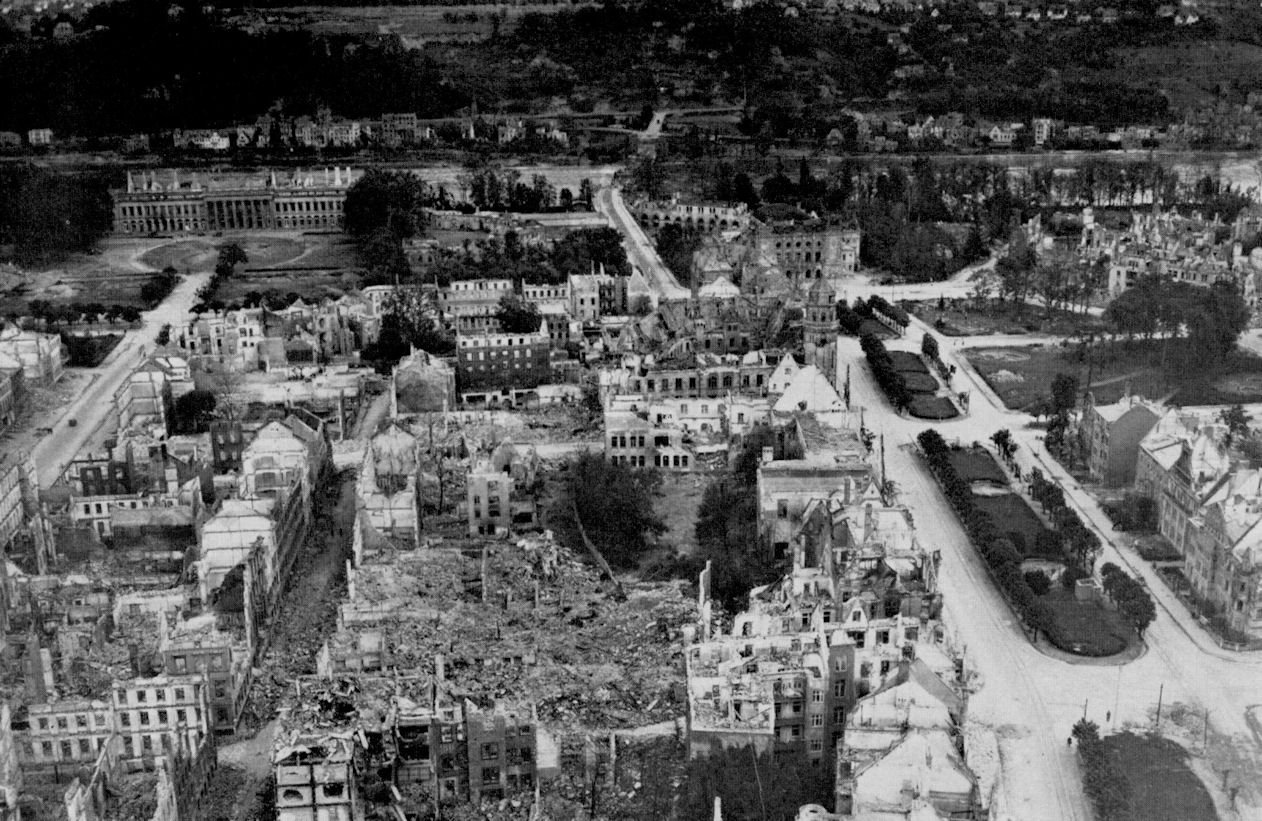
How meaningful is it to talk about terror and terrorists the morning after a night of massacre in Gaza? On the point where words and humanity end in the face of images of children’s bodies.
Gaza’s Heart-Rending Story
On the morning after a night on which Israel carried out a massacre in Gaza with air strikes, I do not know how meaningful it is to go on a round of reflections on the questions of what terror is and who a terrorist is. Images of torn children’s bodies are everywhere on social media. The screams of mothers drowning in tears ring in our ears. In a helplessness that leaves us unable to act, there is nothing we can do but cry out that we stand with the innocent and the oppressed. The world that claims to be civilised, having lost its conscience and its sense of mercy, has struck the concepts of ceasefire, negotiation, dialogue and diplomacy from its vocabulary. Where there is no conscience and no mercy, the boundaries of the fight against terror are shot full of holes.
We all knew that interests come first in international relations. But we did not know that these interests would be valued far above human life, that massacres and genocides could be approved with eyes closed even in the halls of the UN. We suspected it, but we pretended not to know.
We should note that every state that, before the eyes of the whole world, openly supports the mindset that sanctions the massacre and destruction of masses that include civilian, unarmed, innocent people, or that stands at attention saying “I abstain”, bears responsibility for the murder committed.
The speeches we will hear tomorrow or the day after about the ethical dimension of the fight against terror, the addresses on the sanctity of human life, will mean nothing. Climbing onto the pile of rubble left from a scene of savagery in which the nations’ respected social scientists could not intervene and shouting “Down with Zionism, down with imperialism, murderer Israel” has no meaning in the face of torn bodies and mothers’ wails that find no echo in the sky.
The bitter bill is now in front of us for people who believe in the same God, live on the same land and breathe the same air, whom fate has driven to live together and who have no intention of giving that up, who differ in nothing but belonging to different religions, yet who have been unable to restrain the murder networks within them. If Hamas had stood beside the level-headed Palestinian people and with their support, if certain ruthless and radical Israeli leaders had truly looked after the interests of the peace-loving Israeli people (there is no need to turn the calendar far back), what has happened since 7 October would not have happened. So many innocent people on both sides would not have lost their lives. Cities would not have been razed to the ground.
Civilisations are built over very many years. Yet, quite the opposite, they can be razed in a very short time, for example with a few long-range missiles or a short air operation. Now many politicians and statesmen will stamp on the rubble piled up in Israel and Gaza, seek to reap political gain from the trauma out of ideological or ignorant heedlessness, give nationalist speeches and stir up the people. They will turn the murders committed by the killers within a community into an object of hatred against that whole community. They will declare one side the victim and the other the murderer. They will label some as innocent and others as terrorists. This will happen in Turkey too, and in other countries.
What do concepts such as terror, terrorist, innocent, oppressed and murderer mean to society? Does everyone understand the same thing by them? I do not think so. But when the jingoism of orators meets the partisanship of the masses, it is very easy to mobilise crowds around a feeling or an idea. Declaring some people terrorists, murderers, butchers and others innocent, oppressed, martyrs rests on fairly simple verbal acrobatics.
In the face of torn bodies and mothers’ wails that find no echo on the international stage, we are at a time when words fail to describe the pain we feel. Even so, in order to understand such tragedies properly, to gain objective perspectives and, when necessary, to offer a way out, we must understand the concepts and historical processes underlying such events.
*****
The concepts of terror, terrorism and terrorist have moved to the centre of world politics, especially over the last century. But their meaning differs from region to region and from state to state. This points to the subjectivity and relativity of the concept of terror. Likewise, while one state or international community defines an act as terror, another state or community interprets it differently, for example as a struggle for rights.
This also brings with it an argument that there is no objective “right” or “wrong” in international relations. Just as in the Israel-Gaza question, before reaching a clear judgement on any issue, the event must be examined thoroughly in all its aspects.
Now, in this context, let us outline the evolution of terrorism over the last century and the historical course of the concept. But in our next article…
Monthly · free
Compass of the Month
Once a month: five points from Europe’s security and migration agenda and the month’s PUGAT articles, in your inbox.
Newsletter sign-up opens soon.
Read next


What is PUGAT? A non-profit community publishing independent analysis from Europe on security, migration and society in Turkish, German and English.
Go to the homepage
