

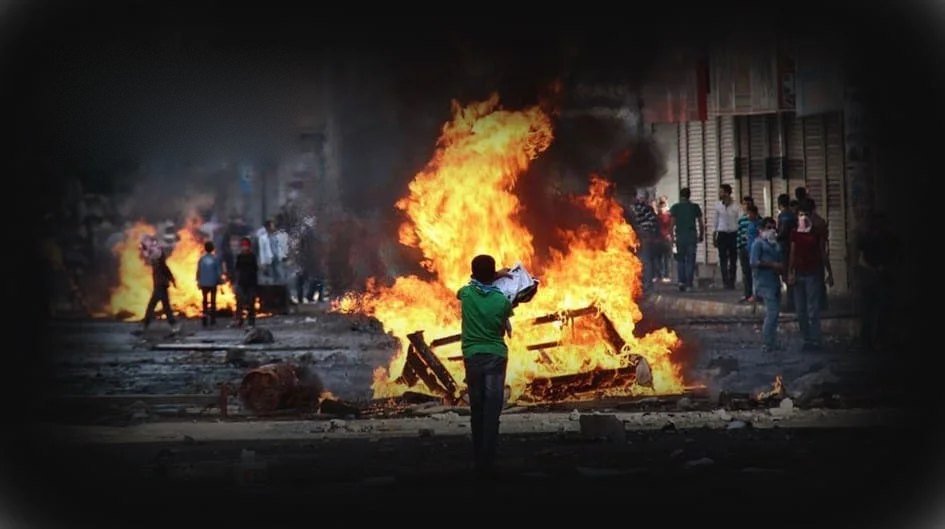
After the trench operations, the government’s answer to the Kurdish question was TOKİ housing and trustees. The author comments on the impasse in which, although the people chose the HDP at the ballot box, the PKK’s guns remained decisive.
The AKP government thought it could cover up the trauma the Kurds experienced after the trench operations with high-rise TOKİ housing. Even a roadmap for solving the Kurdish question was ready: in addition to increased security measures, appointing trustees in place of HDP mayors. And thereby strengthening the Kurds’ ties to the state… An approach that falls apart wherever you take hold of it.
In the past, people who were executed were left on the gallows for months as an example to all. According to what I last heard, several buildings bearing the marks of the clashes in the operation area were also left as they were, as a lesson. This example alone shows that the political power promises the people of the region nothing but the stick. At this point, writing an answer to the question “What should the state do?” is also meaningless. Everyone knows what needs to be done, but those who feed on this strange system have no intention of implementing the remedies.
As for the Kurds…
Unfortunately, during the trench operations, the Kurds were unable to come together and voice collectively the criticisms they expressed individually. Within the HDP there were politicians who sensed the base’s discomfort, but their voices were either faint or suppressed. In this context, it can be said that there are similarities between an ordinary citizen’s approach to the state and the HDP base’s approach to the PKK.
I call this a disease of sanctification rooted in fear. Let no one now come out and say, “So you put the state and the PKK in the same basket!” No, I do not put them in the same basket. I am only trying to identify a social reality. My aim is to find a convincing answer to why the HDP, which reached the highest vote share in its history and in places even received votes from non-Kurdish voters, could not stand up to the PKK, and to question why it left the millions of voters who voted for it halfway.
For example, why, after the Kobani protests of 6–7 October 2014, when the PKK began to dictate that the people were ready for ‘Serhildan’ (uprising), could they not say: “What are you saying! The people trusted us and voted for us. Besides, a solution process, however symbolic, is going on. Where did an armed popular uprising come from?” The date when violence moved into the cities was right after the 7 June 2015 elections, when Kurdish politics was politically stronger.
So why did the PKK take this path at such a time?
During the operations some neighbourhoods were wiped off the map. People died. Yes, what happened involves suffering that words cannot describe, but one thing must not be missed. The operations were a “result”. The PKK’s build-up and the methods applied by the TSK were brought to the fore, and the actors in the background on both sides who caused these problems were screened off.
It can be said that the same tactics of screening and stalling are at work today. Why did those who criticise the state’s intervention as disproportionate not act after what happened in Cizre, before the operations began in central Şırnak and Nusaybin? They had about two months. They could not say to the PKK militants in Şırnak and Nusaybin: “End this, the people are suffering, people are dying, we are in a strong political position, armed struggle is blocking civilian politics.”
It is obvious that special effort has been made to ensure the questions I raised above are not asked among the HDP base. Why can we never read detailed critical analyses on these issues from dissident Kurdish journalists?
Understanding the HDP Base
As a public servant working in the region before and after the process, I made a special effort to understand the HDP base. I spoke with many Kurdish citizens, local administrators and public servants. I understood that the PKK’s plan was simple: trenches would be dug, barricades set up and the people would “rise up”. But the people did not act according to the PKK’s plan. The great majority of Kurds who in some way had an emotional bond with the PKK responded negatively to the organisation’s call for an uprising.
So why?
Although some attribute the fact that not all Kurds took the stance the PKK wanted to fear of the state, I do not think exactly so. In my view the real reason is this: during the opening period the Kurds had the opportunity to observe closely the armed mountain cadres and the armed teenagers linked to them. This was precisely the period when the PKK lost its persuasiveness. I know personally that many HDP members did not approve of what the PKK members did in the neighbourhoods during the trench process.
In this context, the first thing that comes to my mind is these words of Fırat Anlı, co-mayor of Diyarbakır Metropolitan Municipality: “Not all people defended the barricades or said the trenches were very good. There is no such mood. Many people criticised it. In Diyarbakır we received 78 per cent of the vote and 10 of the 11 MPs. We could have pursued our struggle by democratic means and achieved results.” This statement was very important.
The looting of a neighbourhood school by PKK militants or by untrained teenagers of the YPS (Kurdish: Yekîneyên Parastina Sîvîl / Civil Defence Units) meant nothing positive to the HDP-member teacher who taught at that school.
Kurdish Shopkeepers
Which shopkeeper wants a barricade set up in front of his shop and armed teenagers clashing with the police there? The Kurdish shopkeeper who did not want barricades and IEDs laid and who also keeps his distance from the state says: “We can’t say anything; they’ve given guns to the neighbourhood thug. If he pulls the trigger, will the police save me?” This remark was important in showing where the cadre defying the state and set to light the first fuse of a popular uprising stood in the eyes of the neighbourhood.
Let me open a parenthesis and say this too. The Kurdish shopkeeper was very saddened when the young man he called “the neighbourhood thug” lost his life during the operation. But this time his sadness was different from before, because this time he blamed not only the state but also the PKK.
To get to the point.
I am a former soldier, and a significant part of my professional life was spent in counter-terrorism duties. I am among those who think it is impossible to solve the Kurdish question by force of arms. Nor can I help thinking that at every opportunity to approach a solution, these efforts were sabotaged by people within the PKK and within the state, practically putting their heads together. I hope I am wrong for having used the word “state” in this sentence.
Monthly · free
Compass of the Month
PUGAT’s monthly newsletter.
Read next

What is PUGAT? A non-profit community publishing independent analysis from Europe on security, migration and society in Turkish, German and English.
Go to the homepage
