

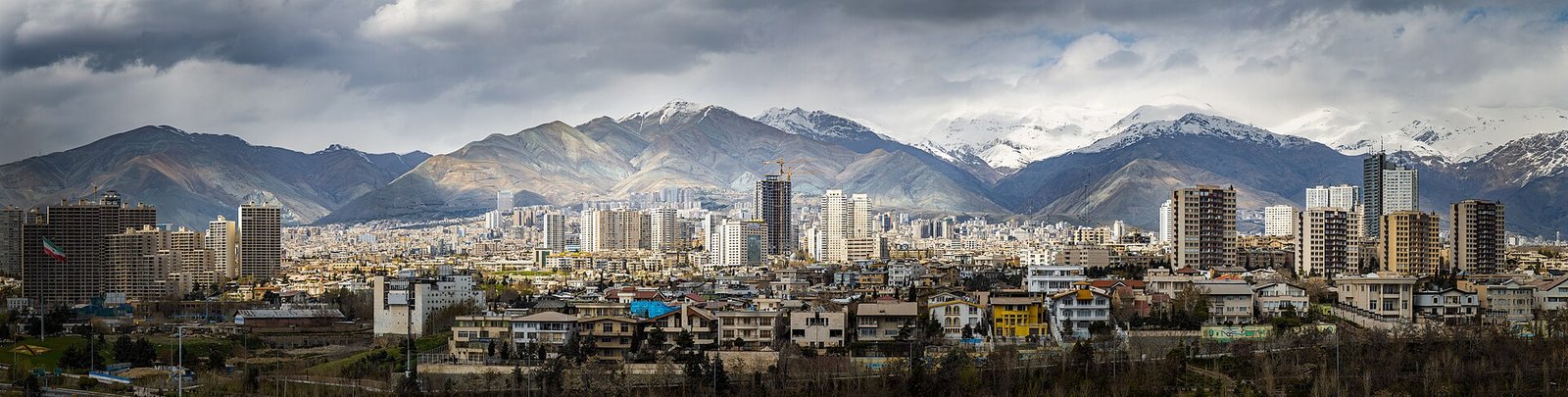
The trilateral summit in Tehran laid bare the rapprochement between Russia and Iran, both under Western sanctions. Our authors assessed the summit’s regional and global effects.
How can we assess the effects of the summit’s decisions on the world agenda, country by country and leader by leader?
In our Q&A section this week, our authors assessed last week’s Iran summit from the perspective of the countries at the table and those with interests in the region even though they were not at the table.
Abdullah Bağcı:
Although the summit was trilateral, the fact that media outlets in the world press without a particular interest in Turkey perceived it simply as an Iran–Russia meeting is, I think, enough to show how important the summit was for Russia.
In the eyes of Westerners and anti-Westerners alike, the summit is a new step towards forming what Russian MP Yevgeny G. Popov called an “axis of good”, in contrast to Bush’s label “axis of evil”. Some see this rapprochement less as an alliance than as a mere overlap of interests in times of crisis, but isn’t the overlap of interests what lies at the root of every alliance anyway?
At a time when their common enemy, the West, is imposing sanctions on both countries, it is entirely normal and likely that this rapprochement will grow and perhaps turn into an alliance in the future. The 40-billion-dollar bilateral agreement, which includes Russian investment in Iran’s energy sector, is the clearest sign of this.
In parallel with all this, although it was not mentioned in the press statements, the issue Sullivan announced, that “Iran will send Russia hundreds of armed and unarmed drones for use in Ukraine”, was presumably clarified further at this meeting.
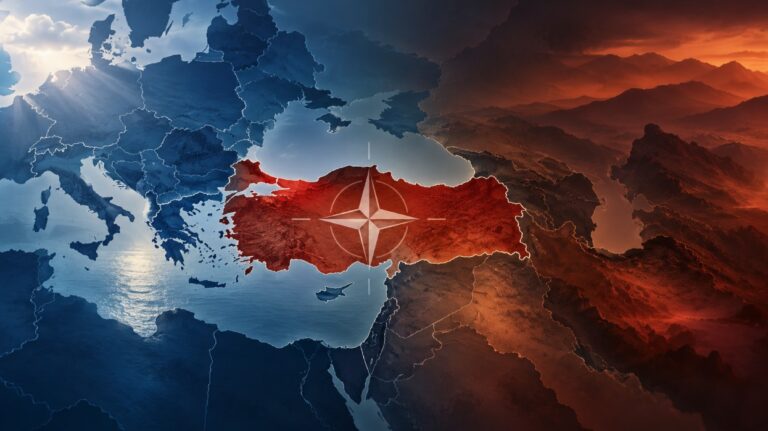
On the other hand, the fact that Turkey, a troublesome member within NATO, is part of this basically anti-NATO formation is of course a joint success for Russia and Iran. It can be expected that these rapprochements, “successful” from their point of view, will continue and grow with more participants.
Orhan Turan:
It can be said that after the Tehran Summit, whose main agenda was Syria, Iran generally tried to maintain its own position and adopted a balancing stance.
Indeed, Iranian officials’ messages on the balancing role of the Astana process, their warnings that any Turkish operation in Syria would harm stability in the region, their emphasis that they maintain their positions on agenda items such as reaffirming their country’s stance on nuclear energy, and their reluctance to make any statement beyond general policy confirm this view.
This profile drawn by Iran is consistent with its preference for keeping a low profile, conveying its messages through social media accounts and state television rather than stating them directly.
From the attitude of President Raisi and other Iranian state officials, we can conclude that they favour Syria’s territorial integrity, believe that Syria’s future should be shaped by the Syrian people without foreign intervention, and oppose the presence or possible interventions of the US and Israel in Syria.
Salih Durmuş:
Actors outside the table generally assessed the Tehran summit as follows:
- that Putin aims to improve his increasingly isolated position against the West through countries with which he can find various kinds of common ground;
- that Iran is striving, in line with current developments, to keep up its reflex of joining powerful blocs against its entrenched hostility towards America and of at least being a regional power;
- that Russia and Iran are seeking various ways to soften the effects of the sanctions imposed on them;
- and that Turkey is trying to take advantage of Putin’s difficult position to increase its influence, repair its image and obtain the approval of Russia, which controls the airspace of the region, for the military operation it plans in northern Syria.
But it should not be forgotten that Putin’s image in Western countries is currently very grave. In short, he is seen as a dictator and an anachronistic leader responsible for human suffering. It is therefore natural that any initiative involving Putin draws a very harsh reaction from Western countries from the outset. In this context, the German newspaper Bild ran the summit on its front page as a “meeting of despots”, and German Foreign Minister Baerbock described the presence of a NATO member’s leader in this photograph as a “challenge”: two messages reflected from the Western world.
Meanwhile Israel, another actor in the region, by continuing to bomb Syrian territory from the air, clearly signalled that for its part it was paying no attention to the decisions taken at this summit.
Monthly · free
Compass of the Month
PUGAT’s monthly newsletter.
Read next


What is PUGAT? A non-profit community publishing independent analysis from Europe on security, migration and society in Turkish, German and English.
Go to the homepage
