

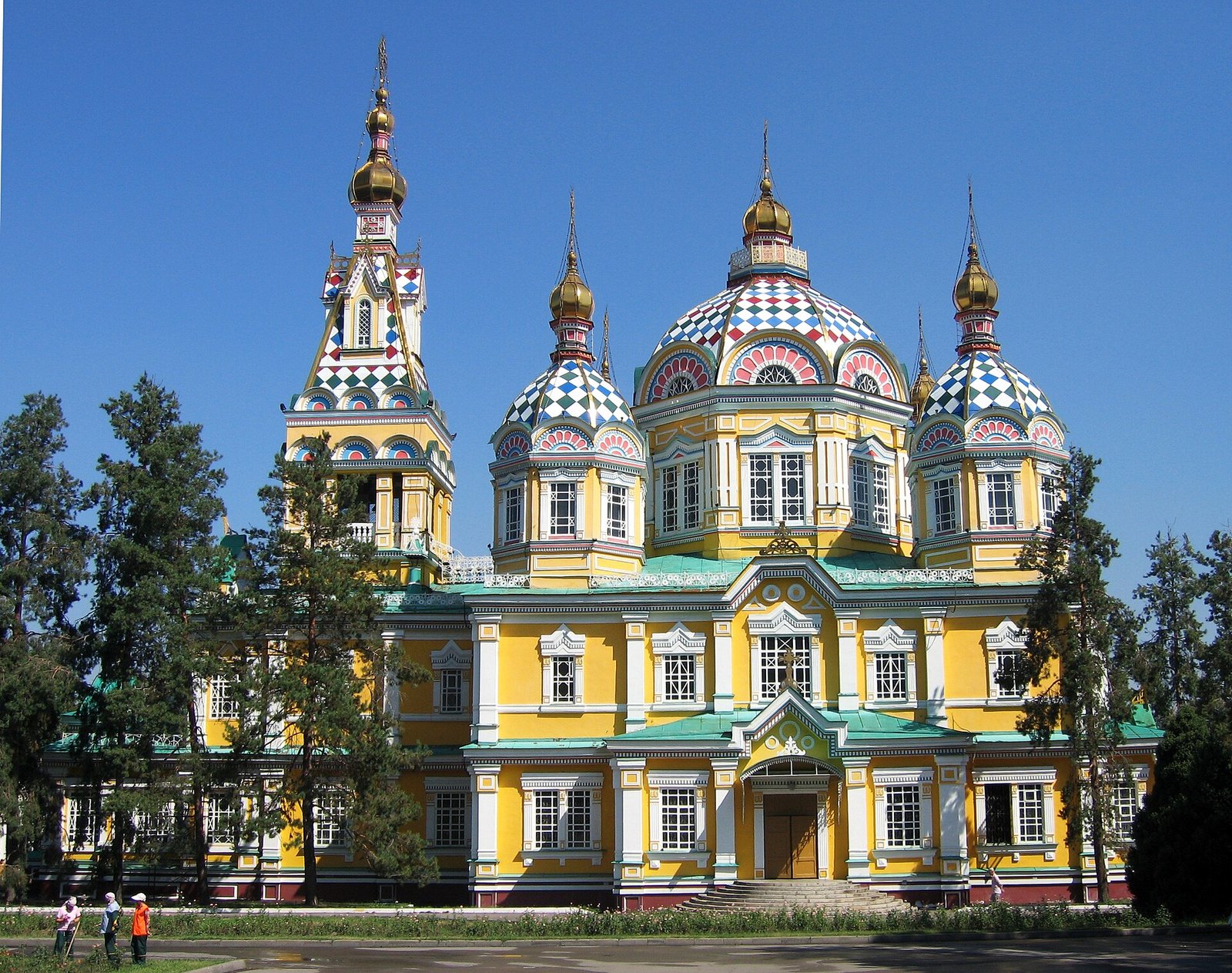
In January 2022 the protests in Kazakhstan were suppressed through the intervention of the Russian-led military alliance. The article traces the path from the Nazarbayev era to this crisis and Russia’s move in the region.
PUGAT News Analysis / Mehmet Kılıçparlar
Kazakhstan declared its independence on 16 December 1991 as the Soviet Union entered the process of dissolution. Ten days later the Soviet Union was officially dissolved. At that time Nursultan Nazarbayev was at the head of the country.
Nazarbayev, who had been president in the communist era, continued to sit in this seat after Kazakhstan gained independence. With this choice, Kazakhstan had perhaps buttoned the first button of the shirt wrong.

The Nursultan Nazarbayev Era
Before becoming president, Nazarbayev served as prime minister from 1984 to 1989. During Nazarbayev’s presidency, Kazakhstan maintained its political and economic relations with Russia while becoming the state that established the closest relations with the West among the former Soviet countries.
During his time in office he made economic breakthroughs. He won the presidential election five times. These elections and their results were not judged transparent and credible by independent organisations.
Like China’s 2030 Strategy and Türkiye’s 2023 Strategy, the kind of long-term planning despotic governments frequently use for perception management, Nazarbayev too announced his “Kazakhstan 2050 Strategy” in December 2012.
Allegations of corruption about Nazarbayev were always talked about. In 2007 he changed the Kazakh Constitution, which allowed a person to run for head of state twice in a row. The term of office was reduced from seven years to five. In 1997, he had also made Astana the capital instead of Almaty.
In 2019, Nazarbayev resigned to head off anti-government protests. This, too, was one of Nazarbayev’s moves to keep his ideas in power.
After his resignation, Russia announced that “Nazarbayev had spoken with Putin before resigning and told Putin that he would resign”. In other words, he resigned either with Putin’s permission or at Putin’s direction. After 28 years in power, he left a Kazakhstan far removed from democracy to Kassym-Jomart Tokayev, whom he had chosen as his successor.
The Tokayev Era
During his presidency of about three years, Kassym-Jomart Tokayev remained in Nazarbayev’s shadow. He expressed his first thanks to Nazarbayev, who had deemed him worthy of the presidency, by renaming the capital Astana as Nur-Sultan.
From the first day of 2022, regional protests began over a price rise for LPG. When the protests spread nationwide the next day, President Tokayev announced that he had dismissed the government. The ruling party Nur Otan, which had formed the government, had won 71% of the vote in the last elections. The party’s chairman is still the former president Nursultan Nazarbayev.
Like dictatorial heads of state before him, Tokayev labelled the protesters “terrorists” and “agents of foreign powers”. A state of emergency was declared across the whole country to suppress the protests. Finally, Tokayev gave the army “the authority to open fire without warning”.

Since the demonstrations began in Kazakhstan, messaging apps such as Telegram, Signal and WhatsApp cannot be used. Two websites carrying news of the protests were shut down. Dozens of demonstrators and security personnel lost their lives during the protests. Footage was published suggesting that many of the demonstrators who died were killed by a single bullet to the head. Inevitably, this footage reminded us of 15 July.
When the protests first began, like everyone else I thought these were ordinary anti-government protests, just like at the time the Arab Spring protests began. In democratic countries the people have the right to protest, demonstrate and march. In countries without democracy, citizens nominally have these rights too, but they cannot exercise them.
The protests’ turn into looting, burning vehicles and killing security forces caused the people’s legitimate and democratic reactions to be perceived differently. This is the last thing that would serve the people. Because President Tokayev’s claim that the protesters were terrorists could only be made true by such events. The peaceful protests somehow had to be diverted from their purpose. And that was not difficult at all, especially if you have a backer like Russia.
So where might Russia be in these events? Is it, as a neighbouring country, merely watching? In my view, it is right at the heart of the events, especially at the point where democratic protests turned into civil war.
Russia’s Influence
President Tokayev called on the heads of state of the Collective Security Treaty Organisation (CSTO), a NATO-like organisation of former Soviet countries, to “help his country against the terrorist threat”. This was exactly the call Russian President Putin had been waiting for, or one he had agreed on with Tokayev in advance.
After Tokayev’s request, the CSTO sent a peacekeeping force to Kazakhstan. Military units from Russia, Belarus, Armenia, Tajikistan and Kyrgyzstan serve in the force. It was announced that the peacekeeping force would serve “for a temporary period” to restore stability and normalise the situation in Kazakhstan.
The number of foreign troops arriving in the country was put at around 2,500. It was announced that the CSTO troops were a peacekeeping force and would protect official and military institutions. But there is also the reality that countries like Russia, once they have entered a country, even under the name of a “peacekeeping force”, do not easily leave. All the more so if this country is a common neighbour of Russia and of China, its ally in the new world order. Kazakhstan is the ninth largest country in the world by area and the largest of the Turkic states. It borders both Russia and China. Such a state should not make its own decisions. From Russia’s point of view, of course.
Russia wants to return to its old days and is working hard to that end. As is known, after the collapse of the Soviet Union, the world moved from the “Bipolar World” order formed by the US and Russia to a “Unipolar World Order”. Russia is not at all pleased with this. It is striving to be the boss in a new world order, or at least one of the bosses. In the new order, a return to a “bipolar” system, with an Atlantic Pole and an Asia-Pacific Pole, is highly likely.
Russia, and therefore Putin, is striving to make the countries of the region dependent on it one by one in order to strengthen its probable pole and add members to it for the new order. Like Armenia, Azerbaijan and Türkiye, Kazakhstan is one of these countries. From Russia’s point of view, Kazakhstan must minimise its contacts with the West so that Russia can establish full control over the country.
Kazakhstan will probably not be the last country to experience such troubles or events.
In the coming period, different problems or developments will occur in many countries in the near region, and Russia will take up the position that suits its aim of always being the winner of these events. In doing so, the blood that will be shed will be of no importance at all. Because for Russia, on the road to the goal everything is permitted.
Monthly · free
Compass of the Month
PUGAT’s monthly newsletter.
Read next


What is PUGAT? A non-profit community publishing independent analysis from Europe on security, migration and society in Turkish, German and English.
Go to the homepage
