

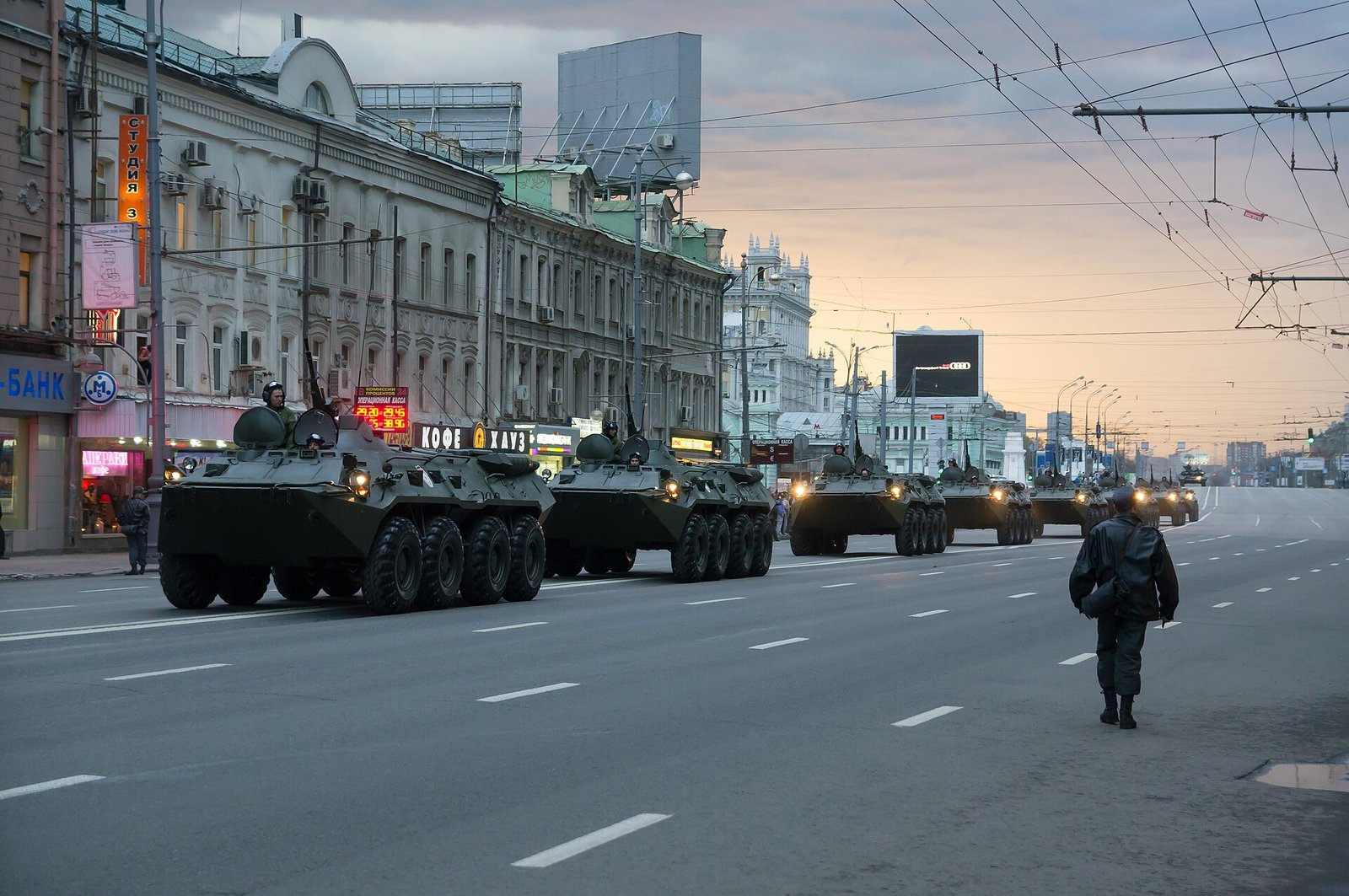
From the downing of a Russian jet to the S-400s, Türkiye–Russia relations have been full of ups and downs. The second part of the series examines Russia’s relations with Türkiye and NATO through the question “What does Russia want?”
In our previous article we briefly touched on Russia’s activities in the countries with which it has recently maintained active relations. In this article we will focus on its relations with Türkiye and NATO and try to make an assessment through the question “What does Russia want?”
Russia’s Türkiye
Türkiye, which sided with NATO during the Cold War, established good relations with the countries of the region after the collapse of the Soviet Union. It also maintained its relations with Russia within a balanced win-win framework. Türkiye announced that it did not recognise the annexation of Crimea. After that, Russia’s activities in Syria in favour of Assad and the deliberate attempts of Russian aircraft to violate Türkiye’s airspace brought the two countries face to face.
Although Türkiye’s downing of the Russian jet was presented by certain circles as a victory, the incident led to Türkiye falling under Russia’s domination. President Erdoğan wrote Putin letters of apology time and again and used intermediaries to normalise relations.
After that, Türkiye–Russia relations were never the same. Türkiye was reduced to a country that does whatever Russia says, both at the table and on the ground. Russia’s repeated attacks on Turkish military units in Syria cost dozens of soldiers’ lives.
Russia and Türkiye signed an agreement on the S-400 air defence system. After the purchase of the S-400s, Türkiye’s relations with NATO and the US came to breaking point.
NATO–Russia Tension
Russia’s military build-up on the Ukrainian border raised fears that Russia would go to war with that country. Russia said it was uneasy about the Ukraine–NATO relationship and demanded that the US not set up military bases in former Soviet countries and in non-NATO countries, not use the infrastructure of these countries for any military activity and not engage in military cooperation with them.
NATO’s suspension in response of the activities of its missions in Moscow increased the tension. Statements on both sides made it clear that this problem could not be overcome in a short time.
What Does Russia Want?
So what could be the aim of Russia, which has been named in so many recent events and has been the main actor in some of them?
Russia, which after the collapse of the Soviet Union tried to become part of the West and shaped its foreign and security policies accordingly, abandoned this approach after Putin became president and set about redefining its national security strategies. According to this definition, military power had to be brought to the fore and accepted by other states, which required armament, shows of force and new alliances.
Having quickly reached the level of “armament” he wanted, Putin would now begin to carry out the other necessary steps at the right time and in a planned way.

After his speech in Munich in 2007, Putin positioned his country on a different strategy. Over the previous six years he had strengthened relations with many countries and pursued a soft policy. Now he wanted to be active on the ground, not at the table. To be active and to be the winner. Indeed, he had reached a level at which he could make a show of force.
After the collapse of the Soviet Union, the world moved from the bipolar world order to a unipolar world order in which the US was the superpower. There were now many countries with a say at the table. Russia was not an influential country in this order. For a Russia positioned against NATO, its biggest trump card was passive reflexes such as slowing down or blocking work by using its veto right at the United Nations. Russia was not at all pleased with this situation. The plan for new alliances now also had to take concrete shape.
Russia raised the level of its relations with Iran, with which the US had a frosty relationship. The leaders of the two states visited each other, as if openly defying the US.
Russia made all its plans once again for a bipolar world. It was highly likely that these poles would be an “Atlantic Pole” and an “Asia-Pacific Pole”. The aim was to bring together countries with military power, economic power and geopolitical advantages so that each one’s advantage could be used as the advantage of the others. For this reason, Russia sought to draw the maximum number of countries into a possible “Asia-Pacific Pole” and spread their clustering across wide areas. In particular, its community of interest with China, which dreams of overtaking the US to become the largest economy, made it easier to achieve its goals.
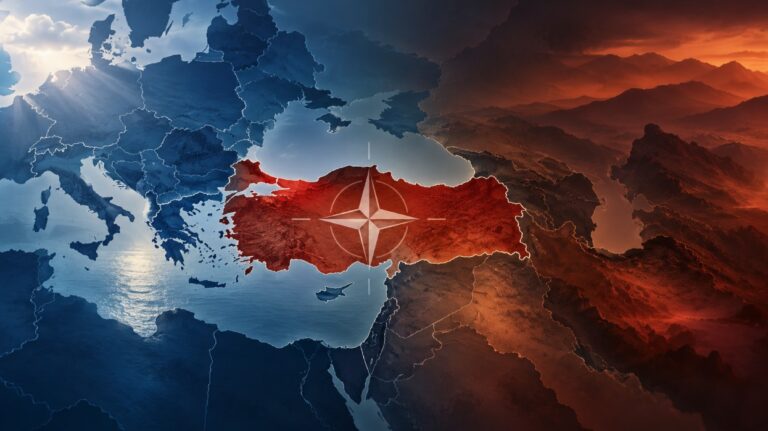
The border of the pole Russia belongs to is highly likely to pass to the east or to the west of Türkiye. Türkiye’s growing interest in Russian weapons, military vehicles and equipment, and the unprecedented US build-up on the Greek border, may mean that the parties have made a decision about Türkiye.
So is it normal for Russia to be able to “run its horses” so freely while the US still continues to exist as a superpower? Here the name Donald Trump comes up. Allegations that Russia influenced the results of the US election won by Trump are still being discussed. During Trump’s presidency, the US suffered partial paralysis in every field. This state of the US created a unique room for manoeuvre for Russia. The US became unable to make plans, especially in the Middle East. Russia became the new playmaker in the region, above all in Syria.
In Conclusion…
We must also ask whether Russia is really a strong enough country for the role it dreams of. In my view, not at all. First of all, Russia is not an economic power. Looking at Russia’s economic strength, we cannot see an economic picture that would allow it to play such a big game. Russia’s economy is one thirteenth the size of the US economy. The country’s economy is built not on production but on natural gas and oil. At this point, it should be remembered that in 2014–2016, as a result of the US deliberately driving oil prices below 30 dollars, the Russian rouble lost more than 50% of its value.
The fact that its economy does not stand on solid foundations makes Russia even more aggressive in the military field. It wants to make its economic weakness seem insignificant by putting its armed power in the foreground.
Russia is highly determined to overcome all obstacles on the road to its goal, whatever the cost. While we do not claim that the US’s sole aim is the welfare of humanity, we should also note here that for Russia, humanitarian and legal values are never criteria. In the coming period we can expect much turmoil and major developments in different regions, above all the Middle East and Asia, under Russia’s influence. Russia will try to turn all this turmoil to its own advantage and will position itself accordingly.
Monthly · free
Compass of the Month
PUGAT’s monthly newsletter.
Read next


What is PUGAT? A non-profit community publishing independent analysis from Europe on security, migration and society in Turkish, German and English.
Go to the homepage
