

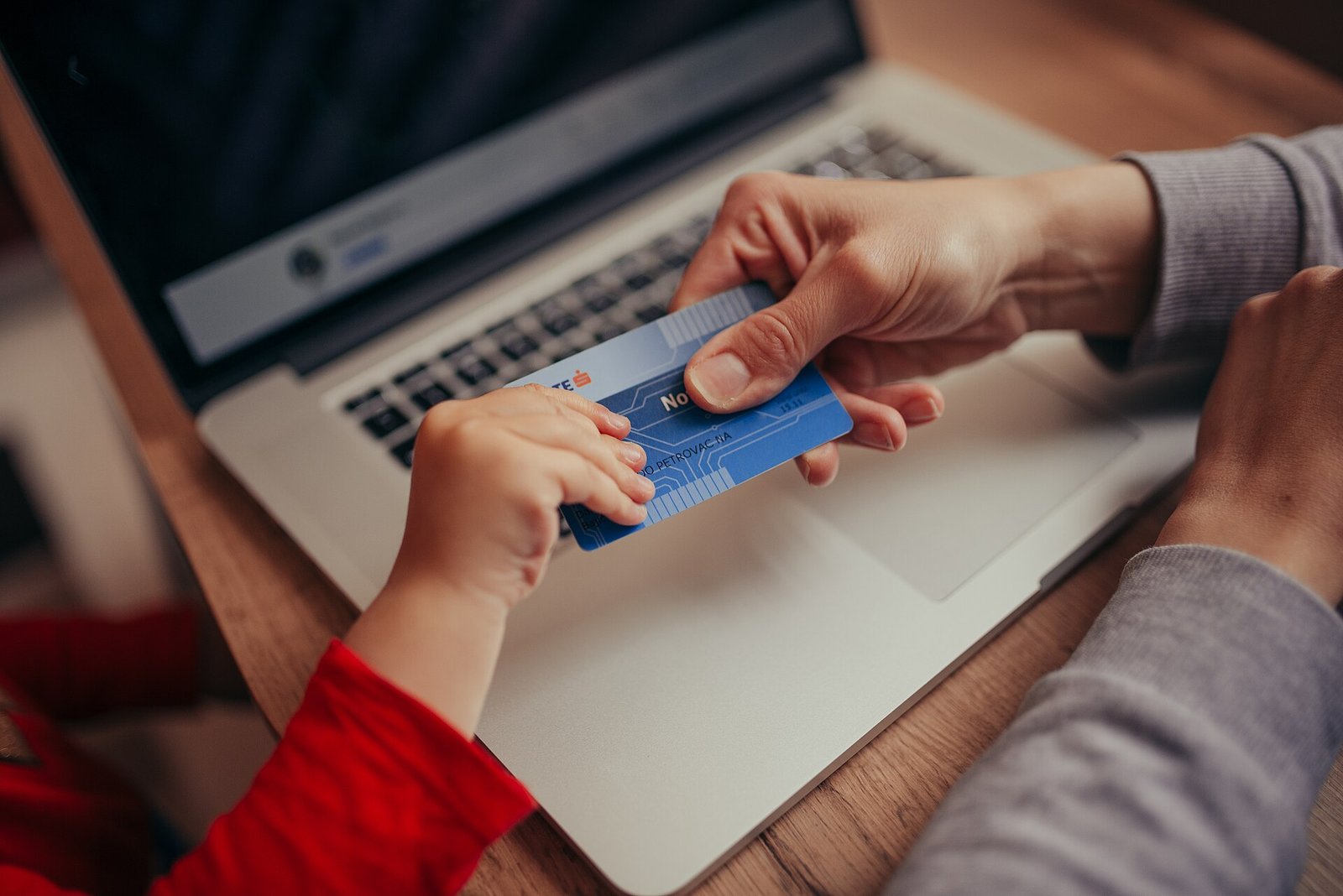
Fake shops that look like normal online stores, take the money and never send the goods are spreading all over the world. The article describes this fraud model and why it manages to survive so long.
What exactly are the fake shops that are encountered all over the world and grow more active every day? Put briefly, they are a fraud system that, beneath the appearance of a perfectly normal online shopping system, takes the customer’s order and money but sends no product in return, or sends a far less valuable one. Although there are people who copy famous online shopping sites and try to defraud people this way, these copycat sites do not last very long, because they are easy to detect, track and act against.
So while the existence of fake shops in a country where democracy and the rule of law do not fully function is hardly surprising, how is it that they can operate even in European Union countries with advanced democracies, where the law works close to the ideal?
Fake shop… The expression is used in English in almost every country, and many people do not prefer the equivalent in their own language, since the issue also has an international dimension.
Many information notes on the subject prepared both by judicial units and by cyber security experts are available on the internet. If one wishes, one can even find online lists of fake shops identified so far or about which there have been many complaints. The matter has become so complex that fraudsters do not even need to travel to the country whose citizens they target. All that is needed is to act professionally, in line with both international and the target country’s prevailing e-commerce culture. Beyond that, all they need is a suitable money transfer route or method through which they can obtain the money coming from their targets. Considering that more than 2 billion people worldwide shopped online in 2021 alone, it is obvious how large the market is and how difficult it is to examine all the activity taking place.

Prominent Fake Shop Methods and Some Information on How the System Works:
- The fake web pages are prepared so perfectly as to leave no room for suspicion.
- To this end, the impression is created that some products are temporarily discounted. Unfortunately, the leading search engines can play into the fraudsters’ hands here, because even giant companies use many ways to maximise their earnings and miss no opportunity. For example, a person looking online for a refrigerator, a computer or just a coffee machine may receive a message from well-known search engines that the brand and model they are focused on is currently discounted on another site. And this message is presented in a perfectly normal, familiar advertising format.
- After browsing the site and choosing a product, the customer is asked to pay by bank transfer or credit card to complete the purchase. Outside famous platforms such as Amazon and eBay, this request would normally arouse suspicion. Customers prefer to use payment tools of proven security such as PayPal. To counter this, the scenario runs as follows. The fake shop’s web page in fact states that PayPal and many other payment systems are accepted. This both reassures people and creates a professional image, because nobody has any doubts about these payment tools. When the customer tries to pay with them, however, messages such as “Could not connect to server” appear. In fact, this is pure online theatre, because the PayPal name here is merely a tool, a curtain used to conceal the fraud.
- At exactly this moment an extra discount for payment by bank transfer (around 5–15%) also appears, whetting the customer’s appetite even further. In other words, the customer who has found the product they were looking for at a bargain below the market price and does not want to miss this limited-time discount is practically hypnotised.
- So how does the customer fall victim to this fraud? Because what they see before them is a real company. It has an address, phone numbers, email addresses, even a valid IBAN from a legal bank. Moreover, prices on the internet change constantly and periodic discount offers are routine. Even the smallest business wants to sell its products online too. All these factors allow the fraudsters to camouflage themselves.
- Everything has been thought out down to the finest detail, so much so that the customer is even given a completely realistic invoice and information on the conditions under which the product can be returned. The customer can register on the site. They create a password, enter their details and can later even track their orders there, or rather believe they can. But it is all nothing more than a theatrical show. Some sites even have notes on how products can be returned and the related legal information. To repeat, nothing has been prepared amateurishly. We see no need to mention the amateur ones here.
- After payment, either no product arrives at all or a far less valuable, unrelated one arrives, and the situation becomes complicated and hard for the customer to get out of. After that, neither going to the bank nor going to the police is of much use, because no one on the other side can be reached, and after a while the website and the bank account vanish along with the money. In most cases the victim cannot even find out the perpetrator’s identity, because the company, names, address, phone numbers, email address, in short everything, is fake, and the bank account is perhaps in the name of an innocent elderly person who knows nothing about the matter, or of someone who has died. In addition, because personal data in the European Union are very well protected by law, banks, law enforcement and prosecutors have to act very carefully. Correspondence and requests for information between countries move slowly, to the victim’s detriment and the suspect’s benefit. Against every measure taken, the fraudsters also develop new strategies. Perhaps they know the laws and procedures better than anyone.
In this context, it is clear that the fraud system run by professionals is more dangerous for society than the relatively amateurish or less carefully made fake sites that are recognisable as fake at first glance, immediately arouse suspicion and are flagged by search engines with a “Not secure” warning. The points we have tried to touch on are probably only a few of the known parts of the problem. The methods the fraudsters use and develop every day are certainly far more numerous. It is also very hard to estimate what other harm they may do to people with the personal information they obtain.
In conclusion, great care should be taken in every online transaction, especially in financial matters. Shopping from reliable, well-known sites should be the rule. If in doubt, one should call in advance for information and always check reviews and complaints online. The company’s address should be checked in online map applications, and it should always be verified that it has a real headquarters. A small number of reviews of a site or product may be fake or untrue, but the perceptions formed by thousands of reviews can usually give us an idea. Companies that deal with negative reviews and try to help also earn great prestige. One can always shop with peace of mind from online stores where an acquaintance or friend has personally shopped and been pleased with the service. For those living outside Türkiye, a company’s acceptance of payment through PayPal and similar secure payment systems is also a very important sign of reliability.
Monthly · free
Compass of the Month
PUGAT’s monthly newsletter.
Read next

What is PUGAT? A non-profit community publishing independent analysis from Europe on security, migration and society in Turkish, German and English.
Go to the homepage
