

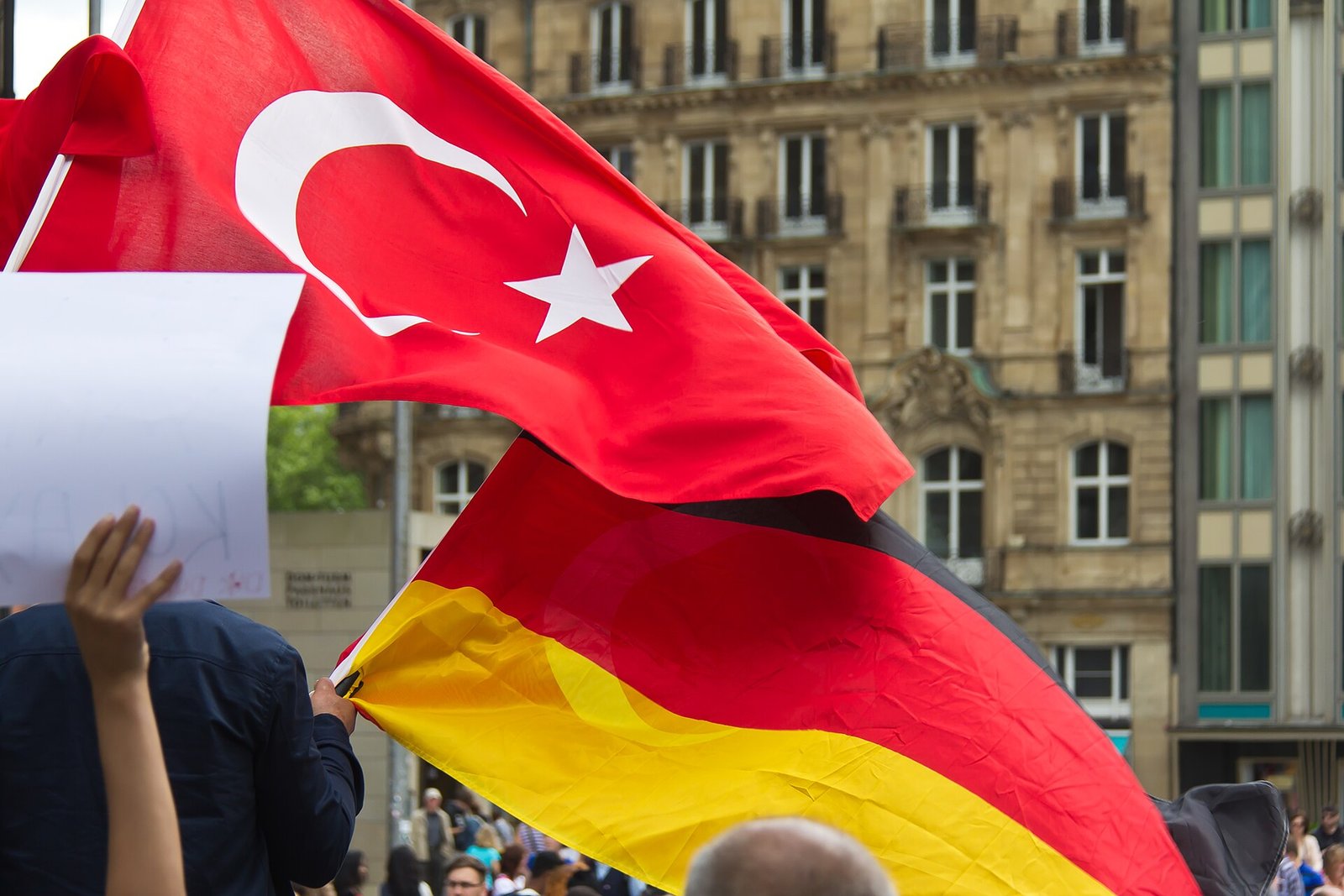
We are a society that can stay estranged from relatives for years. The author asks how the same grudge is reflected in the state’s foreign policy and domestic politics, and how the “land of peace” produces its own enemies.
How long can you stay estranged from your loved ones, your closest people or your relatives? An hour? A day? A week? Perhaps a month.
I am not talking about parting ways completely after an unforgivable mistake. Whatever the reason, unless your heart has turned to stone, you do not want to prolong a falling-out over matters that are not serious.
It is true that as a society we are somewhat “grudge-holding”. Emotional as we may be, forgiving and making peace do not come easily to us. We have relatives and acquaintances who have not spoken for years over matters not worth a walnut shell. You too have surely witnessed estrangements that lasted for years for no reason.
In fact, what I am curious about is not how long we can stay at odds with our relatives, but how long we can keep up the hostility with our enemies.
Let us imagine that a survey is conducted in Türkiye with the question: ‘Which country most wants peace in the world and makes the most initiatives towards it?’ The answer would overwhelmingly be ‘Türkiye’. Because we believe that our country and nation hold a very important position for world peace. While other countries behave this way out of self-interest, we always act with good intentions and expect nothing in return. Or at least we think we do.
States Are Founded Through War and Preserved Through Cooperation
Let us take US–Japan relations, which turned into mutual hostility when the US responded to the Japanese, who carried out the Pearl Harbor attack in the Second World War and killed thousands of American soldiers, with the first atomic bomb attacks in history. Not long after the war, they were able to establish commercial and military relations with the country that had wiped out some 230,000 of their citizens in seconds, and to speak of friendship. They were able to wipe the slate clean and learn from mistakes. Instead of keeping hostilities alive forever, they were able to open the way to solutions and new cooperation. What is more, in the coming days they will sign a new agreement on hypersonic weapons.
Countries, like people, have emotions and psychologies. States too have wounds that do not heal and pains that do not fade. Even so, you cannot harbour eternal hostility towards a country just because you once faced each other. You cannot perceive every statement and every move of a country you see as a rival as a threat to yourself. Life does not go on in constant schizophrenia and paranoia. Yes, territory may be gained through blood and war, but it is not preserved through blood and hostility. It is preserved through cooperation, friendship and agreements.
Are Foreign Powers Always to Blame for What Happens?
As a country, we believe that with a few exceptions everyone looks at us with hostility and envy. The allied countries with which we cooperate very closely are included in this. I suspect it would be impossible to find another country that has accumulated so many enemies without going to war. All the more so since it declares itself the representative of peace and security.
Neither in the Cold War era nor in the unipolar world order have we managed to be truly friends with any country. Even though, apart from Korea and Cyprus, we have not entered any war for nearly a century, the number of our enemies never decreases. Even our relations with our allies hang by a thread. Our commercial and military cooperation is far below what it should be. Even in projects in which we are partners, we are left out when it comes time to share. The interesting thing is that this is not limited to government policy. According to a large part of society, almost every country and nation with power in the global balance is our enemy, has evil designs on our country and, what is more, secretly admires us. They are also to blame for every sensational event that happens…
The biggest reason our foreign policy is so changeable and weak is that it rests on the say-so of one person. Above all because of that person’s weaknesses and crimes of an international dimension. While the US gets what it wants by using the Halkbank and corruption files, Russia extracts concessions over 15 July and ISIS oil. As a result, while being a NATO member, we buy S-400 systems. But because of the pressure, we cannot activate the system. Countries such as Egypt, Syria and Saudi Arabia, which were our friends yesterday, now stand against us as a result of wrong policies. Whether the fact that our foreign policy is so full of negative views even towards countries of the same faith is a product of the people’s distrust of other states, or whether the state’s outlook has spread to the people, remains a mystery. The truth is that this mindset has so far brought us nothing but harm.
There are in fact many examples that explain this more clearly. If the Netherlands makes a negative statement about our politicians, we immediately threaten them by chopping oranges. If France criticises our press freedom, we slaughter roosters. If America warns that fundamental rights and freedoms are being violated, we burn dollars and smash phones. To my mind, the most original of all was the attack in Istanbul, in protest against China, on South Koreans, who are among the most loyal and friendly people towards us, because they were taken for Chinese on account of their almond-shaped eyes. Our foreign policy strategy could not be described better, I think…
A saying repeated since time immemorial actually explains the situation very clearly: “The Turk has no friend but the Turk.”
So how true is this saying? Are there really no other nations that love or feel sympathy for us Turks? Are all countries looking for an opportunity to attack or destroy us?
I think the answer to questions like these can be given with a single piece of evidence. In our country, even hearing the words ‘Greece’ and ‘Greek’ is enough for brows to furrow and nerves to tense. Whether because it is the last country we fought or because there are still political problems, nobody knows, but we have an incredible hostility towards Greeks. That one of the harshest words used to insult someone is ‘Greek’ sums up the situation. It is believed that they feel the same way about us. To tell the truth, I too thought so until I went to Greece, because that is what was believed and taught both in schools and in the environment we lived in. Yes, there were hostilities and wars in the past. But such hostilities can occur even between siblings. During the nine months I stayed in Greece, I did not hear a single negative word about Turks; on the contrary, I saw friendship, warmth and support I could never have imagined. Let no one think that they suffered no harm from us. I saw the eyes of a doctor of Greek origin, who had done his military service in Türkiye and served for years, fill with tears when he spoke of Türkiye, even though his property had been looted and he had been sent away as if expelled. The first reaction of people who learned that we were Turks was a smile and the words “Brother” and “Neighbour”. Everyone we talked to said that we are brotherly nations, but that politicians do politics by portraying us as enemies.
Similar things can be said about Germany and the Germans. According to surveys, 68% see the Germans as enemies. Why would the Germans, in whose country some 3 million people of Turkish origin live and who still open their arms to Turks, be burning with hostility towards Turks? I had heard that the Germans welcomed the first group of workers from Türkiye with Ottoman military marches and flowers. Because the Turks in their minds were the strong, brave, self-sacrificing, honest and moral Ottoman soldiers with whom they had entered the First World War. Whatever they saw afterwards, they now approach Turks with suspicion. Could the reason they keep their distance from us today not be that we fell far short of their expectations?
Would the Germans’ reactions towards people who take the easy way out in every matter, try to evade taxes, draw unemployment benefits from the state while working illegally and smuggle the money they earned in Germany to Türkiye by illegal means not seem very mild compared with what is being done today to Syrians in Türkiye?
A Foreign Policy Aimed Not at Winning Votes but at Winning Friends Is Essential
If the nations we know as our greatest enemies feel this way towards us, it is worth questioning ourselves. Perhaps we are producing imaginary enemies for ourselves, tilting at windmills and shutting ourselves off from the world. We think that no other nation is our equal and still boast of historic achievements. We see ourselves as the inevitable lead actor in restoring peace to the world. We can leave it to social psychologists to analyse the subconscious reasons and motives behind this. But it is a fact that, as a country, we do not understand the international system very well. We put nations into a general mould and condemn an entire society on the basis of a single example. As a result, we overlook those really responsible for our failures and harbour hatred against the “non-existent” enemies those responsible present to us.
In the period we are living through, we are facing economic and social hardship. Ashamed as we may be to say it, we have an economy on the verge of bankruptcy. We need cooperation and solidarity more than ever, not only at home but also internationally. In shaping our outward-looking policy, we must take steps that aim not at winning votes but at developing realistic, commercial and regional relations.
There are enemies who hold out a hand in hard times without expecting anything in return. And there are friendships that leave no need for enemies. They look like friends, but they seize on your bad days to plunder your property.
After the Marmara earthquake of 17 August 1999 and in the forest fires of recent years, the first country to rush to help without expecting anything in return was Greece; the one buying our most valuable institutions in exchange for the money it would give our economy, desperate for financial support, was Qatar. So we must ask: who is friend and who is foe?
Monthly · free
Compass of the Month
PUGAT’s monthly newsletter.
Read next

What is PUGAT? A non-profit community publishing independent analysis from Europe on security, migration and society in Turkish, German and English.
Go to the homepage
