

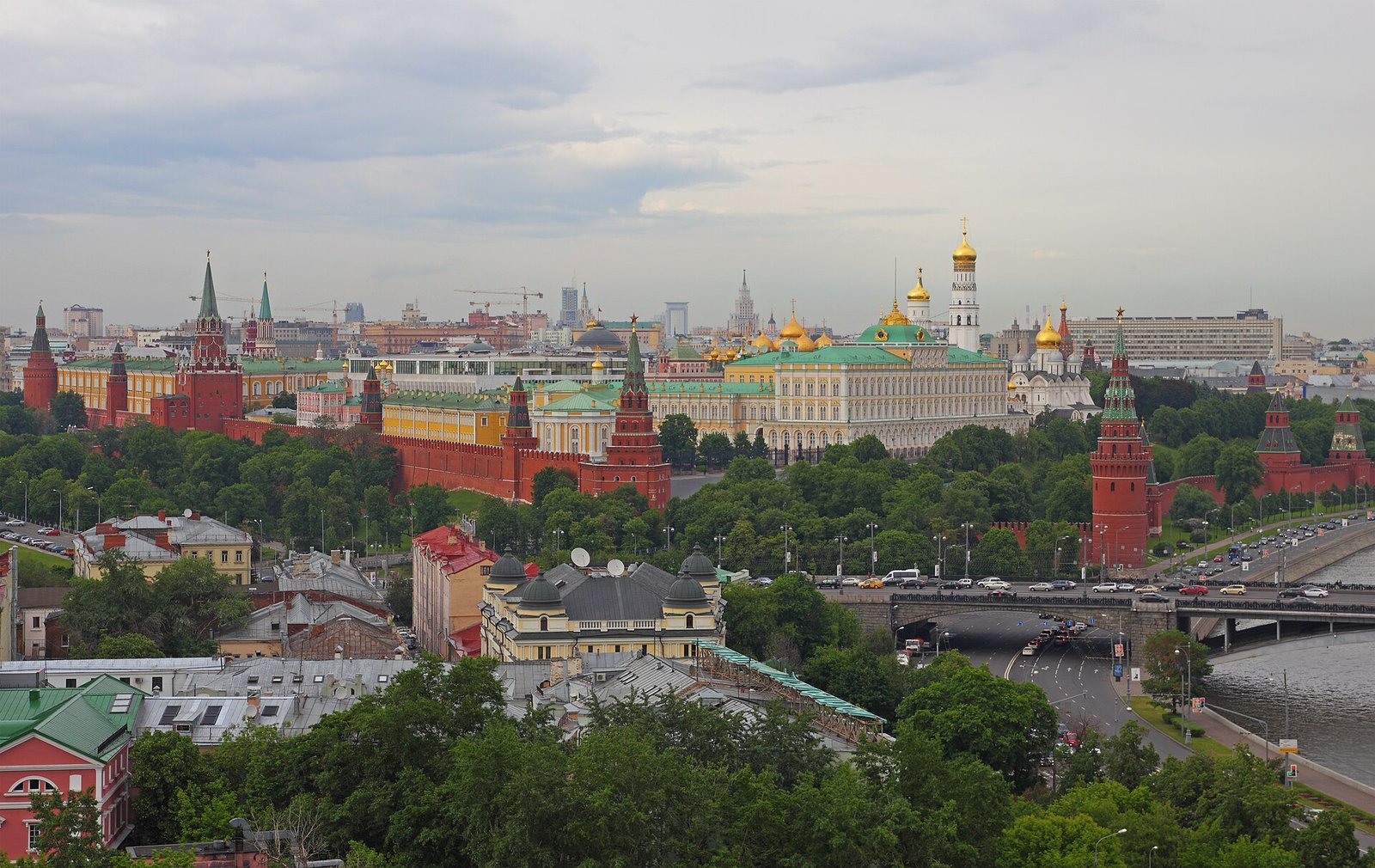
Brought to the brink of bankruptcy by the collapse of the Soviet Union, Russia soon came to defy the US and NATO again. The first part of the series describes how this transformation came about.
In recent years Russia has become one of the most talked-about countries in international relations. This country, bankrupt in every sense, soon reached the point of defying the US and NATO again. Having made Europe dependent on it for energy, Russia also established close relations with Asian and Middle Eastern countries. Russia’s name began to come up in almost every development in the region. So how did Russia manage this in such a short time?
Developments Following the Collapse of the Soviet Union
Founded in 1922, the Soviet Union dissolved in December 1991, some 70 years after its foundation. With its dissolution, 15 countries declared independence. To some this dissolution was “a hope for humanity”, to others “a tragic collapse”. A few years after the collapse of the Soviet Union, a senior American official implied that the United States had a hand in it with the words “We took Russia without firing a single shot”.
With the dissolution of the union, Boris Yeltsin took over the government of Russia. Under Yeltsin’s leadership, Russia suffered great hardship, especially in economic and social terms. It had even borrowed from the IMF, one of the institutions of the capitalism it had been fighting a few years earlier. Despite the difficulties, he stayed in office for about eight years because he was backed by the army. Vladimir Putin, the former KGB agent he had appointed prime minister before leaving office, took the seat of President of Russia upon Yeltsin’s resignation.
It had come out that Putin had previously also served in Türkiye as a KGB agent.
Continuing a moderate policy towards the West in his first term as president, Putin became one of the biggest supporters of the US after the 9/11 attacks. At the same time, he made efforts to develop close relations especially with the countries in his own neighbourhood.
In Putin’s first term, Russia underwent a great transformation in domestic policy, especially in the economy. Knowing that the first condition for taking radical decisions in foreign policy is to have support at home, Putin began taking the steps of a new start in foreign policy after winning his second election.
Speaking at the security conference held in Munich in February 2007, Vladimir Putin criticised the policies of NATO and the US and said openly: “We are in this region too.” He stated that the European Union and NATO could not take the place of the United Nations. It could be said that this speech marked the beginning of the radical foreign policy Putin pursued.

Having established warm relations especially with former Soviet countries until 2007, Putin made moves to develop relations with China, India, Türkiye and Iran. As a result of these efforts, he developed relations especially with China, and together they founded the Shanghai Cooperation Organisation. From then on, this organisation came to be seen, especially for Türkiye, as an alternative to the European Union.
Under Putin, energy, arms trade and economic relations with Muslim countries such as Iran, Malaysia and Algeria were also raised to the highest level.
The Putin administration, which continued to support the nuclear armament programme of Iran, a country under US embargo, decided in 2006 to sell anti-aircraft missiles to that country.
Russia, which generally established good relations with many countries, also experienced events with some countries that will go down in history. Let us briefly summarise some of them…
Relations with China
The most important dimension of the Putin administration’s opening to Asia is the strategic alliance established with China. The strategic alliance the Putin administration built with this country is an important gain for Russian foreign policy on its Asian front. Russia and China drew closer in reaction to the freedom of movement the US had gained.

NATO’s expansion into a global organisation, the US military presence in Asia and the US–Japan security alliance are seen by both countries as common security problems. China’s goal of becoming the world’s largest economy by 2030 has led it to take a position against the US and therefore against NATO.
The Georgian War
In 2008, for the first time since the Cold War, Russia intervened militarily in Georgia, opening a new era in Russian foreign policy. A moderate foreign policy was now replaced by an aggressive one that put armed force in the foreground. As a result of these developments, Georgia moved completely away from Russia.
The Ukraine War
With the collapse of the Soviet Union, Ukraine’s foreign policy shifted entirely to a pro-Western line. The new government began to develop its relations with the US and NATO. In 2014, war broke out between Russian-backed separatist groups and Ukraine. After this war, Russia and Ukraine reached a point of no return. The breakdown of Ukraine’s relations with Russia to the point where no alliance could be formed from then on was one of Russia’s greatest losses.
The Annexation of Crimea
The Crimean parliament declared independence and requested to join Russia. On 18 March 2014, the President of Russia signed the document approving Russia’s annexation of Crimea, officially incorporating it into Russia. By annexing Crimea, a peninsula belonging to Ukraine, Russia preserved its strategic position in the Black Sea.
Its Role in Libya
Libya was very important for Russia to become an influential actor in the Mediterranean. By making its presence in Libya permanent, it wanted to secure many interests. Although Libya is a country in Africa, its long Mediterranean coastline and many ports whetted Russia’s appetite.
With the overthrow of Muammar Gaddafi in 2011, a power struggle began in the country among various groups, in which tens of thousands of people lost their lives.
After years of civil war, all the groups clustered around two different camps: the Government of National Accord under Sarraj, recognised by the United Nations as its interlocutor, and the Tobruk government led by Haftar. Russia chose the Haftar government, with which it had close relations and which was under Russian guidance.

From the end of 2018, Russia stepped in when the Wagner Group, a private security company known for its closeness to Putin, sent mercenaries to Libya. More than 1,200 Wagner mercenaries actively supported General Haftar’s forces from 2018 onwards. This intervention further intensified the civil war in Libya and caused more bloodshed. It made it even harder for the parties to gather around a table, reach an agreement and act together.
Its Role in Syria
In the civil war that also began in Syria with the Arab Spring, Russia was the biggest factor in President Bashar al-Assad keeping his seat. Russia’s real aim was not to keep Assad standing, but to preserve and then further expand its military presence in the Mediterranean. If Assad fell, Russia would lose everything it had built up in Syria.
Indeed, with this decision Russia expanded its naval base in Tartus and set up new bases of various sizes in many parts of the country. With this increase in capacity, Russia increased its influence especially in the Mediterranean. The main reason Russia was able to play an active role in Libya, that is in North Africa, is its presence in Syria. Russia’s presence in Syria also considerably increases its influence over the Middle East.
Its Role in Kazakhstan
When anti-government protests began in Kazakhstan in the first days of 2022 and quickly spread across the country, President Tokayev dismissed the government to calm the protesters. Tokayev then called on the heads of state of the Collective Security Treaty Organisation (CSTO), a NATO-like organisation of former Soviet countries, to “help his country against the terrorist threat”.
Some 2,500 Russian-led troops arrived in the country. According to the latest statements, the protests have been suppressed. Tokayev said the protests were a “coup attempt”. As is customary, dictatorial leaders usually make radical changes in the country, mostly against the people, after events they describe as coup attempts. Putin, in his latest statement, said that “they will not allow colour revolutions in the region”. These statements showed that Kazakhstan is now a country entirely under Russian guidance.
(The subject is not finished yet. In our next article we will look at Russia’s relations with Türkiye and NATO and explore the answer to the question “What does Russia want?”)
Monthly · free
Compass of the Month
PUGAT’s monthly newsletter.
Read next


What is PUGAT? A non-profit community publishing independent analysis from Europe on security, migration and society in Turkish, German and English.
Go to the homepage
