

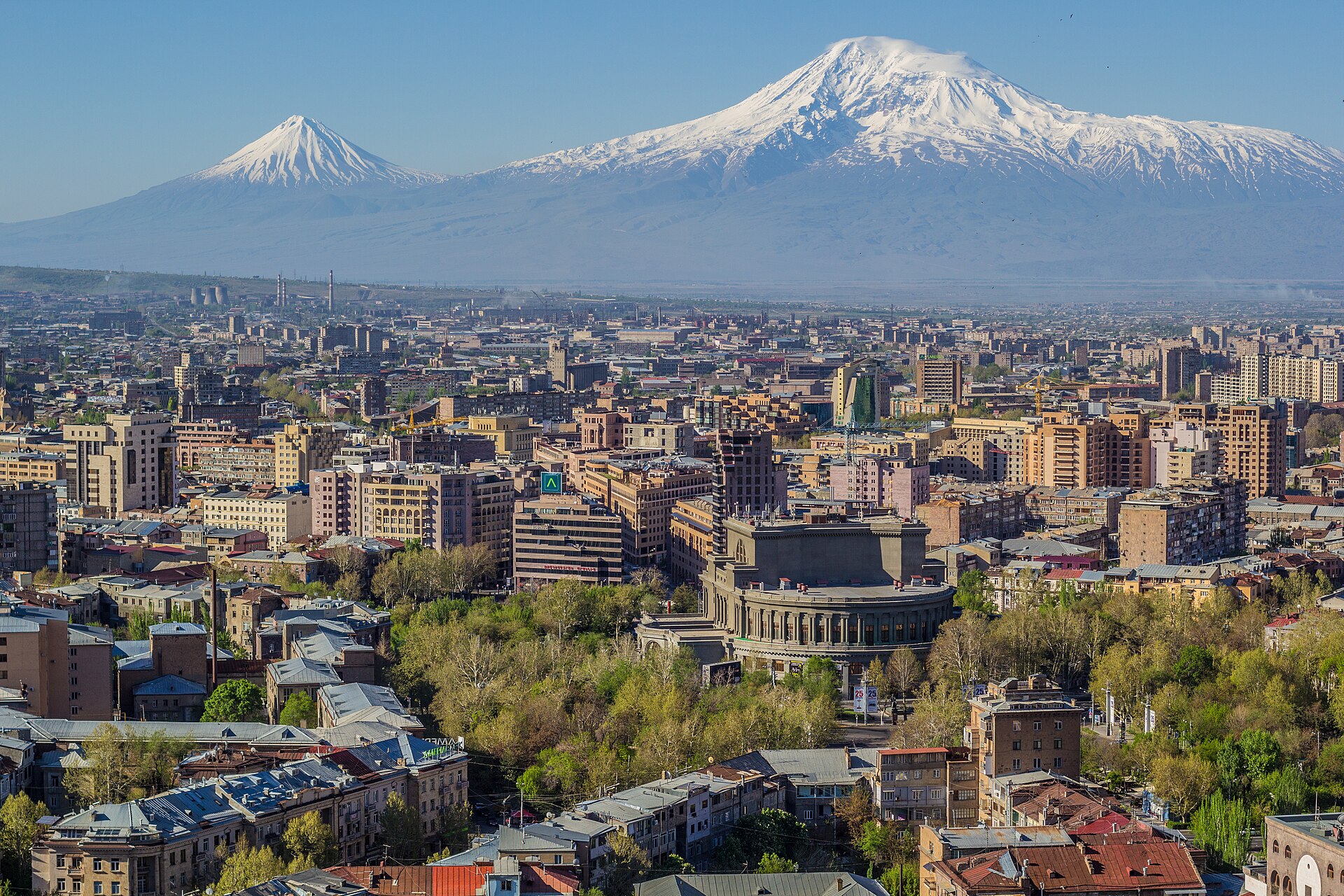
Türkiye was one of the first countries to recognise Armenia, yet the border has been closed for thirty years. We assess the normalisation attempt launched in 2021 and Türkiye’s role at the table.
PUGAT News Analysis / Mehmet Kılıçparlar
The border between Türkiye and Armenia has remained as it was drawn after the First World War, and no sustainable relationship has been established between these countries. Although the parties intended to establish relations after the collapse of the Soviet Union, ultranationalist circles in both countries above all blocked this with their reactions.
We Were One of the First to Recognise It
Upon the break-up of the Soviet Union, Armenia declared its independence on 21 September 1991.
On 16 December 1991, Türkiye became one of the first countries to recognise Armenia. The then Prime Minister Süleyman Demirel wrote a letter to the President of Armenia saying, “We respect Armenia’s territorial integrity and the inviolability of the borders between us”, and steps were taken towards developing relations.
It Could Not Be Sustained
In 1992, before diplomatic missions had even been opened between Türkiye and Armenia, the Armenian army entered Nagorno-Karabakh. As a result of the Armenian army settling in Nagorno-Karabakh, which under international law is Azerbaijani territory and whose population is mostly Armenian, Türkiye sided with Azerbaijan. It announced that it had closed all its borders with Armenia, cut rail and air links, and cut transit trade routes as well.
Genocide Claims
Armenia, putting the emphasis on diplomacy and with the help of its diasporas especially in the US and France, made great efforts for the “recognition of the 1915 events as genocide”. During this time, as a result of Armenia’s diplomacy, the parliaments of some countries recognised the 1915 events as “genocide”, drawing Türkiye’s reaction. Although in 2015, the centenary of the “genocide claims”, Armenia worked internationally for many countries, above all the US, to recognise the 1915 events as “genocide”, it did not succeed. But US President Joe Biden, who took office on 20 January 2021, explicitly used the word “genocide” in his first 24 April statement, unlike previous presidents, which was seen by the Armenian diaspora and Armenia as a positive development.
Mutual Attempts at Rapprochement Continued
In 2008, Armenian President Sargsyan invited then President Abdullah Gül to watch the match between the Turkish and Armenian national football teams in Armenia, and the two presidents watched the match together in the stadium. After that, relations tended to soften. Despite Azerbaijan’s fierce reactions, on 10 October 2009 in Zurich, Switzerland, protocols were signed by the foreign ministers of Türkiye and Armenia, Ahmet Davutoğlu and Edward Nalbandyan, with the participation of US Secretary of State Hillary Clinton, Russian Foreign Minister Sergey Lavrov and French Foreign Minister Bernard Kouchner. In the speeches made that day, neither Nagorno-Karabakh nor the 1915 events were mentioned.
Although the protocols were signed at government level, the domestic dynamics of Türkiye and Armenia made it impossible to implement them and achieve rapprochement, and indeed these protocols came to be described as a stillborn baby. While Türkiye’s acceptance of the “genocide” claims and compensation for those harmed were a red line for Armenia, the withdrawal of the Armenian army from Nagorno-Karabakh had been set as a red line by Türkiye.
Between 2010 and 2020, quiet diplomacy was conducted between the two countries, especially during Ahmet Davutoğlu’s time as foreign minister. In 2014, then Prime Minister Erdoğan, in his message on the anniversary of the 1915 events, said: “It is a human duty to understand and share the Armenians’ wish to commemorate the sufferings they experienced at that time,” and offered his “condolences” to the grandchildren of the Armenians who lost their lives in the events.
The Azerbaijan–Armenia War
The war that began on 27 September 2020 between the armies of Azerbaijan and Armenia lasted 44 days, and on 10 November 2020 Armenia accepted defeat and withdrew its army from Nagorno-Karabakh. Russian President Vladimir Putin mediated the end of the war. After the war, President Erdoğan and Armenian Prime Minister Pashinyan each declared that “a new page can also be opened in Türkiye–Armenia relations”.
Since last December, new statements on this rapprochement have kept coming from the parties, and the process has become concrete. Both sides appointed special envoys to conduct the process. While Armenia lifted its boycott of Turkish goods, it was agreed to open air links mutually.

Putin Steps In for Türkiye–Armenia
The Türkiye–Russia rapprochement of recent years is well known. After buying the S-400 air defence systems, Türkiye kept floundering between Russia and NATO. Although it tried to pursue a balancing policy, it did not succeed, because the two sides were opposite poles. Türkiye could neither give up the one nor the other. This indecisive stance of Türkiye was seen by NATO and the US as unprincipled, and Türkiye was removed from the F-35 programme and given less of a place in their vision of the future.
Russia, for its part, openly damaged Türkiye’s prestige many times during this process and attacked our soldiers. These include:
- On 9 February 2017 in al-Bab, a building housing Turkish soldiers was bombed by Russian aircraft. Three of our soldiers were killed and 11 wounded.
- On 27 February 2020, our military position was again bombed by Russian and Syrian regime aircraft. This time the toll was very heavy: 33 of our soldiers were killed and 32 wounded.
- After this attack, Erdoğan went to meet Russian President Putin. Putin kept Erdoğan waiting outside the door of the room for two minutes. Tired of standing, Erdoğan then sat down on a chair in the waiting room.
As can be seen, Russia under Putin has no value to add to Türkiye. Türkiye’s rapprochement with Russia means drifting even further from the West.
It was announced that the Türkiye–Armenia parties would hold their first meeting in Russia. Russia acting as mediator between Armenia and Türkiye means Türkiye drifting further from NATO and entering further into Russia’s orbit. Yes, there is no such thing as a good war or a bad peace, but if the result is that the country’s prestige is further damaged and it enters further into Russia’s orbit, Türkiye should strive to pursue this intention in different ways and with the mediation of different countries. Otherwise Erdoğan, like in the much-criticised picture above, will sit with Pashinyan before Putin with no choice, and let both the office of the presidency and the country’s prestige be trampled underfoot.
Monthly · free
Compass of the Month
PUGAT’s monthly newsletter.
Read next


What is PUGAT? A non-profit community publishing independent analysis from Europe on security, migration and society in Turkish, German and English.
Go to the homepage
