

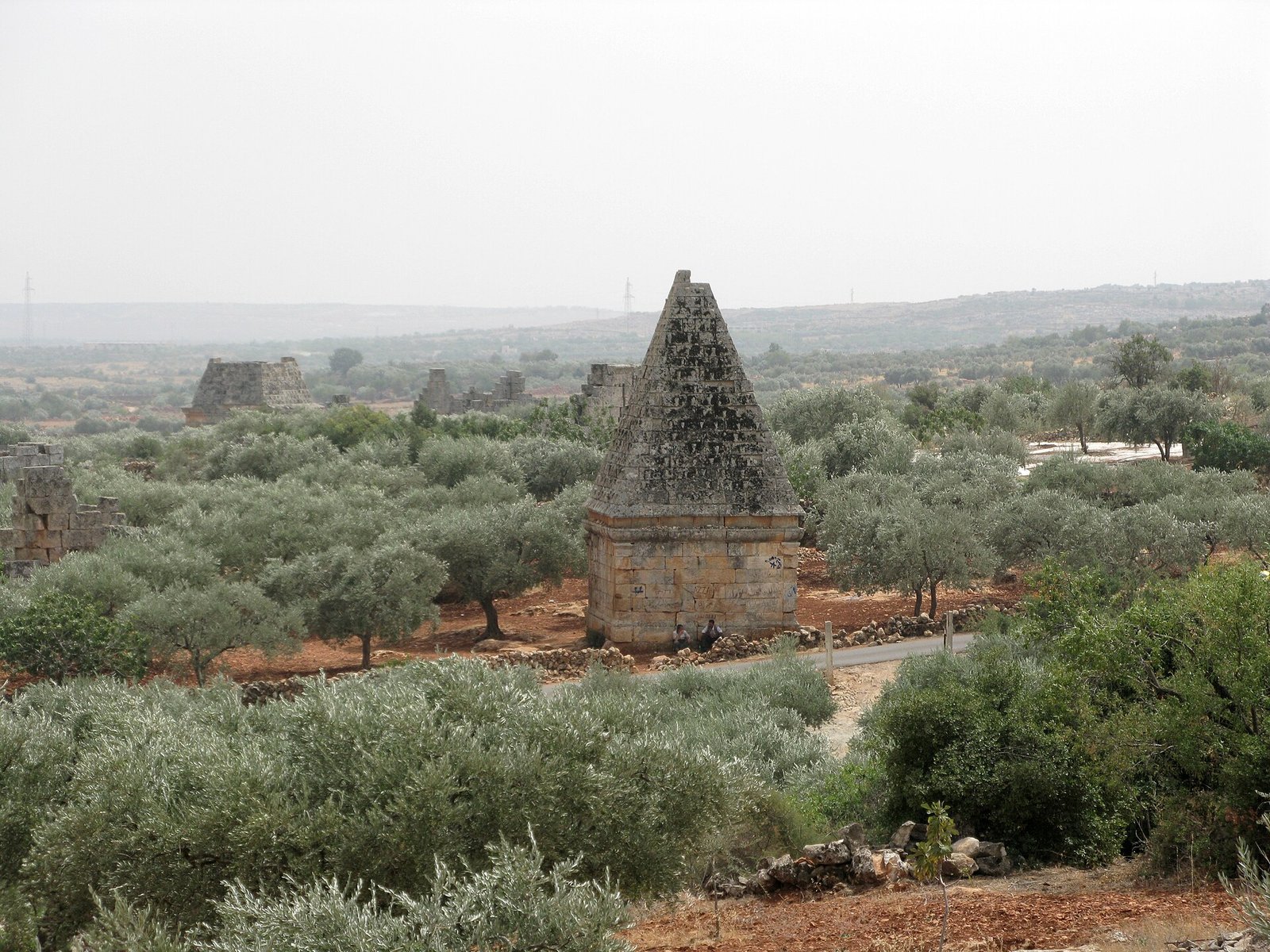
The Idlib operation that began with the Astana process, and Spring Shield, which followed the deaths of Turkish soldiers in February 2020: Turkey’s hard test in Idlib.
Cross-Border Operations in Syria | 4
“With Operation Euphrates Shield we opened up space for ourselves in our region, and we are now striving to take it further with a new step aimed at securing Idlib. Today, for example, there is a serious operation in Idlib, and it will continue.”

With this statement President Erdoğan officially announced the start of the Idlib operation. The operation was not launched against any particular group but, in general, to make the region safer in order to prevent migration. Because of its population density and its greater resources compared with the surrounding areas, the Idlib region attracted the interest of all groups. For this reason, any breakdown of stability in the region would bring a heavy wave of migration with it. Turkey, for which every new wave of migration brought new problems, was the last country that would want the calm in the region to be disturbed.
Idlib was of great importance for the “creation of de-escalation zones”, one of the headings of the Astana agreement. Under the terms of the agreement, the guarantor countries (Russia, Turkey and Iran) could each station up to 500 observers and would serve to ensure calm in different areas.

No Stability in the Region
Since March 2015 control of the region had been in the hands of opposition groups, and more recently of the organisations Hayat Tahrir al-Sham and Ahrar al-Sham. The organisations clashed with each other over many disputes, and the desired climate of calm could never be established. Since members of the FSA were also unwanted by the local population, it was very difficult to include local groups in the political and administrative process. Because the local people wanted to be under the shadow of Turkish soldiers rather than local groups, the inner line of the security corridor would be secured by Turkish soldiers and the outer protection by Russian soldiers.
One of Turkey’s aims within the operation was also to prevent the PYD forces holding Afrin from turning west and forming a canton covering the area up to the Mediterranean. On the face of it, the plan involved a long process with a low probability of fighting but many risks. Because there were many groups that could not agree although they were on the same side, and among the guarantor countries there were also those supporting different, opposing groups. A ceasefire had been agreed between the parties, but the guarantor countries, the Syrian regime and the groups in the region all frequently broke it, and fighting broke out. The Idlib operation, which would later evolve into “Operation Spring Shield”, in a sense turned into a game of chess played with the lives of soldiers and civilians so that the countries could size each other up on the ground.
Exposed to various attacks and difficulties throughout the Idlib operation, the Turkish army suffered its heaviest losses on 27 February 2020. Although what happened seems to have been a result of the complicated and intricate structure described above, there is also talk that it may have been a retaliation driven by a thirst for revenge and intended as intimidation.

Is Russia Lying, or Is Turkey?
On 27 February 2020, despite warnings and notifications, a convoy that included Turkish soldiers was hit by an air strike. While Turkey officially attributed the attack to Syrian regime forces, it was widely said that Russian aircraft had carried it out. Russia denied responsibility and claimed that the Turkish soldiers had been among armed opposition fighters. According to official statements, 34 of our soldiers were killed in the attack and dozens were wounded. Contrary to the official statement, rumours that the death toll was much higher circulated for a long time. In response to this attack, Turkey bombed Syrian regime units, opened its border gates to the migrants in Turkey and called NATO to an emergency meeting. The Russian dimension of the attack was deliberately ignored, and the Erdoğan administration, which could not afford to see relations with Russia deteriorate again, steered public opinion towards other topics.

The Idlib operation, launched to maintain the de-escalation and stability process, to prevent new waves of migration and to block the PYD corridor, continued until 5 March 2020 under the name Operation Spring Shield, with largely unsuccessful and bitter results, and ended with retaliatory strikes on the Syrian army. Although the exact number is not known, between 75 and 84 of our soldiers were killed and more than 100 were wounded during the Idlib operation and Operation Spring Shield. According to a report published by the UN, migration figures did not decline during the operation, between 8 October 2017 and 5 March 2020, or afterwards.

(To be continued)
Monthly · free
Compass of the Month
Once a month: five points from Europe’s security and migration agenda and the month’s PUGAT articles, in your inbox.
Newsletter sign-up opens soon.
Read next


What is PUGAT? A non-profit community publishing independent analysis from Europe on security, migration and society in Turkish, German and English.
Go to the homepage
