

The most common blackmail material in a honey trap is an extramarital affair, but intimate images of family members can also be used. The unusual precaution a Japanese colonel took against this danger.
In our previous articles we discussed various precautions that can be taken against the honey trap. For example, a retired police chief advised never being alone in order to escape attempts at seduction. Jean-Christophe Grangé, for his part, stressed that anyone can fall into this wicked trap.
In this article we will discuss a honey trap precaution that has never been published anywhere before.
As you know, recording an extramarital affair is the most common material that blackmailers can use. However, obtaining intimate images of a person with their own spouse, or obtaining compromising images of any family member and resorting to blackmail, is a candidate for being one of the ugliest methods of persuasion or elimination.
The target of a honey trap may also be a medium-sized businessman or an ordinary political figure. Once embarrassing images have been obtained, the next step is to find the most suitable type of blackmail. Depending on their importance or profession, the trapped victim will face demands for money, political concessions, providing further images or quietly withdrawing into a corner.
One of the simplest precautions in settings such as hotel rooms is to check the rooms for suspected hidden cameras or bugs. But professionally placed devices are not so easy to find.
As is known, the honey trap is the method by which intelligence agencies entrap their targets using attractive women or men. The most common definition in the literature is: “An operation carried out to force people to serve secret services under the threat of exposing their illegitimate romantic or sexual relationships.”
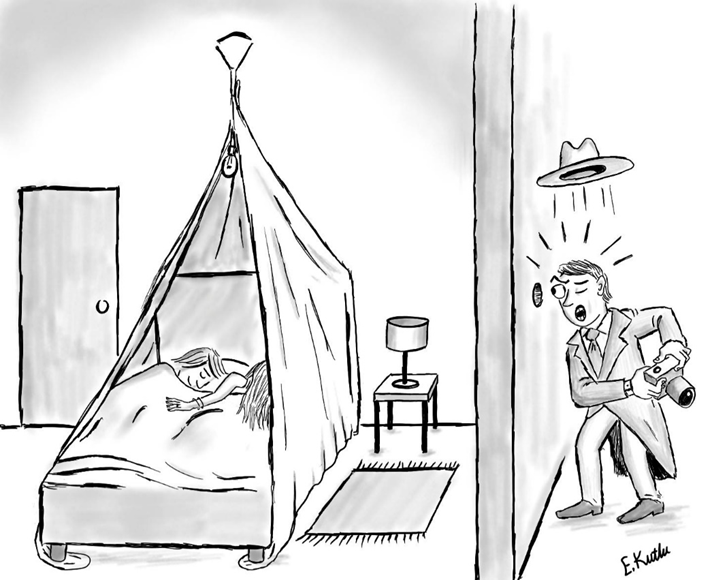
Boris Karpichkov, a former KGB agent, describes how far the KGB could go when it came to honey traps. The KGB officer, who fled his country and sought refuge in Britain, goes beyond the familiar definitions in an interview with “The Guardian”. Karpichkov, who says that the Russians would not overlook a target’s intimate moments even with their spouse, gives as his most interesting example a Japanese military attaché visiting Moscow. The attaché, in Moscow on official duty, had searched the hotel room allotted to him for bugs and cameras as best he could, but knew that professionally placed devices could not easily be found. Knowing that the Russians would not miss any embarrassing image, whether with his wife or alone, the attaché set up a small tent in his hotel room with his own means. In this way he gave no images to any hidden camera. This precaution, recounted to British journalists by Karpichkov, who lives in constant fear of being killed, is practically a lesson against the honey trap.
Another precaution that can be taken so as not to give hostile eyes any ammunition appears in a briefing document given by the British secret service to government officials. The document warned the British delegation attending the G20 summit to be careful about the possibility of “bugs” and hidden cameras in hotel rooms. It even recommended that, if possible, they change clothes inside the bed to prevent naked images of them being obtained. Because even if they do nothing shameful, obtaining naked photos of senior government officials could one day lead to their being blackmailed. If they did not give in to the blackmail, publication would be enough for them to lose their reputation, be worn down and even be sidelined.
According to research, in Western culture the slightest embarrassing act is met with a knee-jerk reaction within the institution and can be enough to block the path to promotion in the state bureaucracy. For this reason, whether moments involving sexuality are legitimate or innocent will not affect the success of a honey trap operation.
As can be seen, the honey trap does not discriminate among targets and has no code of ethics or conscience. Unfortunately, what guides today’s potential targets is the bitter experience of the past.
Monthly · free
Compass of the Month
PUGAT’s monthly newsletter.
Read next



What is PUGAT? A non-profit community publishing independent analysis from Europe on security, migration and society in Turkish, German and English.
Go to the homepage
