

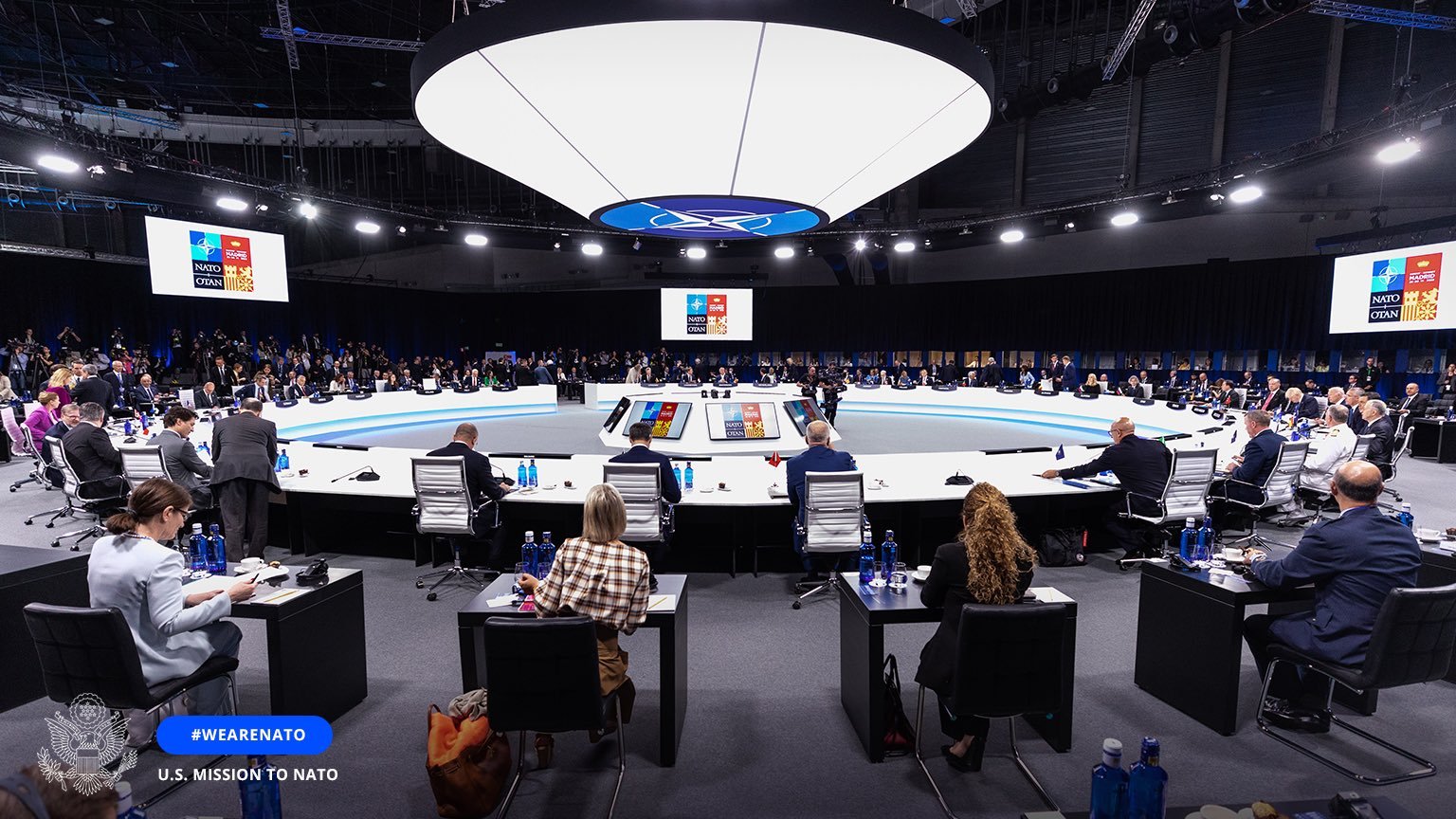
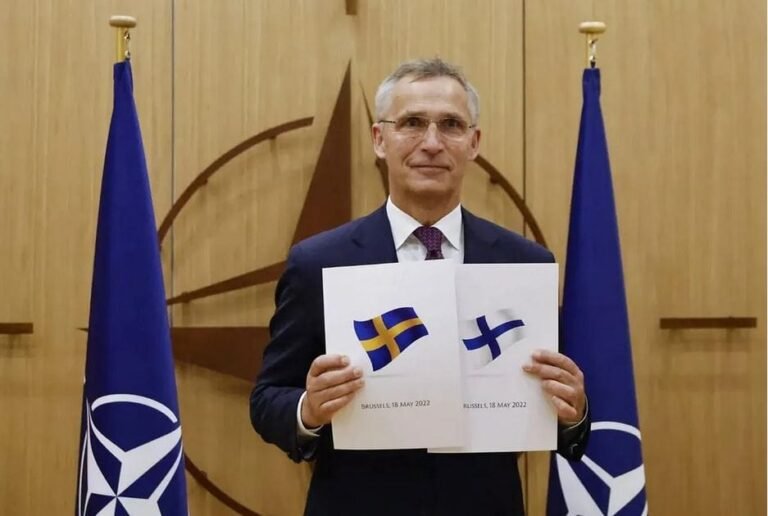
Is Ankara’s objection to the NATO membership bids of Sweden and Finland a bargaining move or a principled stance? Our authors assessed its domestic and foreign policy dimensions.
How should the policy pursued by the AKP government be assessed?
We asked PUGAT authors about Sweden and Finland’s request to join NATO. Our authors answered by considering the short- and long-term domestic and foreign policy aspects of the issue, economic management, and developments in national security and counter-terrorism…
Orhan Turan (lawyer):
Finland and Sweden joining NATO against Russia’s expansionist moves is, of course, in Türkiye’s favour, and Erdoğan is aware of this. So unless he is sufficiently cornered in domestic politics, Erdoğan will not maintain this attitude for long. In this respect, we can assume that his stance is neither serious nor persistent, and that his aim is to turn the Ukraine–Russia war, and thus NATO’s concerns, into a kind of advantage and, as in the refugee crisis, at least to obtain some concessions from the West. When he could just as well have made his demands through diplomatic channels, there can be no other explanation for Erdoğan turning the situation into a show.
Like Hungary, the veto risks portraying Türkiye as being both inside NATO and pro-Russian, and in this respect gives the impression that Türkiye is an unreliable ally. I, however, do not agree with the claim that Erdoğan, who is known to have been on good terms with pro-Russian politicians for some time and to maintain good relations with Russia, has reached an agreement with Russia on this matter.
For now, it is not known what bargaining is going on between the West and Erdoğan. But it should not be hard to predict that if Erdoğan persists in this stance, the US and NATO will play other cards regarding Türkiye.
Although Türkiye has drifted away from the West in recent years, it is still part of the West and one of NATO’s largest allies.
Sezai Akyüz:
Considering that the AKP–MHP alliance will act together in the coming elections, blocking the membership of Sweden and Finland solely on the grounds of support for the PKK matters as another bid for nationalist votes. Another important issue is where the money Erdoğan needs to fix economic conditions on the road to the elections will come from. In this context, he will want to use this card to the full for demands that will free his hand in domestic and foreign policy in exchange for memberships he will sooner or later accept.
Erdoğan must see strong cards and coercive sanctions that could be used against him by both Russia and NATO. At this point, the question becomes whom he fears more and from whom he can obtain the concessions he wants. On behalf of himself and his party, of course.
My personal view is that Erdoğan will want to drag this tension out until the elections. He will see it as an important political opportunity that pays off in domestic politics in particular. The pressure the US and other NATO countries apply, or the offers they make, will also be decisive. Although there are many levers of pressure against Erdoğan and his circle, I think this issue will be resolved not through threats and pressure but through cooperation and the acceptance of certain demands. As İsmet İnönü said: “If you give nothing to those on your side, why should they be on your side…”
Ali Çağlar:
Because of its strategic position south of Russia and its role as a gateway to the ever-troubled Middle East, Türkiye is a very valuable ally for NATO. But in the picture that emerged after 15 July, Türkiye has become almost a NATO member working against NATO. Its purchase of the Russian S-400 missile defence system, its close cooperation with Russia in Syria and Azerbaijan, and its moves in Russia’s favour during the invasion of Ukraine seem to have unsettled NATO countries.
In such an equation, the West, I believe, is paying the price of its indifference.
NATO has the means to persuade Erdoğan one way or another, but what will it give in return? Europe did not care enough about the major human rights violations in Türkiye and the conflicts in Syria. It then ignored Erdoğan’s skilful use of developments for his own interests. The West should look to itself for the reasons why it has become so dependent on Erdoğan. For example, the migrants Erdoğan has used as a threat against Europe in recent years come mostly from Afghanistan, Syria and Iraq. European countries that stayed silent about, or in some way contributed to, the collapse of these countries’ state structures carried the problem to Europe themselves. Now they are repeating the same mistake with Türkiye, with one difference: Türkiye would shake Europe far more than these three countries.
Update (November 2026): The Turkish parliament ratified Finland’s membership in March 2023 and Sweden’s in January 2024. Finland joined NATO in April 2023 and Sweden in March 2024.
Monthly · free
Compass of the Month
PUGAT’s monthly newsletter.
Read next


What is PUGAT? A non-profit community publishing independent analysis from Europe on security, migration and society in Turkish, German and English.
Go to the homepage
