

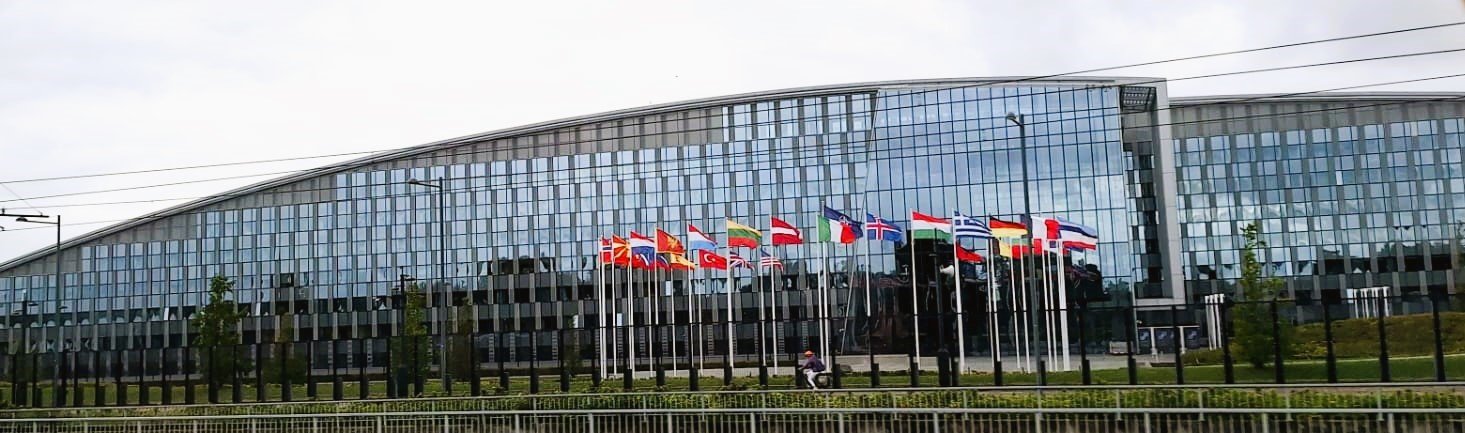
Removal from the F-35 programme and sanctions on critical weapons systems disrupted the modernisation of the Turkish Armed Forces. The author reads Türkiye’s stance on NATO enlargement in the light of these sanctions.
As a result of Erdoğan’s arbitrary style of government and the resulting destruction of the rule of law, Western countries began imposing various sanctions on Türkiye. The sanctions largely concern military equipment. They not only disrupt the long-term modernisation goals of the Turkish Armed Forces but also do great damage to national security and counter-terrorism. For example:
- The US did not approve the sale of the Mk41 Vertical Launch System (VLS) to be used on the İSTİF-class frigates, which Türkiye boasts of having developed with national means. The system is a critical component because it launches air defence missiles. Nor did it approve the sale of the RAM close-in air defence missile for the ADA-class corvettes. ADA-class corvettes put to sea loaded with a minimum number of RAM munitions.
- The US removed Türkiye from the F-35 programme and did not approve the modernisation of its F-16 aircraft. These developments left Türkiye far behind Greece, with which its air power is constantly compared.
- Germany maintains an embargo on the sale of the engines to be used in serial production of the ALTAY main battle tank. As a result of this German sanction, the project was delayed by five years at best.
- France imposes sanctions on the supply of many defence and aviation subsystems to Türkiye.
- Canada imposes sanctions on the electro-optical imaging systems that Türkiye uses in its unmanned platforms (UAVs and armed UAVs). Because of Canada’s sanctions on camera sales, UAVs and armed UAVs could not be produced for months, and lower-quality cameras began to be used instead.
- The “Fırtına” howitzers, announced as domestically and nationally produced, used engines purchased from Germany. As a result of Germany’s sanctions against Türkiye, production of the Fırtına howitzers was disrupted even for the Turkish Armed Forces’ own use, and export orders could not be delivered.
- Similar problems arose with the “Atak” helicopters, which were also presented as domestic products. Under a contract with LHTEC, a company based in the US, 100 engines and their spare parts worth 96 million dollars were ordered. However, US embargoes caused problems in supplying the engines and spare parts. In 2018 a contract had even been signed with Pakistan for the purchase of 30 T-129s. Because of the US embargo on the engine, it was announced in early 2022 that Pakistan had given up procuring the helicopters from Türkiye.
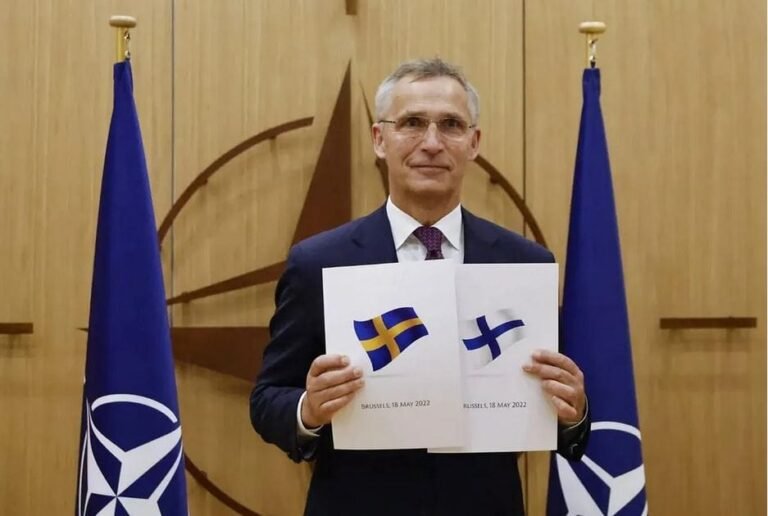
After Türkiye objected to the NATO membership of Finland and Sweden, Canada and the United Kingdom were the first to announce that they were lifting their sanctions. It was also announced that Sweden and Finland would lift theirs.
It was claimed that the US State Department had sent a letter to Congress stating that the Biden administration believed a potential sale of F-16 fighter jets to Türkiye would be consistent with US national security interests and would also serve NATO’s long-term unity. In other words, it is highly likely that the US, too, will lift its sanctions on Türkiye, with the exception of the F-35.
In conclusion, Türkiye will try to get the sanctions previously imposed by the West cancelled by opposing the NATO membership of Finland and Sweden. On the face of it, this stance can be seen as a sound move in terms of national security and counter-terrorism. But the real question to examine, before Türkiye tries to correct a pile of mistakes with immoral methods of coercion, is why it was subjected to these sanctions in the first place. In short, Erdoğan’s arbitrary management of the country’s foreign and domestic policy in line with his own interests is doing great damage to Türkiye’s national security and its fight against terrorism.
Update (November 2026): Finland joined NATO in April 2023 and Sweden in March 2024. After the Turkish parliament ratified Sweden’s membership, the US approved in January 2024 the sale of 40 new F-16s and modernisation kits to Türkiye. Around the same time, Canada lifted its export restrictions on UAV cameras.
Monthly · free
Compass of the Month
PUGAT’s monthly newsletter.
Read next

What is PUGAT? A non-profit community publishing independent analysis from Europe on security, migration and society in Turkish, German and English.
Go to the homepage
