


Israel’s ground operation in Gaza will not be a rapid advance but a long siege war. The Acacia Base, where the Israeli army prepares for urban warfare, and the likely course of the war.
An Assessment of the Course of the War
On Monday, 30 October, Israeli special forces began advancing with armoured units, with the centre of gravity at Beit Hanoun, as I stressed in my previous article. Reports also say special forces have infiltrated from the east of Gaza. But nobody should expect a rapidly advancing Israeli army. To give a definition anyone can understand in military terms, I can safely say that this war will be a siege war. Facing Hamas in a narrow area, ready to fight to the death, the Israeli General Staff will strive to plan the operations of artillery, mechanised, air and infantry units simultaneously and in coordination in order to keep its losses to a minimum.
The Israel Defence Forces specialise in fast, mobile warfare with infantry supported by mechanised units. In urban warfare, the inevitable result of siege warfare, advancing quickly not only increases losses but also fails to achieve the desired result. In urban warfare, controlling every square metre matters. In addition, many experts stress that the Israeli army has remained in a defensive posture in recent years and relied heavily on high firepower, long-range weapon systems and missile defence systems, and that this has made the ground forces complacent. Military service in Israel is also compulsory, which means the army does not consist entirely of professional soldiers. Apart from special forces, the ground units in active use are not as numerous as people think. A large part of the army is also deployed in the West Bank in a role similar to our gendarmerie or as an auxiliary police force.
In siege warfare, it is quite normal to use methods that outside observers may interpret as hesitation. In city sieges, if there is enough time, crushing the enemy gradually is the preferred method. Try to kill a bee in your palm by crushing it and it will sting you. Generals planning an operation will first want to keep their own losses to a minimum. Another possibility is that they want to secure the release of as many of the hostages as possible. Perhaps they do not want to push Hamas militants so far onto the defensive that they start killing the hostages.
In this context, I expect the Israeli army to try to advance by creating small liberated islands in certain parts of the city and gradually enlarging them. Since it will be a multidimensional war above and below ground, they seem to have no other choice. (Update, October 2026: apart from a temporary ceasefire between January and March 2025, the ground operation continued until the ceasefire of 10 October 2025.)
The course of the Gaza War and the Israeli army’s operational strategies are the result of comprehensive training programmes and tactical preparation. The Acacia Base, the hub of this training, forms the core of Israeli military doctrine and plays a critical role in the success of the operations carried out. Hosting a wide range of military personnel, from the Israeli army’s special forces to its mechanised units, the Acacia Base is designed to improve soldiers’ skills in tactics specific to urban warfare and siege conditions. As the army faces the difficulties of siege warfare, the experience gained at the Acacia Base is critical for such situations. Now let us take a closer look at the details of this training centre and what it means for the army.
The Acacia Base
In 2005, with US help and at a cost of 45 million dollars, the Israeli army built the Tze’elim Urban Warfare Training Centre in the Negev Desert near Kibbutz Tze’elim. The area takes its name from the acacia trees, called tze’elim in the Bible, which grow there in abundance.
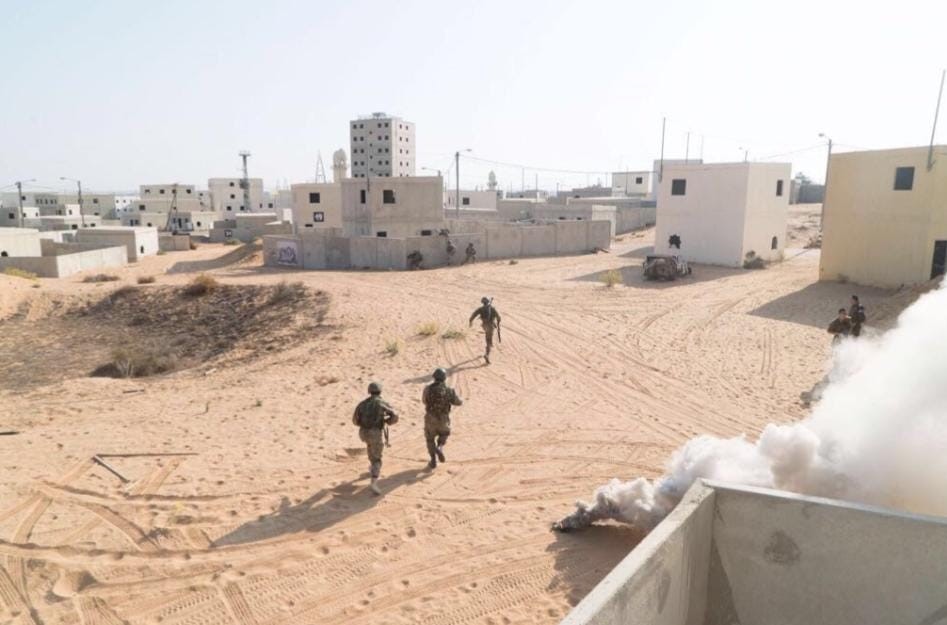
The centre is a mock Middle Eastern-style city with multi-storey buildings, covering an area of around a thousand dunams together with artificial villages and roads. Many armies, including the US Army and even UN peacekeepers, use this artificial city for training. The project was developed in response to the need for more urban warfare training, a concept the Israeli army quickly adopted because of the losses suffered in fighting during the Second Intifada. It is equipped to meet every need for the house-to-house and underground fighting likely to occur in the Gaza Strip as well as the West Bank, southern Lebanon and other Middle Eastern cities. It is constantly updated in line with new developments. At this tactical training centre, exercises can be held with units of different sizes, from 20 to 3,000 soldiers. Training is also given in areas such as air assault operations, ground-air coordination and satellite tracking.
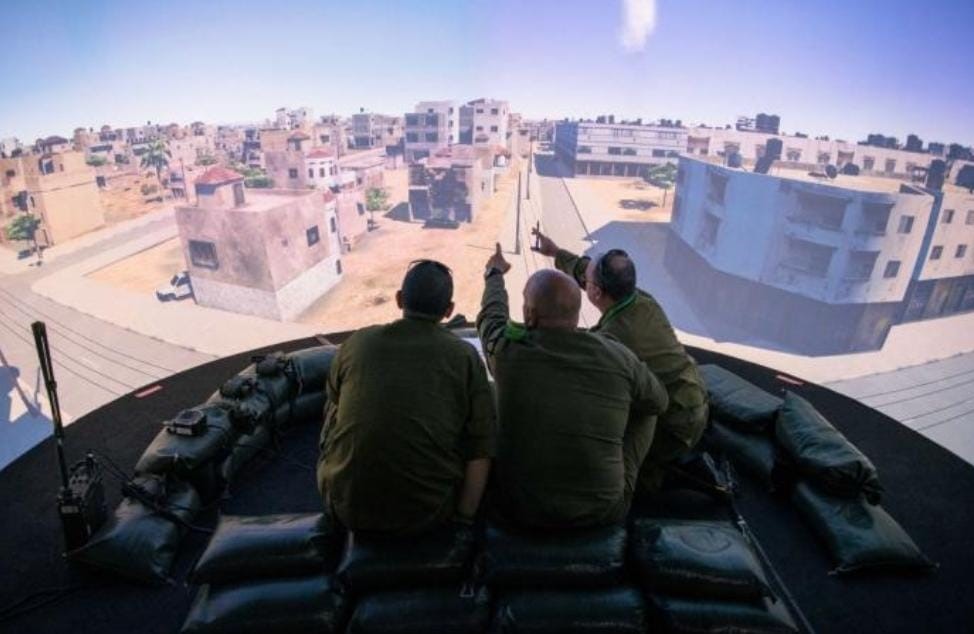
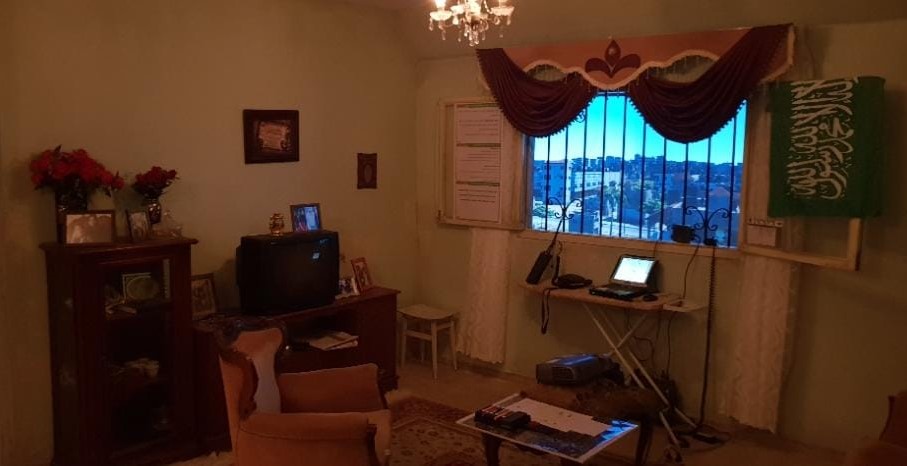
In the area, made up of 600 structures, every detail has been considered: streets full of rubbish, shop windows, schools, houses, shacks, eight-storey apartment blocks, tunnels, mosques, calls to prayer from minarets lit with green lights, down to the household items a family would use inside a home. So that trainees entering the houses can grasp the spirit of the fighting and the atmosphere awaiting them, sudden street clashes, mortar attacks and explosions are recreated with the help of simulators. Copies of the graffiti common on house walls in Gaza’s streets, showing Islamic Jihad militants firing RPGs (Russian-made shoulder-fired rockets) or Hamas founder Sheikh Ahmed Yassin, can also be seen in this artificial city.
Urban warfare training centres are facilities of varying size frequently used by many armies. What sets the Tze’elim base apart from its counterparts is its size and realism. In urban warfare training centres, which generally have capacity up to battalion level and consist mostly of container buildings, units are trained in entering and clearing buildings, bringing targets under fire, breaking out of encirclement, and identifying and classifying targets.
Advances in simulation technology allow soldiers to be put through very different training scenarios and contribute significantly to the overall aim of training, which is to improve soldiers’ tactical knowledge. But the nature of war is changing. Thousands of soldiers fight a much smaller enemy in cities where millions of civilians live. That is why it is very important for urban training facilities to reflect the combat environment exactly. You cannot imagine how hard it is for a brigade of 1,000 to advance in full coordination through dark, narrow streets, with rockets whining overhead, the smell of burnt gunpowder and bullets cracking above your head. Add a civilian population to this tension and the scale of the savagery multiplies. That is why the importance of building the battlefield beyond simulation is beyond dispute.
Today armies are restructuring in the light of the lessons learned and experience gained over the last century. With advancing technology, new methods are added to hybrid warfare every day. Through proxy wars and intelligence operations, conflicts have shifted into built-up areas as never before. As the saying goes, you cannot tell whose hand is in whose pocket. Then there is the fact that wars are fought before the eyes of the world through social media and public opinion is steered positively or negatively, which is a subject for an article of its own.
The wish is that “if only humankind did not use its intelligence to kill”. But wars are a fact of life, and powerful states prepare their armies well for the wars that await them. If you ask, “And what about Turkey?”… Let us leave that for another article.
Monthly · free
Compass of the Month
Once a month: five points from Europe’s security and migration agenda and the month’s PUGAT articles, in your inbox.
Newsletter sign-up opens soon.
Read next


What is PUGAT? A non-profit community publishing independent analysis from Europe on security, migration and society in Turkish, German and English.
Go to the homepage
