

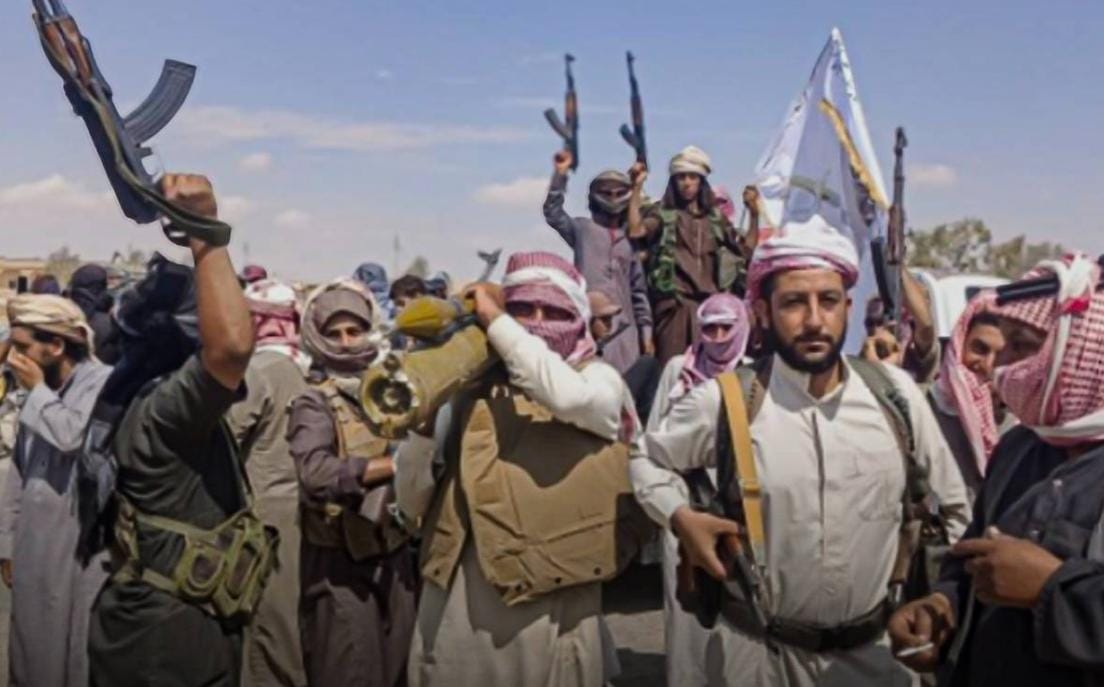
From the outside the SDF may look like a homogeneous structure, but it is a fragile coalition resting on Arab tribes. At a time when US support is weakening and power has changed hands in Damascus, this alliance is unravelling.
After the clashes in Aleppo last week, the SDF lost the first serious test since US protection was lifted. For some this came as a surprise, but those who follow the ground closely saw it as the outward expression of a deeper problem that has long been building up in Syria.
Although most people perceive the SDF as a homogeneous, disciplined and ideological organisation, the reality does not quite match this picture. The SDF is a multilayered coalition in which the YPG forms the military core, while the Arab tribes provide manpower, local legitimacy and governability. Today the weakest link in this coalition is precisely this tribal pillar.
Why Were the Tribes Indispensable for the SDF?
The SDF’s ability to hold on in Deir ez-Zor, Raqqa, Tal Abyad and partly around Aleppo was made possible not only by military force but by the consent offered by tribal networks. That is why, from its foundation, the SDF adopted a model of “integrating the tribes”. Local military councils, civilian councils and tribal notables were the cornerstones of this model.
But there was a critical distinction here: most of these tribes moved closer to the SDF not out of ideological loyalty but out of necessity, because of the circumstances of the time. In other words, they acted pragmatically.
Who Are the Tribes, and Where Do They Stand?
Shammar
Based in Hasakah, it is one of the oldest-established tribes of north-eastern Syria. Through the Al-Sanadid Forces, it was the group that formed the earliest and most institutional relationship with the SDF. Because of its history of cooperation with the Kurds, it has been the most compatible tribe within the SDF. But this is the exception rather than the rule.
Tayy
Taking a position against the rise of the Shammar in the region, the Tayy tribe has over time shifted closer to the government in Damascus. Its distance from the SDF also reflects rivalry between tribes.
Uqaydat Confederation
It is the largest confederation along Deir ez-Zor and the Euphrates. It includes many branches such as the Shaitat, Bukayir and Ubayd. The SDF’s largest pool of Arab manpower came from here. But the biggest ruptures with the SDF have also occurred within this confederation.
Shaitat
It is one of the best-known branches of the Uqaydat. Because it suffered major massacres at the hands of ISIS, it was for a time one of the SDF’s most determined allies. But after an execution in 2025 it declared a general mobilisation against the SDF, becoming the first major tribe to break openly with it.
Baggara
It is influential along the Tal Abyad, Raqqa and Deir ez-Zor line. With its large population and armed capacity, it is a critical actor. Opposing the SDF’s conscription and property policies, it suspended military cooperation and moved closer to the government in Damascus.
Zubaid
It is referred to as the broader confederal structure to which the Uqaydat belong. It is mentioned more in a political and social context. It is not a military structure directly integrated into the SDF.
Na’im, Anizah, Hannada
These tribes, living around Raqqa and Tal Abyad, have had more limited and fluctuating relations with the SDF. They have mostly preferred to stay neutral and increased their distance after the conscription policies.
Jays, Slouk, Hamam Turkmen
These are Arab and Turkmen tribes around Tal Abyad. With strong ties to Turkey, these groups are among the most distant from the SDF, but because they live in the region they have relations with the other tribes.
So Why Is Support Unravelling?
There were three main reasons for the tribes’ support for the SDF.
- Security against the ISIS threat
- The strength and deterrence provided by the US presence
- Gaining an advantage in local power balances
With the ISIS threat gone and the change of power in Damascus, we can say that “gaining an advantage in local power balances” has become the top priority for the region’s tribes. Nor does the US have the ability to respond one by one to the expectations of the tribes within the SDF, which it regards as its partner east of the Euphrates. We are talking about blocs of power in which one opposes what another wants. In this context, the conscription, property confiscations and centralised administration the SDF imposed in Arab areas in recent years had caused serious discontent among the tribes. For a while this discontent did not turn into open revolt, but reports from the ground confirm that the long-standing, muffled grumbling has recently been getting louder. Of course, the government in Damascus is not idle either; through its contacts with local tribes it wants to shift regional alliances in its favour.
To sum up…
The SDF’s having to withdraw from some neighbourhoods in Aleppo without local support sent the tribes a very clear message: “The SDF can withdraw; local forces are what last.” The administration in Damascus is all but forcing this message onto the agenda of the tribes in Deir ez-Zor and Raqqa as well.
Today the SDF has two clear options:
The first option: to continue to see the tribes merely as a military apparatus. This view brings rapid and massive switching of sides when the balance of power changes.
The second option: to recognise the tribes as real political actors. This would require the SDF to loosen its centralised structure by reducing the weight of the YPG, and to allow genuine local representation.
So far, the picture shows that the SDF has chosen the first option and is paying the price for it east of the Euphrates. Now everyone is wondering whether Rojava will be next. We do not know what plan B the Kurds have outside US protection, but stability in eastern Syria can last if it is the product of consent rather than weapons. Without US protection, Rojava, caught between Damascus and Turkey, has no chance. In this respect, preserving local balances is a necessity for the Kurds. Besides, a structure that loses the consent of local tribes loses at the negotiating table, however strong it may be on the ground. Update (October 2026): Shortly after this article was written, in mid-January 2026, government forces launched a large-scale offensive east of the Euphrates. Many tribes, the Shammar among them, switched sides; Raqqa, Tabqa and Deir ez-Zor quickly came under the control of Damascus. With the comprehensive agreement of 30 January, the integration of the SDF into state structures began, and on 25 August 2026 Mazloum Abdi announced the formal dissolution of the SDF.
Sources
- The National Context: Shammar chief meets Ahmed al-Sharaa thenationalcontext.com
- Wikipedia: Al-Sanadid Forces en.wikipedia.org
- EUAA, Syria Country Focus 2025: Areas under SDF control euaa.europa.eu
- Enab Baladi: Tribe in eastern Deir ez-Zor declares mobilisation against the SDF english.enabbaladi.net
- Washington Institute: Tal Abyad, Achilles’ heel of the Syrian Kurdish belt washingtoninstitute.org
Monthly · free
Compass of the Month
Once a month: five points from Europe’s security and migration agenda and the month’s PUGAT articles, in your inbox.
Newsletter sign-up opens soon.
Read next


What is PUGAT? A non-profit community publishing independent analysis from Europe on security, migration and society in Turkish, German and English.
Go to the homepage
