

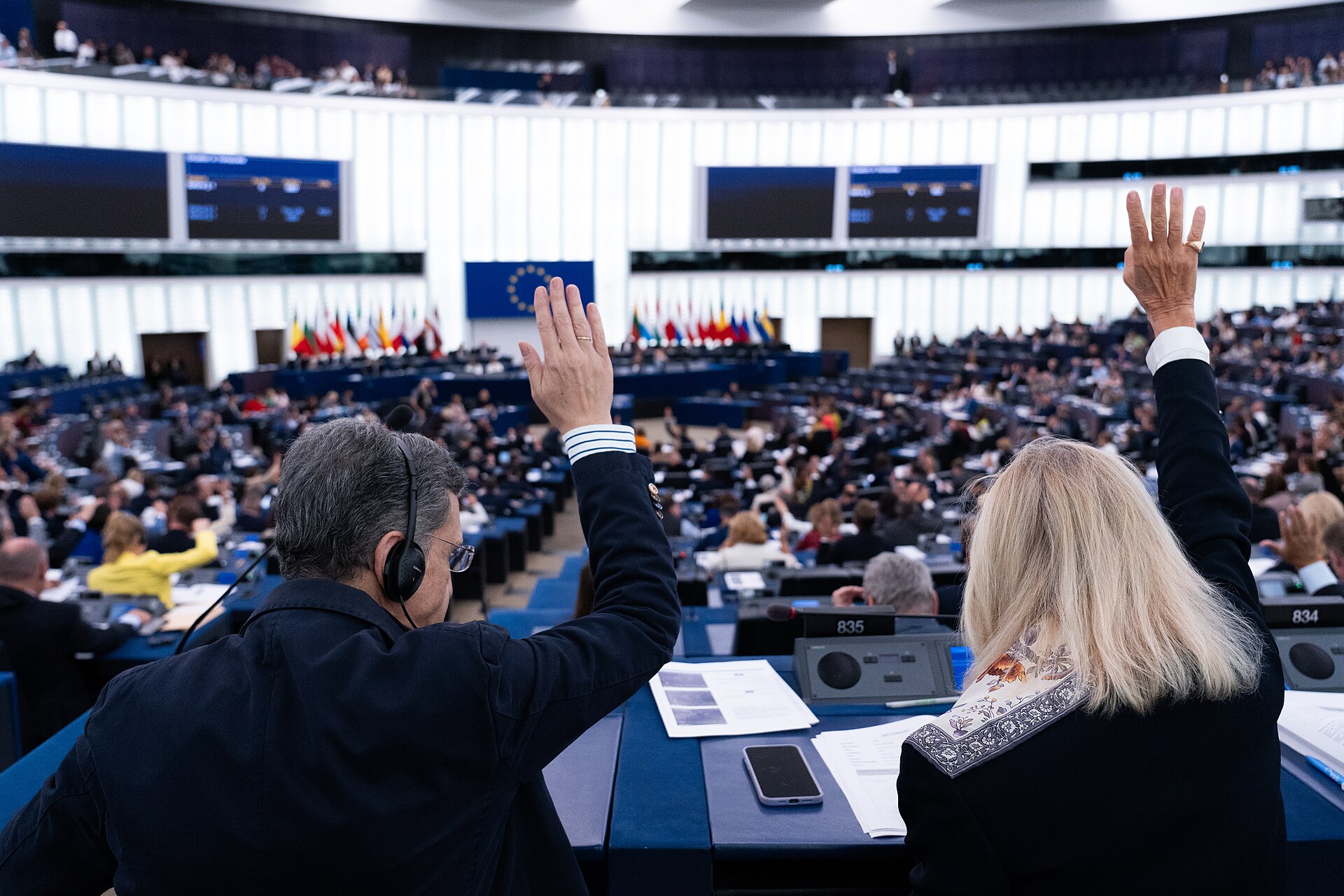
“Politics is the art of fleecing the people” is a crude saying, but it captures a truth: instead of denying reality, modern politics packages part of it and leaves the rest in the dark. On the trinity of good news, patience and foreign powers.
The fate of some societies is drawn with words before it is drawn on maps. Some words are engraved in a nation’s memory, and each generation reads them anew: justice, trust, patience, homeland, traitor, foreign powers… In our part of the world these words keep circulating in squares, on screens, in coffeehouses and on social media.
The remark of a politician, once held in esteem by some, that “Politics is the art of fleecing the people” is of the same kind and dose. Our ancestors did not say for nothing: “As the dervish thinks, so he chants.”
Today, what we call “politics” seems in many people’s minds to be less about organising the affairs of state than about managing moods. As if what is governed were not roads, schools and hospitals so much as anger, fear, belonging and the sense of “us and them”.
“Fleecing” is a crude word, true. But sometimes crude words capture the truth better than polished ones. For modern deception is no longer old-fashioned lying. Modern deception, rather than denying the truth wholesale, takes one part of it, packages it and leaves the rest in the dark. And of course the packaging is shiny, the presentation professional and the slogan effective. The truth, by contrast, needs long sentences; it requires patience, data and accountability.
Is Politics the Art of Telling a Good Story?
Human communities do not live by bread alone; they live by meaning. Even in times of famine people tell stories, because stories make suffering bearable. That is why politics has always been partly a matter of “narrative”. It asks, “Who are we?” It asks, “Where did we come from?” It asks, “Who is friend and who is foe?” It asks, “What befits us?”
The leader of a country is also that country’s chief storyteller.
But storytelling can go to two extremes: it either deepens the truth or covers it up. If the story is built to show the truth, a nation matures. But if the story is built to hide the truth, a nation becomes childlike. It is distracted by slogans and consoled by artificial enemies.
In our stories there has long been one unchanging motif: threat. These lands really have faced many threats. That is why the sense of “threat” is easily triggered. But a feeling does not remain justified for ever just because it was once justified. Pinning a reality that was true in the past onto everything today does not show historical awareness; it becomes an excuse for failing to govern.
The “Foreign Powers” Story Was Once True; Now It Is a Balm for Every Ill
It is no coincidence that our generation traces the story of backwardness back to before the First World War. In those days, saying “foreign powers” was not merely a slogan. “Foreign powers” pointed to a real opposing front, a real occupation or real losses. The economy had gone badly. The trained workforce had melted away on the battlefields, and the word “martyr” had entered family trees as a painful memory. The stories we heard then were convincing, because they came out of reality.
But today… Today, blaming everything that cannot be managed on foreign powers has become a kind of ready-made phrase economy. It is very easy, but as dangerous as it is easy. Easy, because it shifts responsibility outwards. Dangerous, because it paralyses the will to correct mistakes at home.
If a country cries “foreign powers” at every failure, it is putting off asking itself: “So why are our institutions weak? Where is our plan? Why has merit eroded? Why do we invest in concrete instead of science? Why do we see criticism as an enemy?”
When the question is not asked, no answer comes. When no answer comes, the same cycle repeats. When the cycle repeats, people’s language turns bitter: “Another fairy tale?”
The Holy Trinity of Politics: Good News, Patience, Foreign Powers
Politics sometimes resembles a theatre stage: the curtain rises, the applause is arranged, the light falls on the right spot. The play has three main lines: good news, patience, foreign powers.
As things get harder, the words “good news” multiply. Good news becomes a sound effect that fills the place of plans, institutions and merit. And it is accompanied by a measure of time, “very soon”, that works independently of the calendar in politics. “Very soon” is sometimes a month and sometimes ten years, but in every case it serves to sell hope.
Patience is of course a virtue. It is also precious in our faith tradition. But if patience is always demanded of the people and always paid for by the people, it ceases to be a virtue and becomes exploitation. Patience gains meaning through justice, transparency and shared sacrifice. Otherwise patience turns into an embellished way of saying “be quiet”.
The last line, “foreign powers”, ties everything up and packages it. This phrase is a kind of political raincoat. It is worn in all weathers. If it rains, foreign powers; if the sun comes out, foreign powers; if the wind blows, foreign powers…
But one cannot help wondering: if these foreign powers are so powerful, why are we caught unprepared every time? Why are our institutions still so fragile?
What are the country’s security forces and intelligence services doing? Of course, their job is different: they are to create an atmosphere of fear in the country!
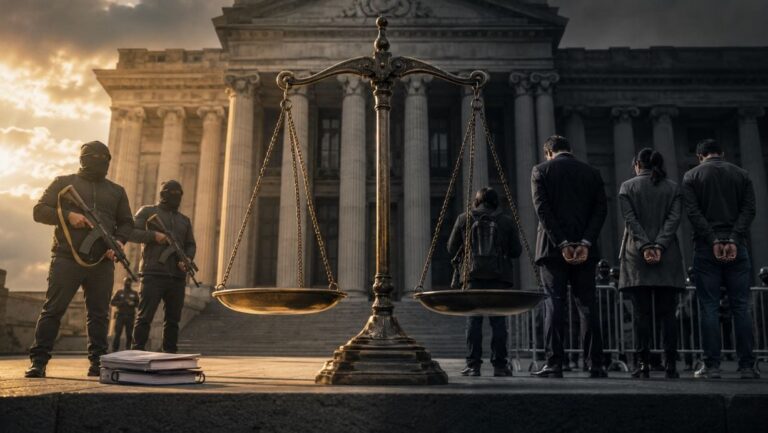
They are after the Elif teachers: women in their late twenties whose husbands have been convicted in a case whose grounds and offence are unclear, who are denied the right to a life, whose passports have been seized, and who, with an eight-month-old baby in their arms, squeeze their hope into a backpack and try to cross the Evros (Meriç).
After all, fear… spreads faster than anything.
The Ethical Backbone of the Turkish Muslim Ideal of the Ruler
In the memory of this land, the image of the “good ruler” is strong. In the Turkish-Islamic tradition, the ruler is in theory a “trustee”. And the concepts that accompany this ideal carry lofty meanings.
For example: justice means protecting the weak against the strong. Trust means seeing government as a responsibility, not as spoils. Merit means entrusting a task to the competent. Consultation means seeking counsel in order to struggle against arrogance. The rights of others (kul hakkı) is the name for scrupulously guarding the public’s rights. Avoiding waste means siding with measure rather than show.
These are valuable words and concepts. But when they become banners, they all wear out. Today, unfortunately, some of these concepts are used more for their label value than for the meaning they carry. Justice is evolving into “justice for partisans”. Merit is turning into “even if he is made of mud, let him be one of us”. Consultation is reduced to three or five photos taken on a plane, under the claim that “we held a meeting”. The rights of others are taught like a lesson in individual morality, but when the major violations of public rights are discussed, a great silence falls. Waste is called forbidden, yet the pomp of protocol becomes “a must”. After all, prestige cannot be compromised, can it?
We see the language of faith, which should soften hearts, hardening as far as it can on the screens. And this wounds not only politics but also society, because the people see this: “Values are talked about, but values are not lived.” Some behave as if they alone held the copyright on values and show no regard for other people’s faith and world view.
This is a country’s most dangerous wound: if the gap between word and deed grows, society’s trust falls into a widening void.
While the World Races with Artificial Intelligence and Quantum, We Are Still Busy Producing Enemies
Today the world is engaged in two great races: artificial intelligence and quantum technologies. These races are reshaping the economy, defence, health, education and production. America, Europe and China look at these fields as a kind of “design of the future”. Major investments, major research programmes, university–industry partnerships and strategies to attract talent follow one another.
While the world builds the future, we live constantly in the “language of crisis”. The country seems locked into a crisis management desk that is open 24/7.
Yet within 10–15 years artificial intelligence and quantum will widen the development gap even further, because these fields have a multiplier effect. Whoever catches the wave transforms all its sectors. Whoever misses it falls further behind every moment.
Are there steps being taken here in these fields? Is there a comprehensive plan? Are young researchers given room to advance? Are universities free? Is real production encouraged? Are people who criticise, propose and question valued?
If a country, far from being a centre of attraction, is instead accelerating its brain drain, this is not only an economic matter. It is a project of destroying plans for the future. A country that loses its trained people loses both its present and its future.
“Thinking Citizen” or “Obedient Citizen”?
Some systems like the thinking citizen, because thought brings innovation, science and production. Other systems need the obedient citizen more, because obedience makes governing easier in the short term. The person who asks questions demands accountability. The one who demands accountability demands transparency. The one who demands transparency demands oversight. And that disturbs comfort.
So how can science grow in an environment where “asking questions” is seen as dangerous?
Can innovation be produced where criticism is considered treason?
If one proceeds by monologue instead of consultation, how will strategy be built?
Science grows not through obedience but through curiosity. And curiosity begins with asking questions. That is why every political sanction that reduces the number of thinking citizens in fact turns the country’s future upside down. And then we turn around and ask: “Why have we fallen behind?” We look for the answer on the screens, yet the answer is in the eyes of the young people packing their suitcases.
The Rights of Others and Public Rights
In our tradition the concept of kul hakkı, the rights of others, is in fact a conscience alarm. People grow up believing in it: “Never violate another’s rights.”
So what about public rights?
Nepotism, favouritism, waste, non-transparent spending, unaccountable government, the attitude that “state property is a sea, and whoever does not eat from it is a fool”, lucrative tenders for relatives and partisans… These are not just “administrative problems” but direct violations of rights. A citizen’s taxes are their labour. When that labour is squandered, not only the budget is damaged but also people’s sense of justice.
Hurting a person’s dignity is also a violation of rights. Not taking people seriously, distracting them with slogans, hiding the truth… These too are a kind of violation of the rights of others, because one of a person’s most basic rights is to be taken seriously.
What Fairy Tales and Lullabies They Sang… and One Line: “We Were Deceived, We Were Deceived…”
If a society listens to the same fairy tale for a long time, it learns its rhythm by heart. “It will soon get better.” “A little patience.” “The real enemy is outside.” “We are very strong.” These lullabies may sound convincing in childhood.
But today, when the same tale is pinned onto every crisis, it stops protecting and becomes a shield. A shield does not correct the mistake; it only keeps it out of sight. It is precisely here that Sezen Aksu’s lyric, with its bitter smile, rings in the ears: “We were deceived, we were deceived…”
Young people put their hopes into suitcases.
Families pray over whether “the child should stay here or go”.
Educated people become alienated from the country with the feeling that “I am not valued”.
And then we are surprised: “Why are they leaving?”
They are leaving because there are countries calling on their talents.
So Is Politics Really the Art of Fleecing the People?
No, it does not have to be. Politics is, in essence, a matter of trust. It means making the rules and laws that make living together possible fairly and in a way that embraces everyone. It means a country paying its debt of hope to its children. It means a ruler being able to say “my nation” instead of “my partisans”.
But when politics goes unchecked and loses its ethical backbone, it quickly turns into the art of “fleecing”. For then the ruler looks at citizens not as partners but as a target audience. And to a target audience, perceptions are sold, not facts.
To get out of this bottleneck, there is no need to wait for a miracle. We just need to put in a little effort. Merit, transparency, accountability, respect for criticism, investment in science, shame at and avoidance of waste, truly practising consultation… We should give a little attention to these too.
At this point one thing must be stressed in particular: the cleansing of language. A language that brands every critic a traitor will in the end brand the truth a traitor too. Where the truth is declared a traitor, how will a future be built?
In conclusion, at a time when the world is building a new age with artificial intelligence and quantum technology, our being stuck in an endless “foreign powers” cycle is the result of our wrong choices. If the choices change, this language will change too. I hope that one day, in all the machinery of government, there will be rulers who use the word “good news” little but do their work well, who do not ask people for patience but deserve it, and who, instead of looking for enemies abroad, fear violating the rights of others at home.
And I hope that one day this country’s brightest young people will dream of preparing laboratories instead of suitcases.
A country that does not produce knowledge imports the knowledge produced by others. And what is imported is not only technology but also mindset.
That is why politics should not be an art of “fleecing” but a “test of trust”.
And the name of the trust is clear: the human being. Let people live, so that the state may live.
And what people are owed is clear too: justice, respect, and being able to live free of economic worries and fear for the future.
Monthly · free
Compass of the Month
Once a month: five points from Europe’s security and migration agenda and the month’s PUGAT articles, in your inbox.
Newsletter sign-up opens soon.
Read next

What is PUGAT? A non-profit community publishing independent analysis from Europe on security, migration and society in Turkish, German and English.
Go to the homepage
