

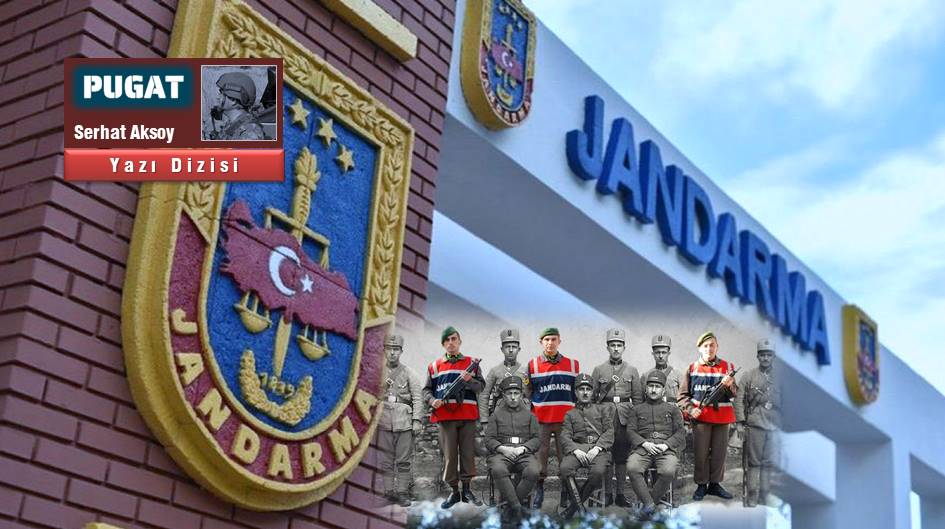
The past of thousands of soldiers was disregarded overnight, and their comrades-in-arms fell silent. From the pen of a former gendarmerie officer, the first part of The First Door: The Gendarmerie series: The military gendarmerie.
For a long time I took stock of myself. I thought a great deal while building a new life on this new road that fate had set for me. What saddened me was the silence that my comrades-in-arms in the Gendarmerie, whose uniform I wore for years, kept in the face of everything that happened. Because there had been a grave injustice. The whole past of thousands of soldiers had been disregarded overnight and they had been wronged. My reproach was that, although five years had passed, not enough effort had been made to bring the truth to light.
Then I decided to write in my own way. To write so as to shed light on our recent history. And even to write so that the Gendarmerie, whose uniform I wore for years, might be in a better position. In writing, my aim is not to quarrel with anyone. Only to ensure that, in the light of the experience I gained over the years, I can still be of some use to this organisation.
In a way, I am also writing to leave my children a better future. With the maxim a veteran of ours voiced after what he went through, ‘Do not grieve, homeland, if you call, we will come again’, we are waiting for the duty that will be given to us.
I believe that the development of the Gendarmerie must be examined in parallel with the political life of Turkish society. While I was preparing my articles on the Gendarmerie, police-politics-mafia relations once again fell on Turkey’s agenda like a bomb. We saw how promotions, evidently determined entirely under political direction, were held back, and what kinds of bargains may have been struck over those promoted. We all listened together to how Gendarmerie personnel tainted by political relations took a criminal out of prison and drove him in a private car to a hotel, into a different network of relations.
It is an undeniable fact that, as society grows and develops, ensuring internal security has become a major problem. If we cannot correctly understand the place of the Gendarmerie in the political life of Turkish society, in the policies we produce to develop the Gendarmerie in a healthy direction we will either go back to square one or keep repeating the mistakes made.
I suspect the most important mistake is confusing the Police and the Gendarmerie, the two organisations that provide security, with each other. If lasting and effective solutions are wanted, it must first be accepted that these two institutions have different cultures and structures and that they must be developed according to these differences. The foundations of the Gendarmerie are formed by a military culture laid down since its founding.
We see that throughout our history the subject of security has always been associated with military units. For the Turkish Gendarmerie to find a place among the gendarmeries of the modern world, examples from European gendarmeries were examined. These examples always highlighted, alongside the gendarmerie’s police services, its services connected with the army[1].

The existence of very different police and enforcement forces under the command of local administrators emerged as a problem for ensuring general security and public order. To solve this problem, there was a need to reorganise these units and to establish a regular law enforcement unit that would be used as a military force in wartime. One of the most important reasons for this need was the expectation that the law enforcement force of the time, which had itself become a problem, would through this system become regular soldiers, that the security question would be solved, and that it would contribute to the army as regular soldiers in wartime as well as in peacetime.
In the pre-Tanzimat reorganisation process, the fact that the civil, judicial, financial and military classes in the state organisation were not strictly separated[2] led to certain problems. The confusion of responsibility in security matters in particular was one of the main causes of this problem. During the new administrative organisation, the civil, judicial and military institutions all wanted the police body to be created to be under their own control, and each argued that, within the scope of its work, the police should be entirely attached to it. With the Regulation on the Civil Duties of the Zaptiye Soldiers (Asakir-i Zaptiyenin Vazife-i Mülkiyelerine Dair Nizamname) prepared on 18 June 1870, an attempt was made to place the legal status of the police forces to be created on a legal footing[3], but the desired result was achieved only in later years.
The policy of land privatisation, which developed rapidly under Abdülhamid II, also resulted in increased agricultural production and the growth of cities[4]. As a result of this change, it became clear that the classical old security measures (the very different police and enforcement forces under the command of local administrators) were not sufficient and that more organised, professional policing policies were necessary.
All these palliative methods failed to solve the problems and led to having to deal with bigger problems in later periods.
Tomorrow I will discuss the Gendarmerie’s chain of subordination, the differences between police and gendarmerie, and the relationship between politics and the gendarmerie.
[1] Ahmet Özcan, Osmanlı Devletinde Jandarma Teşkilatının Kurulmasının İlk Gündeme Gelişi (1839), Tarih Araştırmaları Dergisi, 2013, vol. 32, no. 53, pp. 173-194
[2] Süleyman Tekir, Osmanlı’dan Cumhuriyet’e Jandarma: Kuruluş Teşkilat ve Mücadele (1903-1938), Timaş Yayınları, İstanbul, 2020, p. 34
[3] Süleyman Tekir, op. cit., p. 45
[4] Kemal H. Karpat, İslam’ın Siyasallaşması, Timaş Yayınları, İstanbul, 2019, p. 144 (7th ed.)
Part Two: The First Door to the Court of Justice: “The Gendarmerie” (2) Civilian Gendarmerie
Monthly · free
Compass of the Month
PUGAT’s monthly newsletter.
Read next

What is PUGAT? A non-profit community publishing independent analysis from Europe on security, migration and society in Turkish, German and English.
Go to the homepage
