

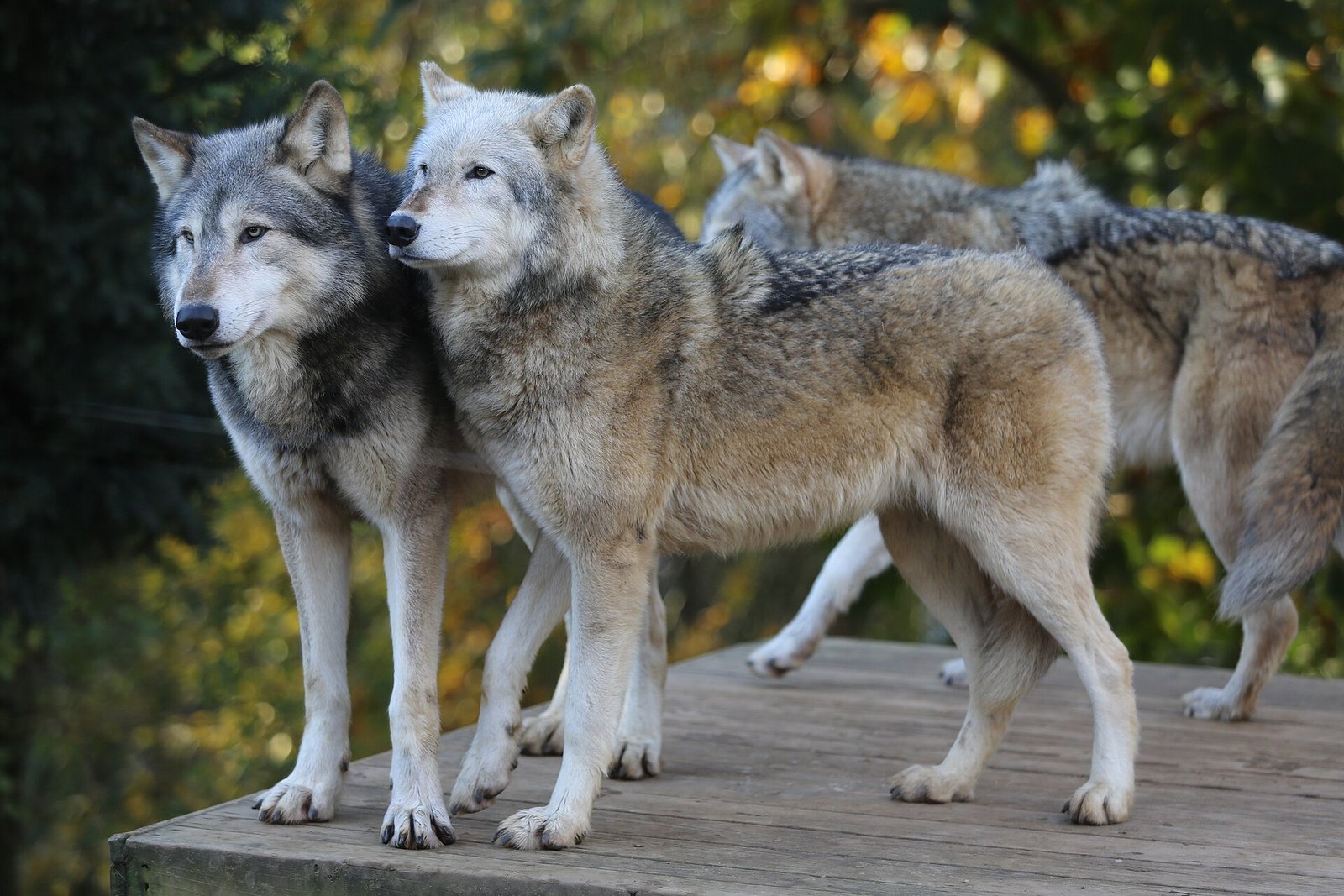
Beyond the ban debates in Europe, the Grey Wolves have officially been considered a terrorist organisation in some Central Asian countries for a quarter of a century. The fifth part of the Ülkücü series.
In our previous articles we tried to show that, although ignored or tacitly supported in Türkiye, the Grey Wolves are openly regarded as a “threat”, having become the subject of certain bans and investigations in Europe and the US. In this article, taking the perception of threat about the ülkücüs (Turkish ultranationalists) one step further, we will look at Caucasian and Central Asian countries such as Azerbaijan and Kazakhstan, which have officially regarded this formation as “terrorist” from 1995 to the present, and at the general situation in the Middle East.
A Grey Wolves-Backed Coup Attempt in Azerbaijan
The ülkücüs, or Grey Wolves as they are also called, being seen as a threat in the world is nothing new. First, in 1995, the state of Azerbaijan banned this formation nationwide on the grounds that it threatened the country’s unity and integrity. The name of the Grey Wolves, who had fought for Azerbaijan in the Nagorno-Karabakh war of 1988–1994, became involved in the failed coup attempt of 1995, also known as the “Baku Coup”. In fact, the ülkücüs were not the only ones whose names were involved in this attempt in another independent country.
As tools of deep structures entrenched within the state, the ülkücüs would carry out across the border the actions they had first rehearsed on Turkish soil, and thanks to this the Turkish deep state or the Turkish government would change the government in another independent country, and in “brotherly Azerbaijan” at that. At least that was someone’s plan.
According to information in the censored 12-page section of the Susurluk Report, later revealed in the Ergenekon indictment, this attempt, organised by Colonel Rovshan Javadov, commander of Azerbaijan’s Special Purpose Police Unit, and a group of Azerbaijani soldiers with him, and shaped with broad bureaucratic support from Türkiye, offers important clues about the role the ülkücüs played with the state and on its behalf in the state’s “dirty work”. The report states that the then Prime Minister Tansu Çiller and Minister of State responsible for the Turkic Republics Ayvaz Gökdemir, Ambassador to Azerbaijan Altan Karamanoğlu, MİT Undersecretary Ertuğrul Güven, Embassy Religious Counsellor Abdülkadir Sezgin and Military Attaché Engin Alan directly or indirectly supported the coup. In addition, the names of the then Director General of Security Mehmet Ağar, Veli Küçük, later promoted to brigadier general, and people such as Abdullah Çatlı, Korkut Eken, İbrahim Şahin and Ayhan Çarkın were also involved in this failed coup attempt.
Among the information that came to light is that, three months before the coup attempt, on 12 December 1994, a team including some of the people named above took a large quantity of weapons and ammunition from Türkiye to Baku and that a special 60-man unit was trained in Azerbaijan.
In this coup attempt, in which the ülkücüs were used as tools just as in the famous May Day events or the Maraş incident, the actors aimed to remove the then President of Azerbaijan, Heydar Aliyev, and replace him with Abulfaz Elchibey on the grounds that this “better suited Türkiye’s interests in Central Asia”. Although Azerbaijani and Russian intelligence units noticed the situation in advance, they followed developments without reacting. After it became clear that things were going badly, Plan B was put into effect, and the Turkish side tried to extricate itself from the affair when, at MİT’s suggestion, the then President Süleyman Demirel personally informed Heydar Aliyev of the coup.
The failed coup attempt suppressed by Aliyev cost around 400 people their lives. This incident, in which Türkiye was seen in the international arena as interfering in another country’s internal affairs and the ülkücüs were used as tools, went down in our diplomatic history as a black stain.
Kazakhstan Put the Ülkücüs on Its List of Terrorist Organisations
By 2005, the Grey Wolves were this time placed on the list of terrorist organisations in Kazakhstan. According to the decision of the Supreme Court of the Republic of Kazakhstan of 15 March 2005, the “Grey Wolves” (as written by the Kazakh authorities: Boz Gourde) are referred to as a “terrorist organisation” in the country’s official records. It can be said that behind this stance of the Kazakh state, as in the Azerbaijani case, lies the aim of preventing efforts in Central Asia, and in Kazakhstan in particular, that contain expansionist aims based on ties of kinship.
In a report on the Grey Wolves published by the Committee for Religious Affairs of Kazakhstan’s Ministry of Culture and Sport, it is stated that the ülkücüs were the perpetrators of many political assassinations in the past, and regarding the May Day celebration in Taksim Square it says: “In May 1977 in Istanbul, ‘Grey Wolf’ terrorists opened fire on a peaceful demonstration. As a result of the attack, 40 people died.”
The Grey Wolves, regarded as terrorists in Kazakhstan for 16 years, are seen as a threat to Kazakhstan’s sovereign rights because of their Turanist ideology. In connection with this, the Kazakh state, proceeding from the assumption that “Kazakhstan is included in the Grey Wolves’ goal of creating a single Turkic state”, has banned the ülkücüs’ activities nationwide for many years.
The Syrian and Lebanese Civil Wars and the Ülkücüs in the Middle East
Having apparently learned no lessons from what happened in Central Asia, we see that the ülkücüs have also been active in the Middle East for similar purposes and, especially since 2011, have unofficially appeared on the territory of independent states in the civil wars that broke out in Syria and Lebanon. We learn from the audacious posts they made on their social media accounts that hundreds of ülkücüs, including people actively holding political posts in Türkiye such as MHP district chairmen or heads of the Ülkü Ocakları (Idealist Hearths), took part in those regions as proxy fighters with the knowledge and instructions of MHP headquarters and led irregular armed units organised under the name of “brigades”.
Again in the same period, the claim that the pilot of the Russian plane shot down by Turkish jets on the Syrian border on the grounds that it had violated the border was shot dead while parachuting down by the “brigade” led by the ülkücü Alparslan Çelik, then fighting in Syria, was one of the reasons tension between Russia and Türkiye rose to the highest levels. Çelik was not convicted on the charge relating to the pilot’s death.
These people engaging in unofficial activities on the territory of another independent country under the Turkish flag and uniform, whether on their own initiative or on the orders of MHP leader Devlet Bahçeli, while doing politics within the MHP, and becoming involved in actions that put the state in a diplomatically difficult position, can only be explained as endangering the existence and external security of the state. For after these events Russia, despite all the warnings and “pleas” of state officials, repeatedly bombed Turkish soldiers on Syrian soil and caused dozens of our country’s sons to be killed on that land.
In Closing…
We have examined the ülkücüs, otherwise known as the Grey Wolves, who maintain their existence in many countries outside Türkiye, who in countries committed to the principles of democracy and law confine their activities to “the use of violence” and “racist rhetoric”, and who, when they find the opportunity or when the climate is favourable, appear as a paramilitary force at the command of those with hidden agendas, to the point of changing governments.
Let us end our words by quoting here the following words spoken in 2015 by their own leader, MHP Chairman Devlet Bahçeli, about the situation of the ülkücüs, whose activities in Türkiye and in the international arena and whose positions left in the dark we have tried to shed light on, and about the likely point to which their path leads: “… Violence has been tied to our feet like a heavy stone, has wrapped our bodies like paralysis, and is indeed dragging us all towards a terrible whirlpool.”
Monthly · free
Compass of the Month
PUGAT’s monthly newsletter.
Read next

What is PUGAT? A non-profit community publishing independent analysis from Europe on security, migration and society in Turkish, German and English.
Go to the homepage
