

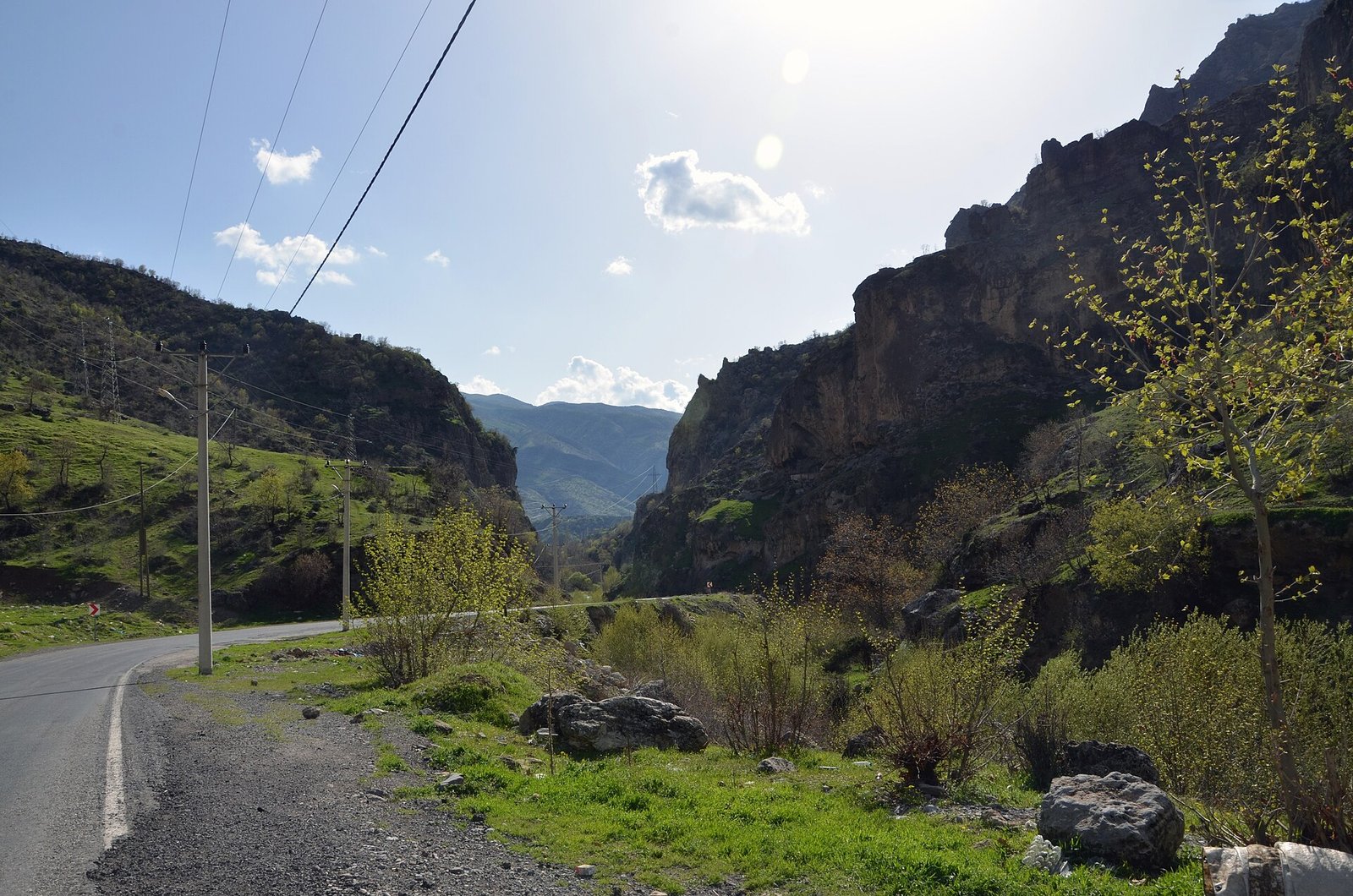
The Beytüşşebap raid staged by the PKK on Mount Kato in September 2015 was one of the gravest events of the bloody period in which the peace process collapsed. The account of an officer who lived through it.
September, the season of autumn, has come again and carried me back to that night. To the times when Ahmet Davutoğlu said, “if we open the files, they won’t be able to show their faces in public.” It was before the elections of 1 November 2015; the country had turned into a pool of blood, and the lives taken by exploding bombs had fallen like embers into our hearts.
Reports had intensified that the PKK, which had organised with ease in the cities during the peace process, was preparing a major action in rural areas.
25 September: They Came on a Holiday
On a cool, dark September night on Mount Kato, veteran members whom the PKK had sent specially from Qandil gave their final motivational speeches and wished the “Fedai Teams” success. Their aim was to seize the district, raze the Beytüşşebap Commando Regiment, the district governorate, the courthouse and the police headquarters, and to wipe out the presence of the state, if only temporarily.
On the night of 24 September, at around 23:00, some 500 PKK militants surrounded the district from four directions and began the attack with harassing fire. During the fighting that went on all night, fierce clashes took place especially on the “strategic” Bayrak Hill, which commands a bird’s-eye view of Beytüşşebap. We watched the clashes, conducted under the command of the Commando Regiment Commander, Colonel Ali, on the camera of an unmanned aerial vehicle, all but biting our fingers. By around 05:00 the fighting had spread to every part of the district, and the terrorist organisation was pressing with all its might. I say it without exaggeration: There was fierce, hand-to-hand fighting.
Let me give you an example so that you can picture it: The judges and prosecutors serving in Beytüşşebap at the time fought until morning so as not to surrender the courthouse. Some of their shoulders were bruised from firing rifles, and the nurses and the female court clerks were exhausted by morning from changing magazines, carrying ammunition and bringing spare rifles to replace those whose barrels had overheated. I would like to share every detail of the attack and write out one by one the names of all the heroes, seen and unseen, but I cannot go into details without their permission. That night in Beytüşşebap, the Regiment Commander, the District Governor, the judge, the prosecutor, the gendarmerie personnel, the police personnel and the intelligence personnel who repelled this attack saved, I can say, the honour of the homeland.
The PKK suffered a true rout. I read myself, in reports containing decoded encrypted messages from within the organisation, that its losses were greater than what was reported in the press.
What Did the Beytüşşebap Attack Mean?
I have thought a great deal about the answer to this question. From whichever angle you look at it, the Beytüşşebap attack had no coherent objective. At the time, the PKK had sent a large part of its rural cadre to northern Syria to fight ISIS in the ranks of the PYD. It needed militants from its mountain cadre to lead the inexperienced youth structure in the city centres. Given this, sacrificing some 100 militants to control a small district for two hours made no sense. Besides, in the “liberated zones” they had created in the cities with trenches and barricades, they were already sending messages aimed at denying the authority of the state.
Fine, but then why was this attack carried out?
In fact, it is the Kurdish public and Kurdish civil society associations that should have asked the PKK this question. The attack took place when it was obvious that the winners of the Beytüşşebap raid, carried out in parallel with the bombs exploding in the cities after the elections of 7 June 2015, would be the AKP and the MHP (that is, they would increase their votes at the ballot box). That night, the chaos plan that the “deep” PKK sought to stage jointly with the AKP-MHP coalition was foiled thanks to the heroism of level-headed personnel. Perhaps that is why the regiment commander, the district governor, the prosecutor, the judge, the soldiers, the police, everyone who served there that night, were all dismissed from their professions by emergency decree and thrown into prison.
Looking at the PKK’s actions from its first attack to the present, we can easily say that it has carried out many actions similar to the Beytüşşebap attack. The killing of 33 unarmed soldiers in Bingöl in 1993, the 1992 Şırnak raid, the 1993 Başbağlar massacre and the 2008 Aktütün raid are examples that spring to mind at once. The common aim of these attacks was to build public support for the “deep state’s” policies of the time. Indeed, when I was discussing this with a senior HDP figure in the region, he answered a question I put to him with words that struck me as sincere: “Commander! The warlords have never wanted to lose their positions in any period, why would they want to now? Besides, if you answer Roboski, I will answer your question.” Yes, do not be misled by the fact that the Kurdish politician’s reply to my question looks like a question. It was in fact a fine answer, the product of a subtle mind. What he meant was roughly this: At a time when the state was squeezing the PKK in every sense, the deep state gave the PKK the kiss of life by having civilians bombed from the air in Roboski; now the PKK is giving the kiss of life to the cornered deep state.
Because the Beytüşşebap attack did not achieve its aim, it never entered the public agenda.
As I wrote these lines, I thought that we have once again come round to the same point. Ahead of us lies a historic election in which Kurdish votes will be decisive. Before the elections of 1 November 2015 there was an accommodation between the AKP and the “deep state”, and the “deep PKK” worked for this accommodation to win. The question everyone is asking is this: Will the PKK repeat, in Erdoğan’s election of survival or extinction, the role it played before the 1 November elections?
Will the PKK, cornered in Northern Iraq and Syria because of international developments over the past two years and the change in the US position, break its age-old alliance with the deep state and take steps in Erdoğan’s favour? What could Erdoğan promise the deep PKK, linked to the deep state, to draw it to his side? The questions go on and on… We shall wait and see.
(Note: On this occasion, I pray for God’s mercy on Specialist Sergeants Ali Çakar and Mehmet Ali Bozkurt, who were martyred during the Beytüşşebap raid.)
Monthly · free
Compass of the Month
PUGAT’s monthly newsletter.
Read next


What is PUGAT? A non-profit community publishing independent analysis from Europe on security, migration and society in Turkish, German and English.
Go to the homepage
