

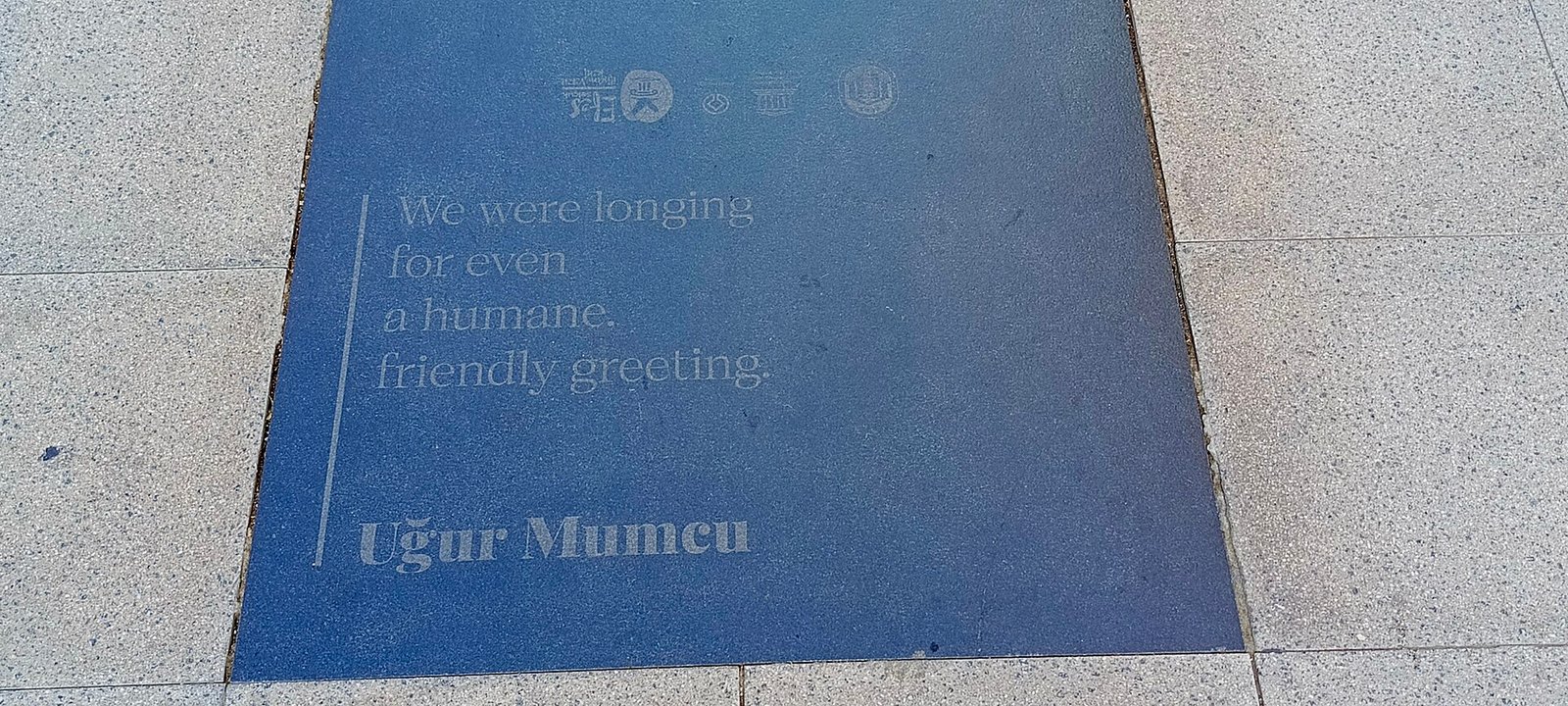
Uğur Mumcu was killed in a bomb attack in 1993, and the case has still not been fully solved. The second part of the Ülkücü series examines the Mumcu assassination and the claims surrounding Turgut Özal.
Uğur Mumcu, one of the most important journalists to have marked Turkey’s recent history, fell victim on 24 January 1993, while he was working to expose the dirty relations between the deep state and the PKK, to a mysterious assassination that remains unsolved to this day. Although 28 years have passed, there is still no concrete evidence to shed light on the killing. Some hitmen were caught, but many “suspects” were released after brief trials.
The Uğur Mumcu Assassination and Abdullah Argun Çetin
Abdullah Argun Çetin, who gave the most concrete information about the event and who, admitted before the parliamentary inquiry commission of the time, confessed in his testimony that he had trained in explosives the people who planted the bomb in Uğur Mumcu’s car, was kept out of sight on the claim that he had lied to the public.
Abdullah Argun Çetin, who admitted to being of Ülkücü origin and a member of the Turkish Revenge Brigade (TİT), stated that he had worked with Abdullah Çatlı and had been part of the team set up for the Mumcu assassination. He said that two weeks before the event a four-man team had reconnoitred the street where the explosion later took place, and that afterwards, in Ganja, Azerbaijan, he had specially trained the people who would later carry out the bombing on the same model of the Renault car that Uğur Mumcu drove. So much suspicion was cast on Abdullah Argun Çetin and his account that Fikri Sağlar, then CHP deputy for İçel, who had paved the way for him to be heard by the parliamentary commission, was accused of incompetence.
In an interview in 1998, Fikri Sağlar would say the following about Abdullah Argun Çetin and his statements, which had mysteriously dropped off the agenda after the parliamentary inquiry:
“…A person named Abdullah Argun Çetin came to our commission. This person gave very important information about the Uğur Mumcu murder. He explained that he was an Ülkücü working in Azerbaijan under the command of Abdullah Çatlı. He said that one day they had asked him to give bomb training to a few people and told him they would put this bomb in a car, that he had even come to Turkey for a day to be shown which car it was… He said this street was Uğur Mumcu’s street, that he was shown Uğur Mumcu‘s car. But for some reason Yaşar Topçu (ANAP deputy for Sinop) prevented him from giving further testimony and, shouting, threw him out of the commission. Saying he was lying…
– What became of this person?
– He disappeared afterwards.
– How did he disappear?
– He’s gone… He can’t be found!”
Abdullah Argun Çetin, of whom Fikri Sağlar said “He’s gone… He can’t be found!”, would later be tried at the State Security Court, would mysteriously deny in court all the statements he had made before the parliamentary commission, and would be released in 2017.
The Turgut Özal Assassination Attempt
Yet another assassination left unsolved… In this one, with Prime Minister Turgut Özal as the target, an Ülkücü again plays the leading role. The assailant, Kartal Demirağ, states that he had also attended the commando camps founded by Alparslan Türkeş, where Ülkücüs received training in many areas, armed training included.
Tried after the attack at the ANAP congress in Ankara, where Mehmet Ağar was police chief, Kartal Demirağ was first sentenced to 20 years in prison and, after Turgut Özal became president and pardoned him, was released on parole in 1992.
Ülkücü hitmen, the climate of terror they created, prime ministers targeted by assassins, investigations those prime ministers never managed to complete… Behind the scenes of the events that led Turkey to 12 September and afterwards into many other periods of turmoil, the names of Mehmet Ağar and Korkut Eken, who held official posts in the state apparatus, are somehow always mentioned together with names “working for the state” such as Abdullah Çatlı, Mehmet Ali Ağca, Haluk Kırcı and Oral Çelik. And most curiously, although their relations with the state have been voiced for years, the judicial authorities never go after them.
“No Ülkücü Becomes a Terrorist!”
Listing one by one every event that the Ülkücüs, who until quite recently were classed by Turkey’s intelligence services as an “objectionable formation”, instigated or in which they pulled the trigger themselves would go beyond the scope of this article. (The label “objectionable” was removed under the AKP government.) We will confine ourselves to presenting, in a historical perspective from past to present, how they position their extralegal acts within the portrait of the “state” they have drawn, and how they interpret them.
The murder of Abdi İpekçi committed by Mehmet Ali Ağca, the murder of Kutlu Adalı, in which the names of Mehmet Ağar and Korkut Eken came up in allegations but whose perpetrators could not be established by a court ruling, and Ogün Samast‘s killing of Hrant Dink are only some of the bloody operations with an Ülkücü motif that remain largely shrouded in fog, and the list goes on and on. Each event mentioned here, and the Ülkücü reflexes of the perpetrators, offer important clues as to why the Ülkücüs are accused around the world of being a “terrorist organisation”. I would also ask our citizens and readers who are devoted to the Ülkücü cause and support the MHP as a political movement to weigh this in their own consciences.
MHP Chairman Devlet Bahçeli had declared young people terrorists for criticising the rector appointed to their university or for voicing their anger over the dormitory problem. The same Bahçeli declared kebab sellers terrorists on the claim that they shared the blame for unemployment. I think all this should be considered together with the statement Mr Bahçeli recently made about the US.
The following statement also belongs to the honourable Chairman. I quote it here without comment: “Are you that afraid of the existence of the Ülkücüs? I am proud to be a Chairman raised in the Ülkü Ocakları. If I came into the world a thousand more times, I would go to the Ülkü Ocakları again. From the Ülkü Ocakları come lovers of the homeland, come brave men, come real men. Not a single terrorist comes from them. …”
From those who invest in dollars to those who voted no in the referendum, from university students to kebab sellers, dozens of people and groups are accused of being terrorists. Not a speck of dust is allowed to settle on the Ülkücüs, who have personally signed off on dozens of assassinations and countless murders. Such is the state of our country.
In our next article, we will look at why the Ülkücüs are seen as a threat in Europe and the US.
Monthly · free
Compass of the Month
PUGAT’s monthly newsletter.
Read next
What is PUGAT? A non-profit community publishing independent analysis from Europe on security, migration and society in Turkish, German and English.
Go to the homepage
