

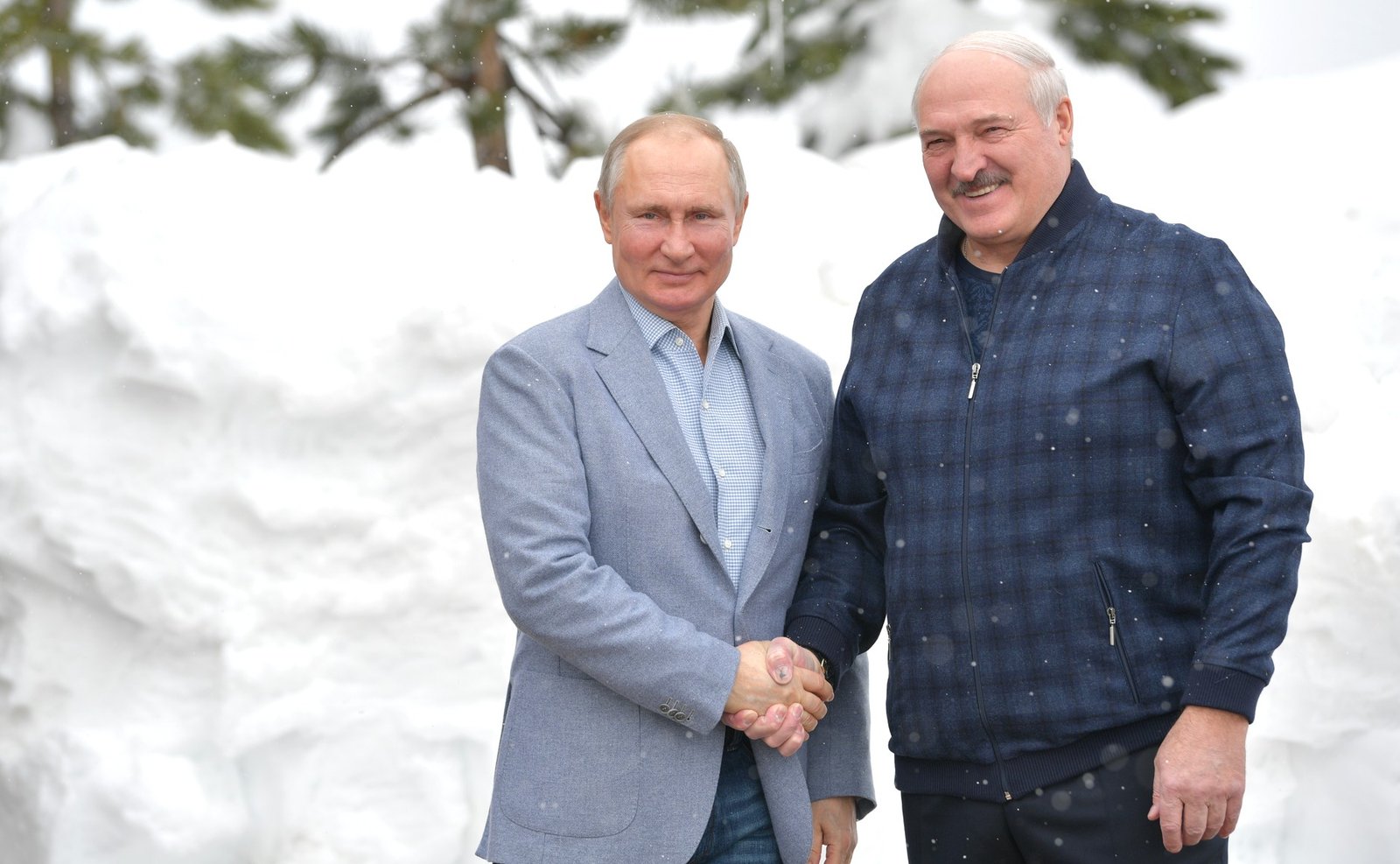
In the run-up to the elections, Russia deferred BOTAŞ’s multibillion-dollar gas debt. Why would a country at war do such a “favour”? The first article in the “Focus on Russia” series.
In the last days of 2022 there was a very important development in Russian-Turkish relations. Russia deferred BOTAŞ’s 20-billion-dollar natural gas debt. This is particularly striking now that we have entered 2023, an election year for Turkey. At a time of terrible inflation and cost of living, this debt deferral, which gives the government a great deal of breathing room, is perceived by many as Russian interference in Turkey’s elections.
For Russia’s record in this respect is, unfortunately, highly dubious. In particular, there is serious evidence of Russia’s efforts to interfere in various ways in the 2016 presidential election in the United States and to influence its outcome. On the other hand, why would a state at war, which needs every single dollar when it comes to it, grant such a deferral? Is there any secret or open agreement on this? Under what conditions, in return for what terms and for what purpose was this deferral made? Is there a similar precedent in the history of the Republic of Turkey?
Why would a country at war do such a “favour”?
On this subject, Birol Aydemir, former undersecretary of the Ministry of Labour and Social Security, called for the terms of the agreement to be disclosed: “Putin has deferred BOTAŞ’s 20 billion dollar gas debt to 2024. Why would a country at war and in economic crisis do such a ‘favour’ in the run-up to elections? What are the terms of the agreement, what political or economic concessions were made? These must definitely be disclosed.”
Broadly speaking, politicians are of the opinion that this move by Russia is clearly interference in the elections. Because many people living in Turkey, which last year stepped back from the brink of a balance-of-payments crisis, are struggling not just with poverty but with much deeper problems that amount to destitution. As a result of all these developments, the polls naturally show the ruling party’s support falling to the lowest level in its history.
Kerim Rota, head of economic policy at the Future Party, also told Independent Türkçe that he saw this as clear interference in the elections. Noting that BOTAŞ had never before requested a debt deferral from GAZPROM and that this was happening for the first time, Rota said: “The relationship between the two companies goes back a quarter of a century. After all these years, I think the deferral in a single item of an amount equal to a quarter of Turkey’s current account deficit is a gift from Russia to the AK Party government.”
Pointing out that Turkey came to the brink of a very serious balance-of-payments crisis in May and June, and that the crisis was postponed with money from Akkuyu and agreements with the UAE and Saudi Arabia, Rota said: “We are only now hearing about the 20 billion deferral, but this is important: the Central Bank of the Republic of Turkey (TCMB) has not sold any foreign currency to BOTAŞ since August. Under normal conditions it sold foreign currency to BOTAŞ regularly. Although the news of this deferral has only just come out, I expect it is in fact a practice that has been in effect since August or September.”
What makes the matter even more suspicious is the lack of transparent information to the public and even the transfer to Turkey in advance of payments to be made for the Akkuyu nuclear power plant. In short, the relationship between Putin and Erdoğan has much deeper dimensions than can be explained at the political level alone.
The allegation that Russia interfered in US elections
Before the congressional midterm elections held in the US on Tuesday, 8 November 2022, a striking statement came from Russia that confirmed the allegations on the subject and all but defied international public opinion.
Yevgeny Prigozhin, a Russian businessman close to the Kremlin, admitted that Russia had interfered in US elections and said they would continue to interfere. Yevgeny Prigozhin, founder of the Russian private military company Wagner and a Russian businessman close to the Kremlin, became the first person to state openly that Russia had interfered in US elections. Of course, we must not forget that this man is a figure who profits from wars and conflicts and, like the current Russian leadership, an operative who both believes that they are a global superpower and actively propagates this. (Update: Prigozhin was killed when his plane crashed in August 2023.)
Giving details, Prigozhin said: “We have interfered (in the US elections), we are interfering and we will continue to interfere. Carefully, accurately, surgically and in our own way, as we know how to do…” Speaking cryptically, Prigozhin said: “During our pinpoint operations, we will remove both kidneys and the liver at once.” Prigozhin did not elaborate on this cryptic remark. Thus Prigozhin, formally accused by the US of interfering in elections, confirmed it for the first time.
As you all know, many senators and journalists alleged that Putin personally directed the hacker group set up in the 2016 election to boost Trump’s popularity and chances of winning against Hillary Clinton.
Conclusion
In conclusion, it is clear that many of the allegations about Russia have sufficient evidence and grounds. Russia itself evidently aims to show that it is still a global rather than a regional power and is quite pleased to project the image of an effective and powerful country in its activities abroad. It would not be far wrong to say that Russia inherited this policy from the Soviet Union.
(I will continue on this subject)
Monthly · free
Compass of the Month
Once a month: five points from Europe’s security and migration agenda and the month’s PUGAT articles, in your inbox.
Newsletter sign-up opens soon.
Read next

What is PUGAT? A non-profit community publishing independent analysis from Europe on security, migration and society in Turkish, German and English.
Go to the homepage
