

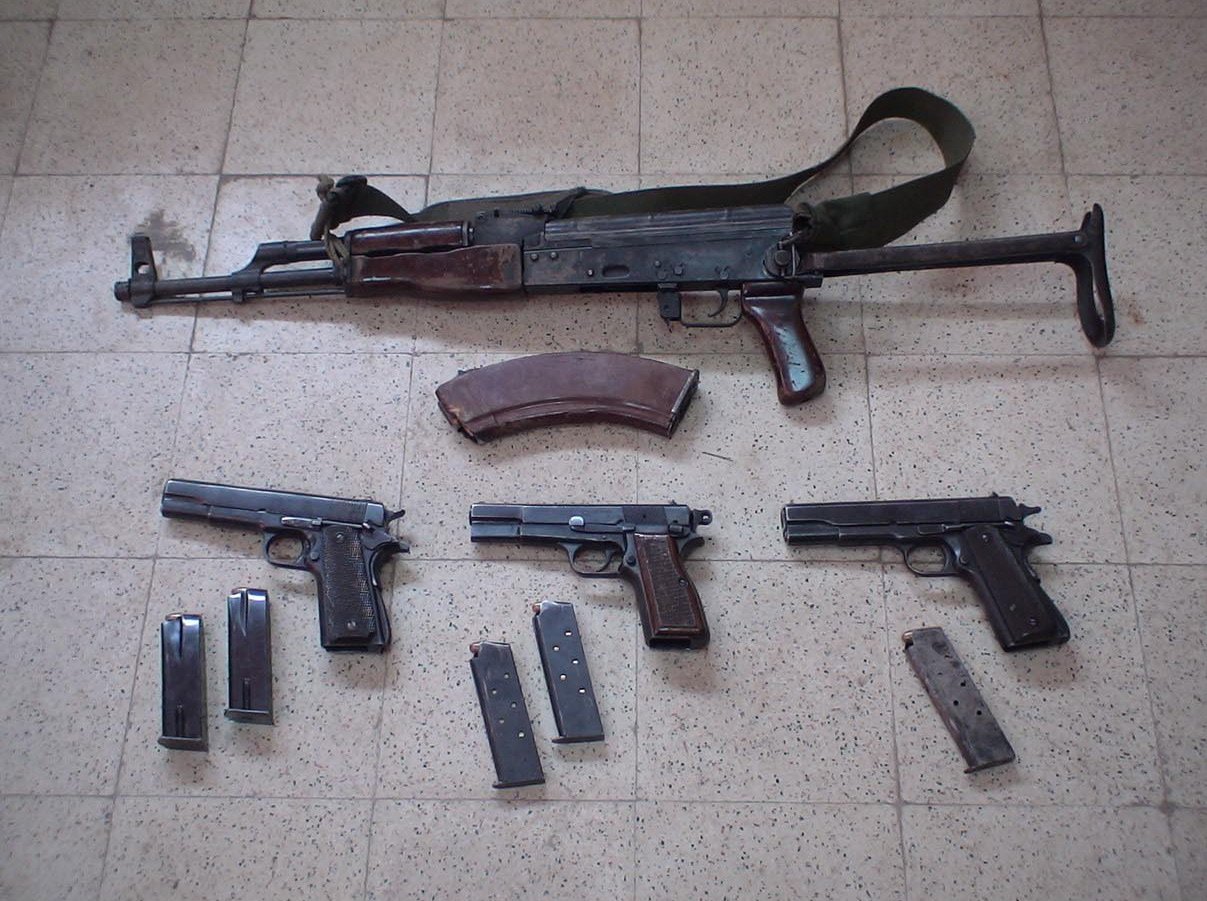
Geography, ideology and method may change, but some elements of terrorism never do: violence, the targeting of civilians and the aim of achieving political results through fear.
Throughout history, terrorist acts have arisen in many different geographies, ideologies and political aims. Although the motivations behind these acts, the methods used and the results sought have changed over time, some basic elements have remained constant despite these changes.
These unchanging elements are of critical importance for defining and understanding terrorism. Below we will look at what these universal and unchanging elements are, why they are so important and what place they hold in the overall structure of terrorism:
1. The Use of Violence
One of the most defining and unchanging features of terrorism is the use of violence. Whether individual or state-sponsored, terrorism generally uses violence as a tool to achieve a particular aim.
Violence is used by terrorist organisations as a tool to convey their messages, create fear and trigger political or social change. The psychological effect of the violence, aided by the communication possibilities the media provide, reaches wider audiences.
That the use of violence remains a basic feature despite technological developments, new tactics and strategies reveals the fundamental nature of terrorism. We can safely say that violence lies at the centre of definitions of terror and is one of the main components of terrorist acts.
For example, at the 1972 Olympic Games in Munich, eight armed members of an organisation called Black September, linked to Fatah, the leading faction of the Palestine Liberation Organisation (PLO), entered the Olympic village in Munich before dawn on 5 September 1972, stormed the quarters of the Israeli team and took Israeli athletes hostage, causing great shock around the world.
At the turn of the century, the 9/11 attacks carried out by the terrorist organisation al-Qaeda on the Twin Towers in the US caused the deaths of thousands of people and showed the whole world that terrorism is a global problem.
The 2019 attack on two mosques in New Zealand shows how the violent element of terrorism knows no bounds. Fifty-one people, including women and children, lost their lives in the attack. This attack too, carried out in a different geography and culture and with a different ideology, is one of the examples revealing the terrible effect of violence.
In short, despite the changing tactics and methods of terrorist acts, the use of violence is one of the unchanging and most defining elements of terrorism.
2. Innocent Civilians
Another unchanging feature of terrorist attacks is that they usually target innocent civilians. When terrorist acts are carried out to create shock and horror in public opinion and to force social or political change, civilians often become targets, directly or indirectly.
For example, in the 1995 sarin gas attack carried out by the Aum Shinrikyo sect on the Tokyo subway, 13 people were killed and thousands injured.
In 2004, this time in Madrid, more than 190 people lost their lives in attacks on commuter trains carried out by a group thought to be linked to the terrorist organisation al-Qaeda.
The 2019 Sri Lanka attacks are one of the most recent examples showing how terrorists spread horror by targeting innocent civilians. On Easter Sunday, simultaneous bomb attacks were carried out on several churches and hotels, and more than 250 people lost their lives.
The main reason terrorists target innocent civilians is to create a climate of widespread fear and panic in society and to get their demands accepted by influencing governments and public opinion. Targeting innocent civilians is a strategy designed to maximise the psychological impact of such acts on society. Technological advances and new tactics have not changed this basic feature of terrorism.
3. Political Aim
Terrorist acts are not carried out merely to create fear and panic without any demand for political change. One of the clearest and most unchanging reasons behind these acts is political aims. Terrorists generally put forward their political demands or goals by targeting a state, a government or a particular political structure.
For example, a series of terrorist acts carried out by the IRA towards the end of the twentieth century against British sovereignty over Northern Ireland supported a political demand for Irish unification. Similarly, ETA carried out a series of terrorist acts to win independence for the Basque region from Spain.
In recent years the civil war in Syria became an environment in which many terrorist groups acted in line with their political aims. ISIS, for example, announced to the world its aim of establishing a caliphate over a large territory in Syria and Iraq with a radical religious ideology.
Terrorism is seen as an effective tool by groups with a political aim. In fact, these groups, weak in the face of states or the international community, aim to draw attention and make their demands heard by a wider audience through terrorist acts.
This political aim is also one of the main reasons terrorists target innocent civilians. Through the pressure they put on civilians, they try to force states or the international community to make the political changes they want.
4. Psychological Effect
One of the primary aims of terrorist acts is to create a psychological effect rather than physical damage. Terrorist attacks aim to create fear, panic and uncertainty among the target audience. This paves the way for people to change their daily lives and habits, which in turn makes it easier for terrorists to achieve their political or ideological aims.
More than the number of people killed, it is the atmosphere of fear that spreads through the public after an attack, and the anxiety in society that similar attacks may follow, that increases the dose of the psychological effect.
Indeed, we can say that in attacks such as 9/11, which caused thousands of deaths, the sarin gas attack on the Tokyo subway, in which 13 people died, and many other terrorist attacks, terrorist groups had an aim that put the psychological effect first.
Likewise, in recent years, terrorist attacks in many European capitals have created security concerns across the continent. These attacks have left a deep psychological impact on the public, changing their daily lives and habits.
Terrorists always make use of the power of the media to influence large audiences psychologically. The fear and panic an attack creates spread around the world through the media. Thanks to social media platforms in particular, images of a terrorist attack reach millions of people within seconds, making the feeling of fear and panic spread much faster.
5. Asymmetric Warfare
Terrorist acts are generally carried out by groups too small to fight a large, institutional force. This leads terrorists to adopt methods of asymmetric warfare. Asymmetric warfare means a militarily weaker side fighting a militarily stronger opponent by exploiting particular advantages. Terrorist groups often adopt this method because they are usually few in number and lack conventional military power.
North Vietnam and the Viet Cong guerrillas resisted the United States using asymmetric warfare tactics. These included unconventional methods of warfare such as ambushes and booby traps in jungle areas.
In the 1980s, jihadist militants in Afghanistan resisted Soviet forces using asymmetric warfare tactics.
In recent years, too, terrorist groups such as ISIS, especially in the Middle East, have resisted regional and international powers using asymmetric tactics such as suicide attacks, ambushes and car bombs.
By making use of technology, terrorists can use asymmetric warfare methods even more effectively. The use of unmanned aerial vehicles (drones), for example, allows even a weak group to pose a serious threat to large and powerful armies.
In short, through asymmetric warfare, terrorist groups can resist stronger opponents without having conventional military means. Although the means at their disposal change from era to era, asymmetric warfare is an unchanging strategy that terrorist groups have often used throughout history.
6. Propaganda and Use of the Media
Behind terrorist acts there is usually an effort to spread a message or an aim. Propaganda and the media are tools terrorist groups frequently use to get these messages to large audiences. This use also allows terrorist groups to mobilise individuals sympathetic to their aims, to create fear and to weaken their opponents.
The spread of social media platforms and the possibility of reaching large audiences simultaneously through different platforms are also used effectively by terrorist organisations. In some of the media channels used, users’ identities are hidden behind fake accounts. On the other hand, there are terrorist organisations that broadcast without hiding their names in order to make use of direct propaganda.
The PKK terrorist organisation, for example, uses media effectively in its broadcasts from outside Turkey through direct propaganda, without hiding its name, identity or activities.
From the mid-2010s, ISIS actively used social media platforms, especially Twitter and YouTube, to spread propaganda videos and win new members.
Similar examples can be seen in the past. In the second half of the twentieth century, the IRA used such means to emphasise its resistance to Britain’s policies in Northern Ireland, and towards the end of the 1970s the far-left Red Brigades in Italy used written propaganda material and radio broadcasts to extend their propaganda and radicalise young people.
Propaganda and use of the media are an important tool that terrorist groups have always used to spread their messages, gather support and gain a psychological advantage over their opponents. Even if the form, type and method change, terrorist organisations’ dependence on propaganda and media tools continues.
7. Ideological Commitment
At the roots of terrorism lies an ideology to which individuals or groups are firmly committed. This ideological commitment is the main driving force pushing individuals into terrorist acts. Terrorists do not shrink from using violence to defend or spread the ideology they believe in. This ideological commitment has historically been one of the main motivations of terrorism and has not changed.
The left-wing Baader-Meinhof terrorist organisation, active in Germany in the 1970s, had a firm ideological commitment against the capitalist system and American imperialism.
The Aum Shinrikyo organisation, known for its 1995 sarin gas attack on the Tokyo subway, espoused an apocalyptic ideology based on its own mystical beliefs.
The terrorist organisation al-Qaeda, with a radical religious ideology, also carried out many terrorist attacks, calling for jihad against Western intervention in Muslim countries.
Ideological commitment has always remained one of the main motivations behind terrorist acts.
8. Terror as Reaction
Another enduring feature of terrorism is that terrorist acts take place in reaction to particular political, economic or social changes. Terror as reaction is a feature that has not changed over time.
This reflects the discontent and anger terrorists or terrorist organisations generally feel towards external factors. Indeed, in the past, many terrorist acts were carried out in reaction to the oppression, injustice or wrongs of the time.
Towards the end of the twentieth century, the IRA carried out many terrorist attacks in reaction to British control over Northern Ireland.
ETA carried out attacks for the independence of Spain’s Basque region in reaction to government policies.
The suicide attacks and rocket attacks carried out by Palestinian groups in reaction to Israel’s interventions in and oppression of Palestinian territories also fall into this category.
9. Cross-Border Impact
Terrorist movements have never been confined to a single region or country throughout history. Terrorist organisations have carried out attacks in reaction to events or policies in other countries, and these organisations have also had foreign supporters. The cross-border impact of terrorist acts is a factor that deeply affects international security and world politics.
For example, it has been argued that al-Qaeda’s 9/11 attacks in the US in 2001 were carried out in reaction to America’s Middle East policies. These attacks showed the whole world that terrorism is an international threat.
Although the Red Brigades were a left-wing terrorist group active in Italy in the 1970s, they were linked to similar left-wing movements in other European countries and sometimes carried out cross-border actions.
Although ISIS was founded in the Middle East, its terrorist attacks spread to many parts of Europe. The attacks in cities such as Paris, Brussels and Nice once again revealed the cross-border impact of terrorist movements.
With its cross-border character, terrorism crosses national borders and becomes a global threat. Countries and the international community must always take this threat seriously.
*****
In our next article we will look at the changing elements of terrorism.
Monthly · free
Compass of the Month
Once a month: five points from Europe’s security and migration agenda and the month’s PUGAT articles, in your inbox.
Newsletter sign-up opens soon.
Read next


What is PUGAT? A non-profit community publishing independent analysis from Europe on security, migration and society in Turkish, German and English.
Go to the homepage
