


Tesla can give its cars new headlight features with a software update. The German armed forces are moving to “software-defined defence” on the same logic, and Platform42 is the accelerator of this transformation.
Digitalisation is a fast-moving trend in the defence industry. The advantages software offers, beyond hardware, with its capacity for faster and remote updates, make digitalisation more practical.
Information and Command Superiority
One of the turning points in security policy came with the Russia–Ukraine war. It led to decisive changes for the German armed forces, particularly with regard to digitalisation. Today, as before, armies need information and command superiority in order to be fast and strong. Now, however, this is possible only by integrating modern technologies into defence. Modern communication technologies, artificial intelligence and cloud computing play key roles here. And threats come not only on land, in the air and at sea, but also from virtual domains such as cyberattacks.[1]
To counter cyberattacks and keep pace with fast-evolving threats, we need to master more data and thereby make progress in powerful software and above all in artificial intelligence. Today IT-based work has become widespread in many areas, weapon systems included.
The Digitalisation of the German Armed Forces
The armed forces of developed countries use various platforms to adopt digitalisation quickly and in line with standards. In this context, BWI GmbH, the German armed forces’ leading partner in digitalisation, recently announced Platform42. Platform42 is said to act as an accelerator of software development for the German armed forces.[2]
The Impact of Software
Today software plays a critical role in making armies fast and effective. By making it easier to update technological platforms, software increases operational flexibility. Examples from the automotive sector show how successful this approach is: Tesla later gave suitable headlights fitted to the Model 3 from 2021 an adaptive high-beam function purely through a software update, automatically switching from high to low beam when light is detected ahead of the car (for example an oncoming vehicle).[3]
Like Tesla, the German armed forces are adopting a software-centred approach and aim to implement the concept of “Software Defined Defence” (SDD)[4].[5] The idea is essentially to focus on software rather than hardware when developing weapon systems.
The Internet of Military Things
On the one hand, SDD makes it possible to adapt faster and more flexibly to the demands of modern operations management; on the other, networking ensures better compatibility between systems. A central element of SDD is therefore the idea of an “Internet of Military Things”. Frank Leidenberger, Chairman of the Executive Board of BWI, said as much recently at Handelsblatt’s “Security and Defence 2024” conference.[6] At the end of January he discussed the concept and its benefits for the German armed forces in a panel with Lieutenant General Michael Vetter, head of the Cyber/Information Technology Directorate at the Federal Ministry of Defence.
Faster Development through Standards
In order to make better use of existing software modules across the armed forces, and thus to introduce software-based innovations faster and to develop and adapt software more quickly in future, BWI has been developing “Platform42” since last year. The project is modelled on the US Department of Defense’s Platform One (P1).[7] Experts in the US armed forces likewise agree on the growing importance of software in the military and its impact on the way military conflicts are conducted.
Platforms
Standardised platforms prevent waste of resources and time for institutions and companies while allowing software developers to develop their products quickly. As P1 leader Brian Viola puts it:
“Today software developers grapple with a range of complex technologies to build and run software securely at scale. Platform engineering simplifies a developer’s access to the tools and infrastructure they need, making it easier to build, test, stage and run software securely and in an orderly way”[8].
Platform42
Last year BWI began building Platform42, which is much more than a development environment. Platform42 is an ecosystem in which its developers work together with customers from the German armed forces and partners from industry. At its centre are software development teams carrying out tasks such as design, coding, testing, coaching or system administration for the German armed forces.
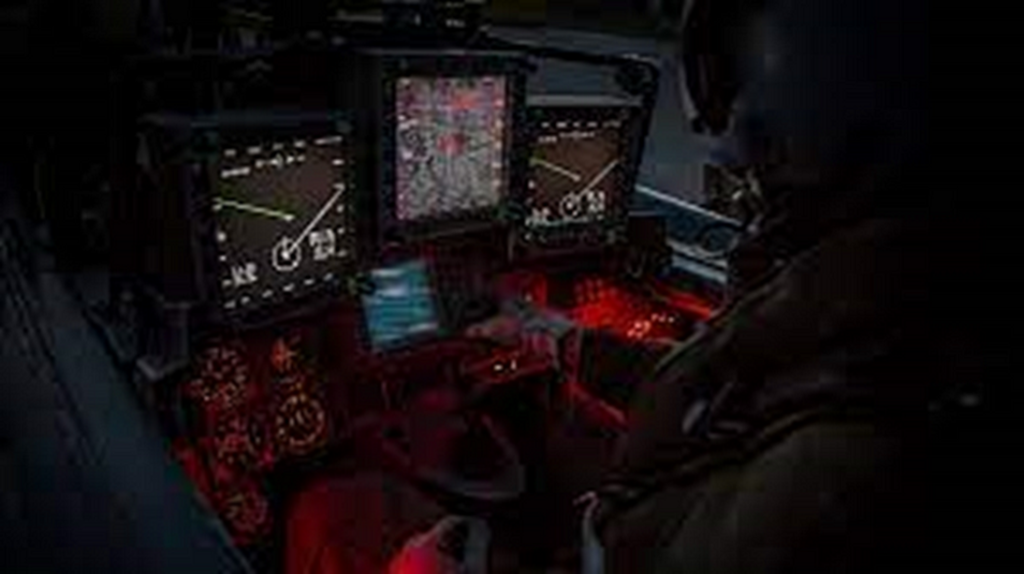
A software engineering framework defines the standards, methods and best practices used in developing applications for the German armed forces. Standards create software components that can easily be reused for other products without having to start from scratch every time. They also ensure that software is compatible and meets interoperability requirements between the German armed forces and the allied forces of other nations. The software components developed are evaluated and collected in a “Shared Production Base”, where they can be used for other products as needed.[9]
DevLabPro
BWI is also currently setting up “DevLabPro” in one of its data centres. This hardware, designed specifically for software engineering, will be used to create a development environment in which developers can program cloud-ready software in line with German armed forces and BWI standards and for all required operating platforms. The environment is expected to be ready by the end of 2024.[10]
Conclusion
The emergence of Platform42 shows the impact of digitalisation on the defence industry. At a time of growing cyber threats, the fast and effective software development this platform will give the German armed forces could be an important turning point in security policy. By focusing on software rather than hardware, the German armed forces are adopting a more flexible and compatible approach to modern operations management. The SDD concept will enable the armed forces to respond more effectively to future threats and, integrated with the Internet of Military Things, will create a stronger defence capability. By speeding up software development and managing it more effectively through standards, Platform42 will make an important contribution to the German armed forces’ digitalisation goals.
Sources
- BWI – Schnellere Softwareentwicklung für die Bundeswehr: die „Platform42“ der BWI bwi.de
- Electrek – Tesla is upgrading Model 3 and Model Y headlights electrek.co
- t.co t.co
- BMVg – Experten fordern „Software Defined Defence“ bmvg.de
- BWI – Neue Chancen durch Software Defined Defence bwi.de
- Platform One (dso.mil) p1.dso.mil
- FedTech Magazine – How Platform One (P1) from the Air Force Supports DevSecOps fedtechmagazine.com
- Rolf Hager, „Software Defined Defence: Schnellere Softwareentwicklung für die Bundeswehr mit der Platform42“, Europäische Sicherheit & Technik, 3/2024, p. 51.
Monthly · free
Compass of the Month
Once a month: five points from Europe’s security and migration agenda and the month’s PUGAT articles, in your inbox.
Newsletter sign-up opens soon.
Read next


What is PUGAT? A non-profit community publishing independent analysis from Europe on security, migration and society in Turkish, German and English.
Go to the homepage
