


Migration policy is not set by national governments alone. A network of institutions, from UNHCR and IOM to the EU institutions, Frontex and the EUAA, shapes the rules a migrant will face.
This article examines the institutional structure of the European Union’s migration, asylum and border management policies, and assesses the role of United Nations (UN) and European Union (EU) institutions in migration policy.
This way, people considering migrating from Turkey to EU countries, or working in this field, will gain a basic knowledge of the relevant institutional structures and will be able to assess, from a sounder and more holistic perspective, the topics to be covered in later sections:
- Work- and employment-based migration
- Investment- and entrepreneurship-based migration
- Studying abroad, and
- Asylum and protection.
First of all, it should be stressed that migration and integration are extremely sensitive and multidimensional processes that must be planned and managed effectively at both national and international level. These processes should be approached not as state interference in individual, social and cultural freedoms but within an approach that respects differences and aims at integration while avoiding assimilation.
Where migration and integration policies are insufficiently planned or poorly implemented, irregular migration increases; as a result, migrants’ adaptation to their new societies weakens, and problems such as ghettoisation and cultural segregation can arise. Such developments can in turn have a negative effect on both social cohesion and the cultural fabric.
In other words, the integration of people who migrate to a new country is too important to be left to individual efforts alone. These processes therefore need to be planned, institutionalised, managed and supervised by states and civil society organisations.
In this context, the UN and the European Union above all, as well as countries with high immigration such as Germany and the Netherlands, attach great importance to migration and integration policies, develop various strategies and set up institutional structures to implement them. This section looks at some of the most prominent of these institutions.
Let us first list the most important institutions at global level:
UNHCR (Office of the United Nations High Commissioner for Refugees)

Founded in 1950, it is one of the most competent international institutions for the protection of refugees worldwide. Its core mission is to protect the rights and safety of refugees, asylum seekers and others in need of international protection, to protect them under the principle of non-refoulement and to support the application of international legal standards. Based on the 1951 Geneva Convention and its 1967 Protocol, UNHCR shapes the normative framework of asylum law.
UNHCR does not only provide direct support to individuals; it also offers guidance to states and regional organisations. It makes recommendations on countries’ asylum policies and practices, provides temporary shelter and logistical support in crises, and runs programmes on migrants’ integration and access to social rights. Its reports, statistics and policy recommendations are a reliable reference for migration advisers.
For those interested in migration, UNHCR’s role is crucial, especially for understanding the rights of refugees and asylum seekers in EU countries and guiding them. In a decision to transfer someone to another country under the Dublin system (replaced since 12 June 2026 by the AMMR), for example, UNHCR reports and recommendations can serve as authoritative references. This allows advisers to guide their clients on a legally sound and up-to-date basis.
International Organization for Migration (IOM)

The International Organization for Migration (IOM), founded in 1951 and restructured in 1989, is today one of the most influential international institutions in the field of migration. Its main aim is to support the orderly, safe and well-managed governance of migration and to strengthen cooperation between states. To this end, IOM provides technical assistance between countries and carries out migration research, assisted voluntary return programmes, resettlement operations and emergency humanitarian assistance.
Brought into the United Nations system in 2016, IOM is now the UN’s migration agency. This integration has enabled the organisation to play a stronger role in global migration governance. IOM’s work covers not only support to states but also direct support to migrants; for example, it seeks to improve migrants’ living conditions through health, shelter and vocational training projects.
In an advisory context, IOM’s reports, statistics and examples of good practice serve as a reliable reference for migration advisers in informing and guiding their clients.
ICMPD (International Centre for Migration Policy Development)

ICMPD is an international organisation founded in 1993 on the initiative of Austria and Switzerland, with more than 20 member states today. It is headquartered in Vienna. Its core mission is to provide technical support to states in migration management, develop policy and strengthen cross-border cooperation. ICMPD is active not only in Europe but also in neighbouring regions such as Africa, the Middle East and the Western Balkans, in the fields of migration projects, return programmes, border management and developing migration statistics.
The organisation also emphasises the humanitarian side of migration policy and its link with development. For migration advisers, ICMPD is an important source for understanding policy trends, new practices and project-based support models.
Now let us take a look at the migration institutions within the EU:
As is well known, the EU’s major decisions are taken through the joint work of three main institutions. Since migration is one of the most sensitive and complex issues for member states, it is handled through the cooperation of the following institutions and within established legal procedures:
- the European Commission (prepares legislative proposals and monitors implementation),
- the European Parliament (takes part in the legislative process on behalf of EU citizens) and
- the Council of the EU (takes decisions on behalf of member state governments).
In addition, the Court of Justice of the European Union can deliver landmark rulings in migration disputes (for example, cases on language requirements in family reunification or on deportation orders). The European Court of Human Rights also sets the human rights standards that member states must observe in their migration policies. Following ECtHR judgments from 2011 onwards, for example, Dublin transfers of some asylum seekers to countries such as Greece or Hungary were halted because of poor asylum conditions there.
Other important EU institutions in the field of migration include:
EUAA (European Union Agency for Asylum, formerly EASO)

The EUAA (formerly EASO) is the European Union’s main technical agency in the field of asylum. It is headquartered in Malta and its core task is to strengthen the asylum systems of EU member states. The EUAA provides operational support to member states; for example, it sends experts, interpreters and trained interviewers to countries such as Greece, Italy or Cyprus where the number of applications has risen sharply. It also prepares standardised interview training for asylum officers, Country of Origin Information (COI) reports and common procedural standards across the EU. The agency’s aim is to ensure a more consistent, fair and rights-respecting asylum assessment process throughout the EU. For migration advisers, the EUAA’s reports and training materials are of great importance for following current practice and country-specific risk analyses.
Frontex (European Border and Coast Guard Agency)

Another important EU institution is Frontex, founded in 2004, which acts as the main agency for protecting the Union’s external borders and combating irregular migration. Frontex supports member states’ border security capacities, conducts joint operations and, where necessary, deploys rapid intervention teams. Its tasks also include combating people smuggling, coordinating return operations and developing border surveillance technologies.
To manage irregular movements outside legal migration routes, countries have border security units and return mechanisms. Besides Frontex, there are of course other similar national institutions in Europe. Just as in Turkey with the Gendarmerie and the Coast Guard Command, it is important to know about institutions such as the Italian Coast Guard or the Hellenic Border Police, which are responsible for preventing irregular and unauthorised crossings. Anyone interested in migration should not focus only on legal migration routes but should also be informed about risks and consequences such as irregular routes, the dangers of people smuggling, the risk of deportation and penalties for visa violations!
MIPEX
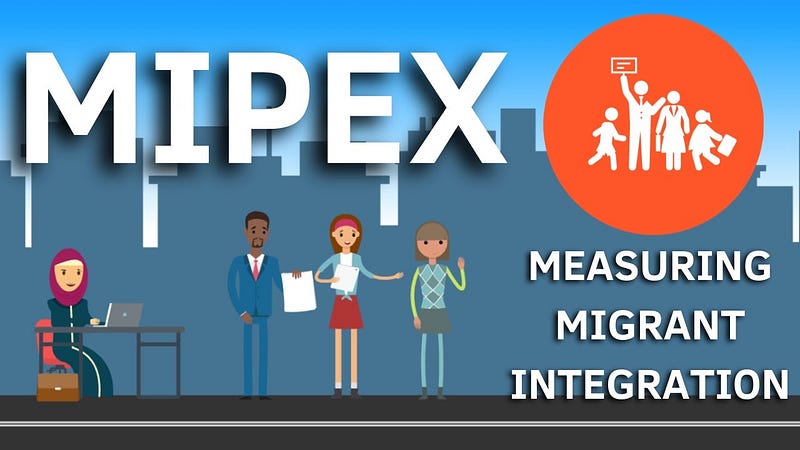
MIPEX, run since 2004, is a benchmarking index that today covers more than 50 countries. Each country’s integration policies for migrants are scored under 8 main areas (for example education, health, nationality, political participation and anti-discrimination). The index measures, on objective criteria, how inclusive or exclusionary the policies applied to migrants are, especially in EU countries. Germany, for example, scores well on integration policies, while some countries lag behind on access to nationality or political participation. For migration advisers, MIPEX is a practical tool for explaining comparatively to clients which rights are stronger in which country, planning integration strategies and monitoring developments in migration policy.
EMN (European Migration Network)

The EMN is a network coordinated by the European Commission, with a national contact point in each member state. Its aim is to ensure the sharing of reliable data and information on migration and asylum at EU level. Every year it publishes reports containing member states’ migration profiles, policy briefs and statistical analyses. The EMN also contributes to the harmonisation of migration policies by sharing recent legal changes, examples of good practice and common terminology. For migration advisers, EMN reports are very valuable, particularly for understanding differences in practice between countries, following legal developments and giving clients more accurate information. The EMN is also an important information and networking platform for professionals working in the field of migration.
In this sense, knowing these institutions is certainly important!
We have briefly covered the main institutions related to migration. In our next article we will look at some international support organisations in the field of migration, as well as the national migration institutions of Turkey, Germany and the Netherlands.
Sources
Monthly · free
Compass of the Month
Once a month: five points from Europe’s security and migration agenda and the month’s PUGAT articles, in your inbox.
Newsletter sign-up opens soon.
Read next



What is PUGAT? A non-profit community publishing independent analysis from Europe on security, migration and society in Turkish, German and English.
Go to the homepage
