

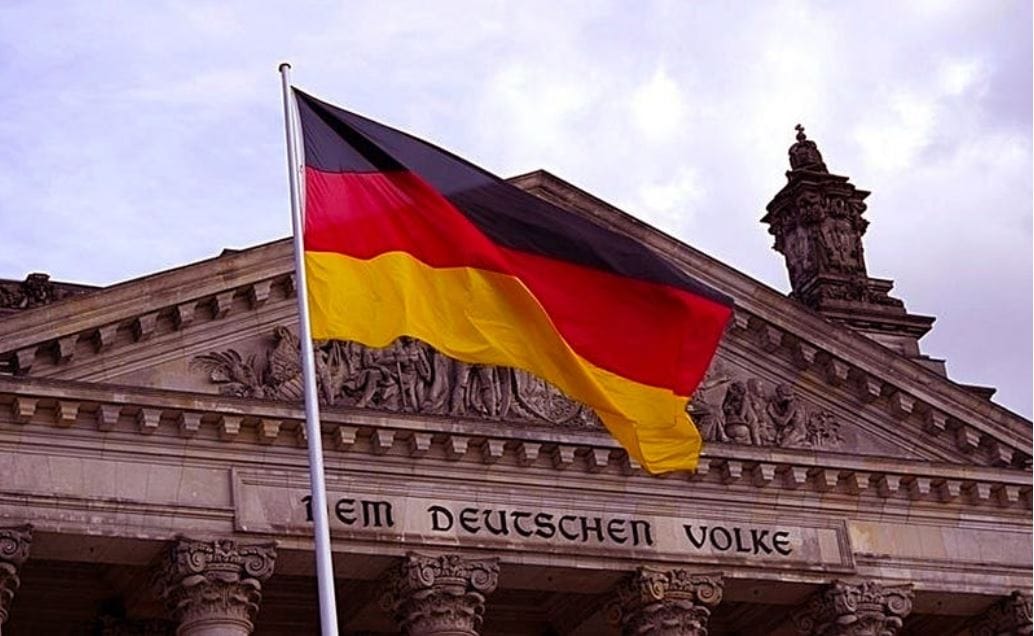
For a long time Germany did not define itself as a country of immigration, but its laws said otherwise. The basic rules on work, study, family reunification and permanent residence in Germany’s Residence Act and in Dutch migration law.
We continue our series on migration with migration legislation. In earlier articles we looked first at “International Migration Law” and then at “European Union Migration Law”! Now, going into more detail, we will take a brief look at the national migration laws first of Germany and then of the Netherlands, leaving detailed analysis for later articles!
German National Migration Law
For many years Germany did not define itself as a traditional country of immigration, but its legislation and its practice said otherwise. Today Germany openly describes itself as a country of immigration, and the reforms of its migration law reflect this shift.
Since the 2000s in particular, Germany has developed comprehensive migration legislation and continues to do so. The core migration law here is the Aufenthaltsgesetz (Residence Act), which governs the conditions under which non-EU foreigners may enter, stay and work in Germany. The law provides for different types of residence permit:
Residence for Employment
Germany offers various routes for skilled workers. The EU Blue Card (Blaue Karte EU) is a residence permit for foreigners with a university degree and a job offer at a certain salary level. Residence permits are also available for skilled workers who have completed vocational training (Ausbildung). This field was broadened by the Skilled Immigration Act (Fachkräfteeinwanderungsgesetz), which entered into force in 2020.
In 2023 the German government carried this law further with new reforms. The new rules introduced innovations such as coming on the basis of “work experience” without a recognised equivalent qualification, and coming to look for work under a points system (the Opportunity Card). The aim is to attract the tens of thousands of skilled workers Germany needs every year.
It is also worth briefly mentioning the accelerated procedure for skilled workers under Section 81a of the Residence Act, commonly referred to as 81a. This provision governs the accelerated skilled-worker procedure (beschleunigtes Fachkräfteverfahren) that an employer can initiate on behalf of the employee. In other words, on behalf of a foreigner who wants to come to work in Germany, the employer can apply to the local foreigners’ authority for pre-approval before the person even arrives. In this process the employment contract, the recognition of professional qualifications and, where required, the approval of the Federal Employment Agency (Bundesagentur für Arbeit) are assessed together.
Under Section 81a, the pre-approval granted by the foreigners’ authority allows the visa application abroad to be processed faster. However, pre-approval does not guarantee a visa; the decision on the visa lies with the German mission abroad. It has become especially important within the Accelerated Procedure for Skilled Workers (Beschleunigtes Fachkräfteverfahren), and many people who now want to migrate to Germany for work start their procedures this way!
Family Reunification
The spouse and minor children of a foreigner legally residing in Germany can, in principle, obtain a family reunification visa. Conditions such as housing, income and basic German are often required. In recent years family reunification procedures have become considerably longer. While there are facilitated rules for recognised refugees, family reunification for people with subsidiary protection has been suspended for two years since July 2025.
Temporary Work and Seasonal Workers
This is regulated under provisions such as §19c of the Residence Act and §15a and §26 of the Employment Ordinance (Beschäftigungsverordnung). Germany issues seasonal work visas to third-country nationals, particularly in sectors such as agriculture and tourism. Through these routes, above all the Western Balkans regulation, tens of thousands of people from various third countries come to Germany every year to work temporarily!
Visas for Education and Training
Student visas are issued to those who want to study at university in Germany. This should not be thought of as university study alone; language courses, internships, special training programmes, and master’s and doctoral visas also fall into this category.
To attract qualified people, Germany offers those who come on this visa and want to stay after graduating opportunities such as a job-search permit of up to 18 months followed by a transition to a work permit. These visa types are governed by the Aufenthaltsgesetz (Residence Act), in particular §16b (residence for study) and §20 (residence for job search after graduation), and are among the scenarios people interested in migration will encounter most often!
Humanitarian Residence
Besides refugee status and subsidiary protection, there are provisions that exceptionally grant residence for certain humanitarian reasons, such as “serious illness or inability to return to one’s country”. This, too, is regulated in national law under §25(3)–(5) (residence on humanitarian grounds) of the Aufenthaltsgesetz (Residence Act).
Permanent Residence (Niederlassungserlaubnis)
People who have lived legally in Germany for a certain period (generally 5 years) and met the language and integration requirements can obtain permanent residence. This permit is unlimited in time and includes the right to work.
Blue Card holders and graduates of German universities can obtain permanent residence sooner (with the Blue Card, after 27 or 21 months depending on language level; for those who completed higher education in Germany and work in a skilled job, after 2 years).
Naturalisation (Einbürgerung)
Since the reform that entered into force on 27 June 2024, German citizenship generally requires at least 5 years of legal residence, sufficient German (B1 level), economic self-sufficiency, a clean criminal record and commitment to Germany’s constitutional order. The same reform generally allowed dual citizenship (under the previous rules the waiting period was 8 years). The fast-track route to citizenship after 3 years for exceptionally well-integrated people was, however, abolished again at the end of October 2025.
Indeed, in 2023 more than 200,000 people became German citizens, a record for the past 20 years; one reason for this rise was that the government had signalled it would take facilitating steps! After the reform the number rose to about 292,000 in 2024 and about 332,000 in 2025, breaking new records year after year.
Appeals and Legal Procedures
When migration and residence applications are rejected in Germany, the applicant has the right to take legal action against the decision. The grounds for rejection are given in writing, and the deadline for bringing an action (Klage) before the administrative court (Verwaltungsgericht) depends on the type of application and decision. For residence decisions it is usually 1 month, for ordinary asylum rejections 2 weeks and for asylum applications rejected as manifestly unfounded 1 week. The deadline stated in the information on legal remedies (Rechtsbehelfsbelehrung) is therefore decisive.
In some cases an objection procedure (Widerspruch) may be required first, but in most migration cases one goes directly to court. The court reviews the lawfulness of the administration’s decision; the most important point for advisers in this process is that clients should seek legal assistance without delay and submit their documents in full.
An action or objection can in some cases suspend deportation. Whether this happens automatically, however, depends on the type of decision; in some cases an additional application for urgent interim relief (Eilrechtsschutz) is required. The adviser should therefore explain to the client not only the avenues of legal support but also the possible consequences of the process.
Dutch National Migration Law
The backbone of Dutch migration law is the main act governing the residence of foreigners, the Vreemdelingenwet 2000 (Aliens Act 2000). Dutch migration policy can be described as a mix of a flexible economy and a strict approach to integration!
Dutch migration rules are not as broad and detailed as Germany’s, and in this respect the Netherlands lags behind Germany. While Germany, driven by an ageing population and a growing need for workers, has acted quickly and carried out serious legal reforms over the past decade or so, the Netherlands continues to be somewhat more conservative.
However, the Netherlands, which is struggling with similar problems, will in the not too distant future want to attract more skilled workers through legal reforms similar to Germany’s. Frankly, this seems an unavoidable necessity!

Work and Residence
Depending on the situation, non-EU nationals who want to work in the Netherlands need their employer to obtain a work permit (werkvergunning, TWV) or need a single permit combining residence and work (GVVA). For skilled employees above a certain salary threshold under the highly skilled migrant scheme, the procedure is easier (an accelerated procedure if the employer is a recognised sponsor of the IND, the Immigration and Naturalisation Service). Those granted Highly Skilled Migrant (Kennismigrant) status can obtain residence quickly with a job offer. Turkey is among the top 4 countries sending the most skilled workers to the Netherlands!
In the Netherlands, apart from kennismigrants, the employer of a non-EU national usually has to obtain a work permit (TWV, Tewerkstellingsvergunning). Before applying, the employer must carry out a labour market test. This means:
- The vacancy must be advertised on the Dutch labour market (reported to the UWV).
- The search must cover not only the Netherlands but also the EU/EEA and Switzerland, and must be carried out for a certain period before the application.
- Only if no suitable candidate is found at either stage can a permit be requested for a non-EU worker.
The main legal basis for these rules is the Foreign Nationals Employment Act (Wet arbeid vreemdelingen, Wav) and related regulations, and the UWV is responsible for assessing work permits. The test is mandatory in order to protect the labour market.
Start-up and Investor Visas
The Netherlands issues a start-up visa to innovative entrepreneurs and also offers a self-employed (zelfstandige) residence permit to people setting up their own business. The start-up visa usually comes with a 1-year initial permit, during which working with a “facilitator” (supporting organisation) in the Netherlands is mandatory. The foreign investor scheme, which required an investment of €1.25 million, was abolished in April 2024 because of low demand.
Family Reunification
The spouse and children under 18 of a person holding a residence permit or Dutch citizenship can join them through family reunification. An income requirement and a basic language and integration requirement (such as a basic Dutch exam before arrival) apply. From time to time the government debates tightening family reunification rules (for example, waiting periods for people with refugee status).
Student Visas
The Netherlands is a popular destination for international students. A student admitted to university is granted a temporary residence permit by the IND. After graduating, just as in the German example, graduates are given a one-year “search year” (zoekjaar) permit, which encourages them to stay and find work. The residence permits required for study in the Netherlands (study residence permit) and the application requirements are set out under the Vreemdelingenbesluit 2000 (Aliens Decree).
Asylum-Based Residence (Asielregeling)
Asylum applications are examined by the IND and affiliated bodies; those granted refugee status receive a residence permit. In the Netherlands the first stop for asylum applications is Ter Apel. People with refugee status in the Netherlands may become eligible to apply for permanent residence and citizenship after 5 years. Prospective advisers need to know the distinction between a “temporary permit” (verblijfsvergunning asiel bepaalde tijd) and a “permanent permit” (onbepaalde tijd).
Integration Obligation
An important feature of Dutch law is that it requires migrants who receive residence to pass a compulsory civic integration (inburgering) exam. Under the Civic Integration Act 2021, in force since 1 January 2022 (replacing the system introduced in 2013), many residence permit holders must acquire the required language and knowledge of society within 3 years of arrival (a B1-level language exam, a test of knowledge of Dutch society, etc.).
The integration system was overhauled in 2022 and municipalities began to give migrants more support. Completing this integration process is essential for successful migration in the long term. It is also important to note that under the new system municipalities (gemeente) now act as advisers, preparing language courses, social orientation and job-search plans together with migrants.
Citizenship
Dutch citizenship generally requires 5 years of legal residence, passing the integration exam and a clean criminal record. Dutch law does not, as a rule, permit dual citizenship. Apart from certain exceptions (for example being married to a Dutch citizen or being a recognised refugee), Turkish nationals must as a rule also renounce their Turkish citizenship. Turkey’s “Blue Card” scheme, however, preserves some rights in Turkey for those who give up Turkish citizenship.
Sources
- Aufenthaltsgesetz (AufenthG) gesetze-im-internet.de
- Make it in Germany make-it-in-germany.com
- IND ind.nl
Monthly · free
Compass of the Month
Once a month: five points from Europe’s security and migration agenda and the month’s PUGAT articles, in your inbox.
Newsletter sign-up opens soon.
Read next

What is PUGAT? A non-profit community publishing independent analysis from Europe on security, migration and society in Turkish, German and English.
Go to the homepage
