


For thirty years Germany has been one of the European countries receiving the most asylum applications. In 2025, under the new government’s tough measures, applications halved and family reunification for people with subsidiary protection was suspended.
Not only in recent years but for roughly the past 30 years, Germany has been one of the European countries receiving the most asylum applications. Although application numbers fluctuate over time, the country remains one of the driving forces of the European asylum system. In 2025, however, Germany’s asylum policy underwent a major transformation, which was directly reflected both in the figures and in practice.
To explain this with the figures of recent years:
- In 2023, with 351,915 applications (329,120 of them first applications), the highest level in recent years was reached,
- In 2024 the number of first applications fell by 30.2% to 229,751.
- In 2025 the decline became even more pronounced. Over the year, 113,236 first applications were lodged, about 51% fewer than in the previous year. In the first nine months of 2026, the number of first applications stood at 51,982.
- In June 2025 the number of new applications in Germany fell below 7,000, 60% lower than in June 2024. This was the lowest monthly figure since March 2013.
This picture is also closely linked to the tough measures taken by the CDU/CSU–SPD coalition government led by Friedrich Merz, which took office in May 2025. To limit irregular migration and bring the asylum system “under control”, the government introduced comprehensive reforms. The main steps are:
- Border controls have been tightened and the police presence at land borders increased.
- Significant restrictions have been introduced in practices concerning certain groups of migrants.
- One of the most striking changes is the law adopted by the Bundestag on 27 June 2025, which suspends family reunification for people with subsidiary protection for two years. The measure affects some 388,000 people and is expected to prevent around 12,000 arrivals a year. The law entered into force on 24 July 2025.
Applications had already fallen by 30% between 2023 and 2024, that is, before the new government took office. With the tough measures this trend accelerated, and over the whole of 2025 the decline reached about 51%. The government describes this as “regaining control” and stresses that it has achieved its goal of halving asylum applications.
Deportations have also been accelerated. In July 2025, for example, 81 Afghan nationals with criminal records were deported in a single operation. Germany is also floating stricter ideas such as setting up “return centres” outside the EU. According to data from the Federal Office for Migration and Refugees (BAMF), 9,295 first applications were lodged by Turkish nationals between January and September 2025, a 59.8% decrease compared with the same period of 2024. Over the whole of 2025, Turkish nationals lodged 11,919 first applications, putting Turkey in third place after Afghanistan and Syria.
- In September 2025, the number of first applications from Turkey was 1,008. In September 2026, Turkey ranked third with 618 new applications.
- In the first nine months of 2025, the overall protection rate in Turkish cases was 7.8%.
Although this rate looks low overall, the recognition rate is much higher for profiles such as people associated with the Gülen movement, members of the Kurdish political movement, journalists and human rights defenders. Turkey is not on Germany’s national list of “safe countries of origin”. However, under the EU rules applying since 12 June 2026 (Regulation 2026/464), EU candidate countries are covered by the EU safe country of origin concept unless the EU-wide recognition rate exceeds 20%, and Turkey falls within this scope. This can lead to the use of the accelerated procedure, but applications are still assessed on the basis of individual risk.
Political hardening is having an effect not only in the legal framework but also in society.
- In Berlin in 2024, attacks on asylum seekers rose dramatically, with the number of physical assaults increasing from 32 to 77.
- There were 8 arson and sabotage incidents targeting refugee accommodation, in which 34 people were injured.
- At federal level, the number of “crimes against refugees” remained high, with 1,905 cases in 2024.
In response to rising right-wing violence, the Berlin House of Representatives and the federal government took measures such as increasing police protection at reception centres, tightening gun laws and revising asylum rules. The rise of the far-right AfD has amplified anti-migration rhetoric and laid the ground for local anti-refugee protests and attacks. This has increased public pressure on the government to continue its more restrictive policies.
Expectations for the second half of 2025 and beyond point to a continuation of the hardening trend:
- Restrictions on family reunification for people with subsidiary protection are expected to remain in place until at least 2027.
- There are plans to expand “safe country of origin” lists and to make wider use of accelerated procedures.
- Application numbers are expected to remain low, while deportation procedures become routine.
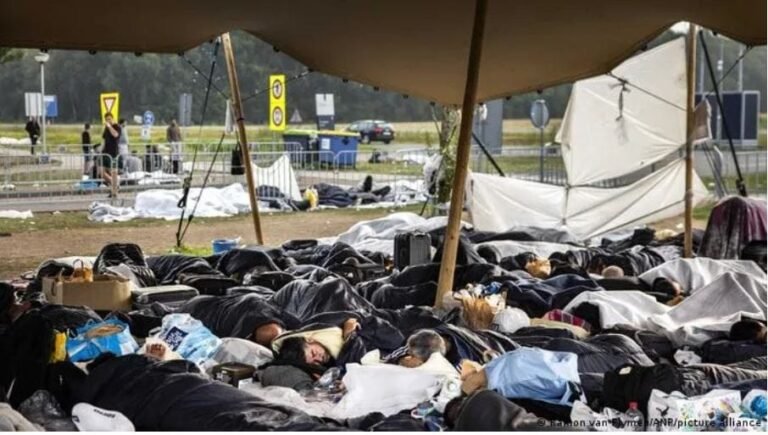
- Pressure on municipalities’ reception and integration capacity, together with rising far-right violence, will continue to pose serious risks for asylum seekers in the years ahead.

In light of all these developments, anyone interested in asylum and protection in Germany must focus not only on legal procedures but also on social and security-related risks. In a period when applications are examined in greater detail and the risk of rejection has risen, it is crucial to prepare files early, completely and on the basis of evidence. In subsidiary protection cases aimed at family reunification, narrow legal avenues such as humanitarian exceptions or the best interests of the child need to be assessed, and urgent application strategies against Dublin procedures and refusals at the border must be planned in advance. In addition, in view of rising social risks, it has become critical for the success of the process that advisers inform their clients about safety in reception centres, reporting hate crimes and access to NGO networks.
Sources
- BAMF – Current figures bamf.de
- Federal Government – Family reunification for persons with subsidiary protection bundesregierung.de
- Mediendienst Integration mediendienst-integration.de
Monthly · free
Compass of the Month
Once a month: five points from Europe’s security and migration agenda and the month’s PUGAT articles, in your inbox.
Newsletter sign-up opens soon.
Read next

What is PUGAT? A non-profit community publishing independent analysis from Europe on security, migration and society in Turkish, German and English.
Go to the homepage
