

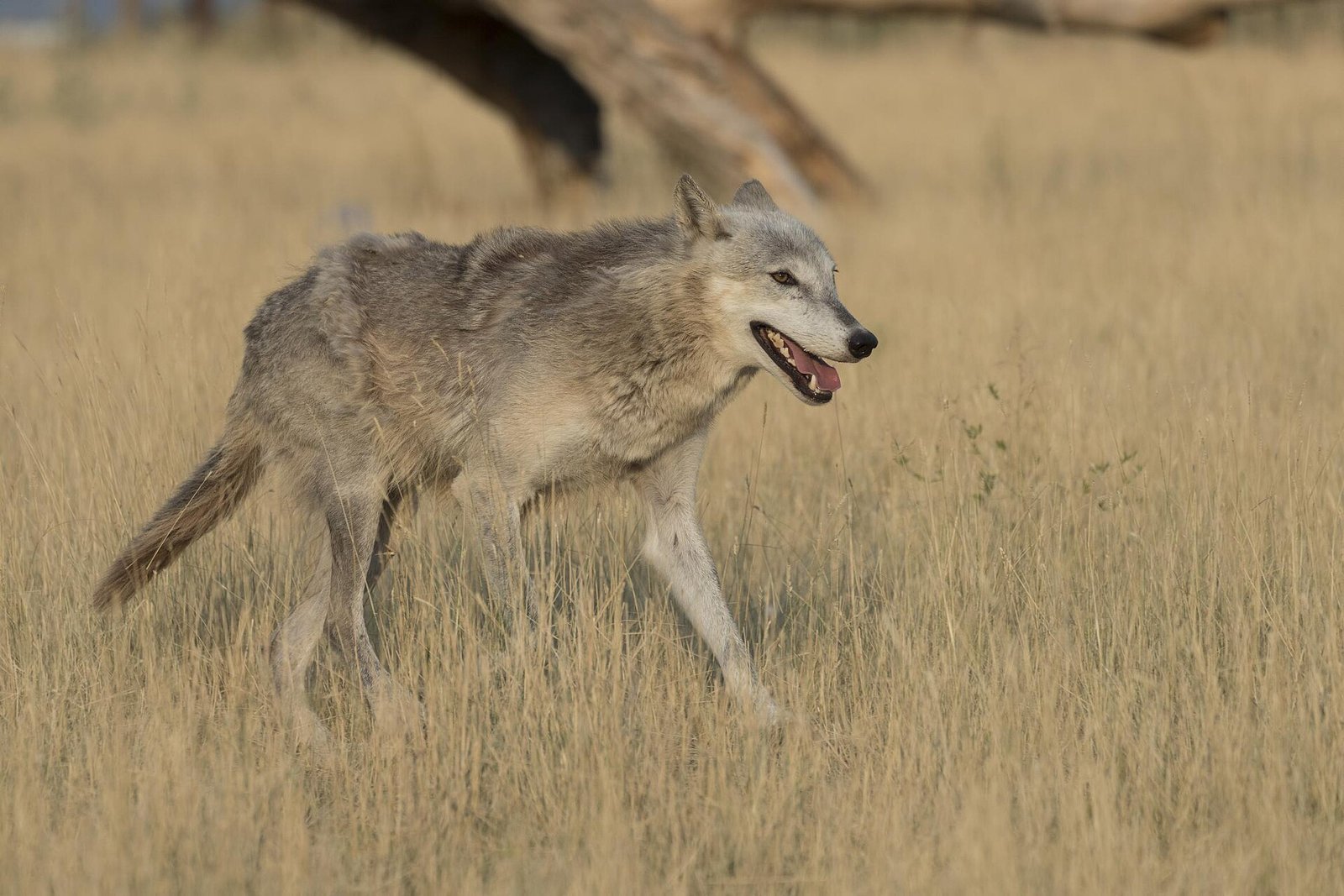
What happens if there is no state? Haneke’s film “Time of the Wolf” and the tent days after the 1999 earthquake point, after the 2023 earthquakes, to the need for a new social contract.
At the point we have reached today, right after the earthquakes and just before the elections to be held in the Republic’s centenary, what is needed is not so much a change of government as a more fundamental solution: a new “Social Contract”.
In our society the concepts of state and government have become intertwined. Every elected government sees itself as the state and regards citizens who criticise it as traitors to the state, while citizens accept governments as the state itself, attribute divine ranks to them and do not question their decisions.
Let alone governments, states too are neither entities worth dying for nor structures to be credited with a sanctity above human values. The state is only and solely one party to an agreement in which people, in the spirit of “the supremacy of law”, give up part of their rights and transfer their rights and powers to governments they themselves elect, that is all! It is not a divine being or a sublime entity! And above all it is in no way, absolutely no way, more precious than human lives.
***
At university, our professor of general state theory began the lecture in which he was to explain why and how states come into being by asking the reverse question:
“What happens if there is no state?”
He then talked about Austrian director Michael Haneke’s film “Time of the Wolf (Le Temps du loup)”, which focuses on this very question, and when I got back to the dormitory after the lecture, the first thing I did was put it on and watch it.
Now, to explain the state, rather than talk about John Locke, Jean-Jacques Rousseau, Thomas Hobbes, the State of Nature, the Social Contract or Leviathan, I too wanted to start with the Austrian director’s film, which questions basic concepts such as state, justice and security.
I do not know why, but when I lay on my bunk and watched that film, I remembered the days we spent in tents after the 1999 Gölcük earthquake, which I lived through when I was only ten. Our house had not been badly damaged, but as a precaution we, like all the residents of our street, stayed in tents we had made ourselves from wood and plastic sheeting. A few days later, when a young woman in the street right behind our house said she had been watched, an uproar broke out and everyone grew tense. After that, every night one or more people began keeping watch by the tents. We were not in our homes and had no locked doors to keep us safe. In a spirit of collective help, everyone brought whatever they had, and basic needs such as food and clothing were met in this way. In those days I never saw a police officer; there was no state showing itself with tents, food or clothing, and the neighbourhood did everything itself. Perhaps that is exactly why the film reminded me of those days!
The film tells the story, set in an unseen future in the middle of a disaster, of a family fleeing the city for the countryside who find their house occupied by others, and of the struggle for survival that begins when the head of the family is killed there. What the post-apocalyptic world of the film really shows is how anarchy breaks out when state authority disappears, how, in keeping with “homo homini lupus / man is a wolf to man”, the strong crush the weak, how laws lose their power of enforcement, how people’s personalities and beliefs melt away, in short how social collapse comes about.
***
What happened after these two last great earthquakes also made me question again the present position of both the state and the citizen.
What could be done to minimise the destruction these disasters would bring was clear; that they would happen was as certain on scientists’ lips as it was written in fate. But, as before, the apparatus we call the state unfortunately failed to perform its function after the earthquake too.
The state, or the government that has turned itself into the state, could only intervene on the scene from the third day, waited for the one man’s signal to send the forces at its disposal to the region, fell short in aid, failed to organise its institutions and caused people who waited for days under the rubble to die through negligence! Far from doing its duty, it busied itself with hiding the truth, clearing the rubble as quickly as possible, worrying about its own political future, protecting the reputation (!) of the state and threatening grieving people! After the state’s failure, many people were left in great aimlessness, deprivation and helplessness.
Was the state alone to blame? Of course not! On the other hand, can we say that we as citizens, with our contractors, our landlords and our civil society groups, bear no responsibility? Can we claim that we did not skimp on materials when buildings were being built; that we did not raise rents right after the earthquake; that we did not let our dangerous buildings benefit from the monstrosity of the zoning amnesty; that we did not hastily patch up our damaged buildings to get a sound report; that we did not pay bribes; that many of us did not fawn over the politicians who came late to the region instead of holding them to account; that some of us were not still chasing opportunities, such as demanding that our district be made a province while all around was like the Day of Judgement; that we did not accuse foreign rescue teams who came to help of spying; that we did not ignore non-Muslim organisations such as the Red Cross that were there to help; that as Sunni and Muslim Turks we did not, even then, exclude our Kurdish, Alevi or Syrian neighbours, tarring everyone with the same brush?
***
Just as no contract whose parties do not know their rights and duties can stay valid for long, societies without a healthy contract between the state and its citizens cannot sustain their existence for long either.
In societies where the social contract has been established soundly, by contrast, the state is an institution whose duties include maintaining public order, ensuring the safety of life and property, securing justice and delivering public services quickly and fairly. That is precisely why people transferred these rights, which in fact belong to them, to the state apparatus they created with their own hands.
When these services are not properly delivered, there is a return to statelessness, that is, to the condition Hobbes called the “state of nature”. This is what our professor of state theory at university was pointing to when he asked the question the other way round:
“What happens if there is no state?”
If there is no state, people cannot organise on their own, cannot live together, cannot dispense justice, cannot provide security… If there is no state, people there start looting, at first those with a primal claim, then those with no claim join in, others start taking the law into their own hands and intervening themselves, torture and cruelty up to killing take place, while screams rise from under the rubble the bank vaults are carried off first, threats fly through the air, bandits block the roads, opportunism and self-interest run rampant…
With this earthquake, the images of rubble, corpses, concrete, negligence and screams, whose weight we will not be able to shake off for years, added yet another illegal storey to the tired building of our minds! And not content with that, despite the superhuman efforts of the fake media, they took a picture of a great problem we must solve first.
From what happened after the earthquake, we saw plainly that the contract concluded between the state and its citizens has become void and has lost its value.
Leaving the social-morality side of the matter to the experts, my last word is this:
When the rule of those in Turkey who think the government is the state, the state is their father’s property and the citizens are their servants comes to an end, the first step to be taken is to make a healthy, modern new “Social Contract” in which the state and the citizen are redefined and their boundaries clearly drawn!
Sources
- Michael Haneke, Le Temps du loup (Time of the Wolf, 2003)
Monthly · free
Compass of the Month
Once a month: five points from Europe’s security and migration agenda and the month’s PUGAT articles, in your inbox.
Newsletter sign-up opens soon.
Read next

What is PUGAT? A non-profit community publishing independent analysis from Europe on security, migration and society in Turkish, German and English.
Go to the homepage
