


In the 1960s a polygraph expert claimed that plants react to human thoughts. Starting from this experiment, the author questions society's ability to recognise and remember evil.
Cleve Backster, an expert in the polygraph, also known as the “lie detector”, carried out in 1966 an experiment that would shake the scientific world. He decided to use the device, which measures the electrical potentials in the human body in response to thoughts and emotions, on plants. He dipped one of the plant’s leaves into the cup of hot coffee he was holding. When no clear reaction appeared on the device, he moved to a more aggressive act. He made up his mind to burn the leaf to which the electrodes were attached. As soon as he pictured the thought of burning in his mind, movement appeared on the device. When he left the room to fetch matches and came back, he noticed sudden fluctuations on the device. The plant had read Backster’s thoughts.
In his research Backster discovered that plants had other traits besides the ability to sense emotions and thoughts. He came across results showing that plants could recognise even a culprit who harmed them, a killer who killed other plants, a torturer who had harmed another plant before. He established that they had not only feelings but also memory and perception.
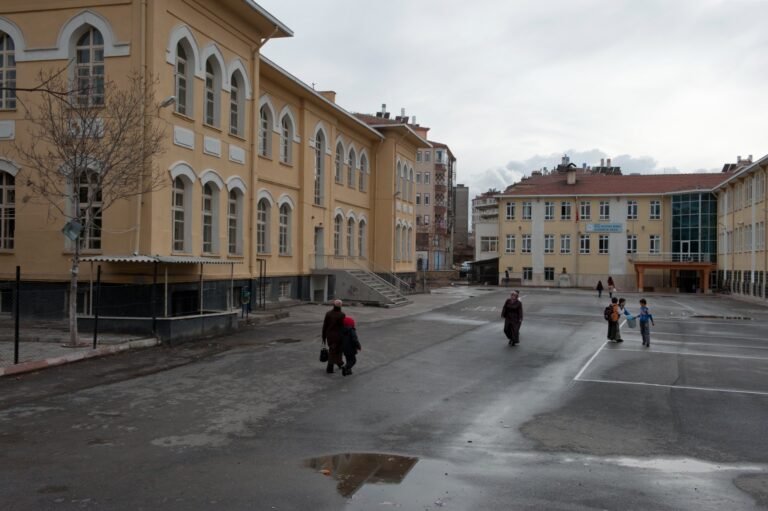
I want to continue with a memory I heard from a colleague years ago. In the early 2000s, afforestation work was being carried out at a recently opened barracks housing some of the Turkish Armed Forces’ important schools. As is well known, the Turkish Armed Forces are among our country’s pioneering institutions in afforestation and the expansion of forest land. Because of the afforestation work at the barracks, even teaching at the schools was neglected. For about 2 years students were put to work carrying water, planting trees and clearing stones. The big day came and at last an afforestation festival was held with the participation of senior commanders, and thousands of saplings were ceremonially planted. Planted they were, but the land was barren and the region very dry in terms of rain. The interesting point is that after the afforestation festival, so that the commanders visiting at intervals would see the trees growing, the saplings planted were pulled up and slightly larger ones planted in their place, and this was repeated several times. It turned out the aim was not to eat the grapes but to please the owner of the vineyard. I do not know whether that area has become a forest now or is still barren land. Let those who know please inform me too.
*****
While under its natural conditions at least 75 per cent of Turkey should be covered with forest, the figure is 27.6 per cent. In Turkey, around 40,000 fires broke out in the last 15 years, some 150,000 hectares of forest land turned to ash, and more than half of these forest fires were recorded as “perpetrator unknown”.
Unfortunately, fire brigades and civil defence teams fall short as firefighting equipment in forest areas. In this situation the most important elements are aerial firefighting vehicles. Yet here too many wrong steps have been taken in recent years. The Turkish Aeronautical Association, which was in the lead, was neutralised and stripped of all its resources. Apart from a few leased aircraft with which we can respond to fires, we have no serious means. And the capacity of those aircraft is well known. Today many countries that lag behind us in military power and capacity have firefighting aircraft numbering in the tens. While it has not been forgotten that only last week 3 ministers flew to flood-hit Rize in 3 separate planes, our having no aircraft to fight fires is one of the foremost problems that must be solved.
In recent years a great many forest fires have occurred, especially in our tourist regions and coastal areas. After these fires, hotels and villas were built in those areas. Because fires cannot be fought in time and with the necessary equipment, our country’s lungs are melting away day by day. Although the culprit is sometimes barbecuers and sometimes a terrorist organisation claiming responsibility, the outcome points to other culprits too. The bare land left from the burned forests turning into fields of rent, and hatred being stoked among different sections of society by openly pointing at someone as the culprit of the fires, inevitably remind one of the words of the late former intelligence officer Mahir Kaynak: “Whoever benefits from the outcome of an event is its perpetrator.” Looking at the recent forest fires through this window, we can gather a good deal of data about the perpetrators.
In fact, every tree and every blade of grass that burned knows very well who burned them…
Our green is shrinking day by day. The way to leave a liveable world for our future lies in measures taken now. We must not give up so easily on our forests, home to thousands of species of plants and animals. We must seize every opportunity that can contribute to our fight against fires. Including our neighbour, which struggled with fires two years ago and which our national press mocked by calling it “Yananistan” (a pun on Yunanistan, Greece, meaning “Burnistan”). Perhaps this will also warm our cooled relations a little.
We said at the beginning that Backster’s experiments showed that plants too have feelings, understand and suffer. Let us put ourselves in the place of the plants and the other living things harmed in the fires and imagine: Being burned together with thousands of our friends, hands and arms tied, by the people we love and to whom we give clean air… Dying while hearing the scream and pain of every living thing… And, when the news is presented in the press, hearing “No lives lost” without a single word about us…
Let the last word belong to the master Nâzım:
“Yaşamak bir ağaç gibi tek ve hür
ve bir orman gibi kardeşçesine,
bu hasret bizim.”
Monthly · free
Compass of the Month
PUGAT’s monthly newsletter.
Read next


What is PUGAT? A non-profit community publishing independent analysis from Europe on security, migration and society in Turkish, German and English.
Go to the homepage
