

Selahattin Demirtaş’s condemnation of the September 2022 attack on a police guesthouse in Mersin drew a harsh response from the PKK. The author assesses how this debate reflects on Kurdish politics.
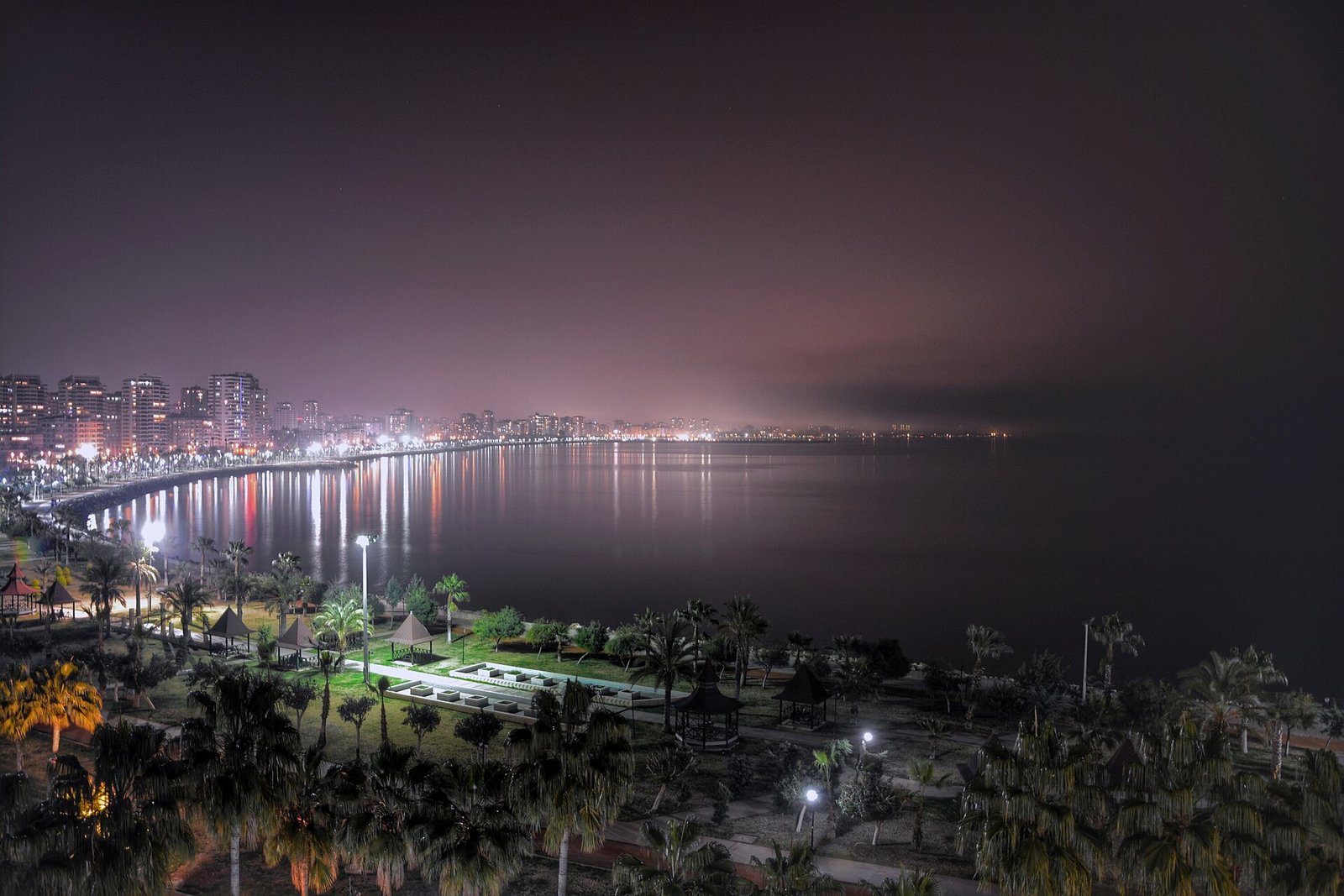
In the attack on a police guesthouse in Mersin’s Mezitli district by two PKK militants on 26 September 2022, one police officer was killed and another wounded. The two female PKK members who carried out the attack died when they detonated the bombs they were carrying.
Interesting developments followed the incident. In particular, the condemnation of the attack by former HDP co-chair Selahattin Demirtaş gave it an entirely different dimension. In his second statement following his first after the Mersin attack, Selahattin Demirtaş said: “Even if I am left alone, I will never give up defending what I believe to be right. Of course this comes at a price. I am prepared to be labelled the ‘madman’, the ‘populist’, the ‘strongman’ or the ‘intimidated one’ by people in my own political camp, or a ‘terrorist’ and a ‘murderer’ by the opposing camp.” I actually wanted to write an article right away, but I wanted to watch for a while how the PKK would respond to Selahattin Demirtaş’s move and how the HDP base would react.
After Selahattin Demirtaş’s move, the HPG, the PKK’s armed wing, in its statement claiming responsibility for the attack, alluded to Demirtaş and the HDP without naming them: “That circles which do not condemn the fascist regime’s use of chemical weapons condemn, in the language of the enemy and for whatever reason, the fighters who sacrifice themselves to protect the Kurdish people and their values can only be described as a sign of intimidation.”
Statements supporting Demirtaş soon came from various quarters of Kurdish public opinion. Following these statements, KCK Executive Council member Duran Kalkan targeted those who condemned the Mersin attack in remarks to a TV channel. In his statement, in which he alluded without naming them to Selahattin Demirtaş and some HDP figures, Kalkan said: “If you are not strong enough, pray for those who do it; don’t object, don’t talk to yourself, don’t be a smart aleck.” As the echoes of Demirtaş’s statement continued, journalist İsmail Saymaz also joined in, interestingly. In his column on Halktv.com he quoted an HDP official: “There is discomfort that Demirtaş appears separate from the HDP and one step ahead of it. If Demirtaş carries on like this, he will be pushed out of the party. When he gets out of prison they won’t even let him onto a panel. He won’t be able to speak anywhere. That is the mood today.”
Selahattin Demirtaş was arrested after 15 July, in November 2016. Despite the final judgment of the Grand Chamber of the European Court of Human Rights on 22 December 2020, which found violations of his rights and ordered his immediate release, he is still in detention. Duran Kalkan tells Selahattin Demirtaş, who has been in prison for about 6 years and whose strong support within the HDP base and even among Turks is proven by the votes he received, ‘don’t be a smart aleck’ and belittles him. Meanwhile, a report recalling Recep Tayyip Erdoğan’s words in parliament some months ago, “The person in Edirne will have to answer above all to the person on İmralı”, was also put on the agenda by İsmail Saymaz. Although Saymaz’s report was denied by the HDP, it has long been said that some cliques among the Kurds do not care for Selahattin Demirtaş.
After being placed on Erdoğan’s revenge list for his “We will not make you president” challenge, and on the blacklist of nationalist and ultranationalist structures because he won Turkish votes and loudly advocated an unarmed solution, we can now clearly read between the lines of his statement after the Mersin attack that he is unwanted among the Kurdish ruling elites as well.
How interesting, isn’t it?
Even the ordinary citizen in the coffeehouse could predict that after this attack the AKP-MHP vote would rise and the hand of the opposition parties would weaken. It is impossible that an organisation like the PKK did not know this, yet the attack was carried out anyway, and it was stressed that more actions would follow. In other words, the PKK announced that it would step up its attacks before the elections. The PKK’s decision-making is a complete black box; let alone objecting to decisions, it is impossible even to comment on them negatively. No one has heard or seen anyone from the leadership or the ruling clique paying the price for failure or engaging in self-criticism. I don’t know about you, but I find it strange that the leadership is never held to account in a structure where lower-ranking cadres shoot themselves for failing. Some may say: “The PKK is an armed terrorist organisation, what are you thinking?”
Those who say so are right. What I want to stress here is that the Kurds cannot object to the facts I have set out above. The organisation’s senior leaders see themselves as indispensable, and the base largely accepts this. The main argument of those who defended the action after the Mersin attack was: “There has always been war. Turkey is continuing its operations in Syria and Northern Iraq at full speed and is using chemical weapons in these operations. The Mersin action is retaliation for these operations.” But this argument does not answer the point being criticised. From the past to the present, the impact of PKK actions on society has varied with their timing.
Had this action been carried out 2 years ago, perhaps the criticism now voiced within the organisation’s base would not have been voiced then.
The PKK has been carrying out armed attacks since 1984, but the fact that the political aims of the attacks it carries out at critical moments serve, given the circumstances, to perpetuate the current system raises questions. After 15 July, the PKK found itself facing a new regime that controls the state. In this period, while PKK actions decreased day by day, the Turkish Armed Forces and the Gendarmerie launched a series of operations. Of course, the view that the PKK deliberately reduced its actions because it wanted international support, above all from the US, and to be removed from the list of terrorist organisations should also be noted.
In conclusion, the PKK, which turns a deaf ear to the muted objections to the Mersin attack from the HDP base, seems to have been taken aback by Selahattin Demirtaş’s unexpected statement from his prison cell.
On the other hand, although Interior Minister Süleyman Soylu’s attempt to turn the attack into political gain, by trying, on a TV show where he commented on the attack, to link it to the CHP on the grounds that a person he identified as one of the attackers had appeared years earlier in a CHP report on imprisoned journalists, did not catch on, thanks to the strenuous efforts of the pro-government media the blame for the attack has already been laid at the door of the CHP and the HDP.
So let us ask too: Which political goal was achieved with the Mersin attack? (Editor’s note, November 2026: This article was written after the 2022 Mersin attack. On 12 May 2025 the PKK announced its decision to dissolve its organisational structure and end its armed struggle.)
Monthly · free
Compass of the Month
PUGAT’s monthly newsletter.
Read next


What is PUGAT? A non-profit community publishing independent analysis from Europe on security, migration and society in Turkish, German and English.
Go to the homepage
