

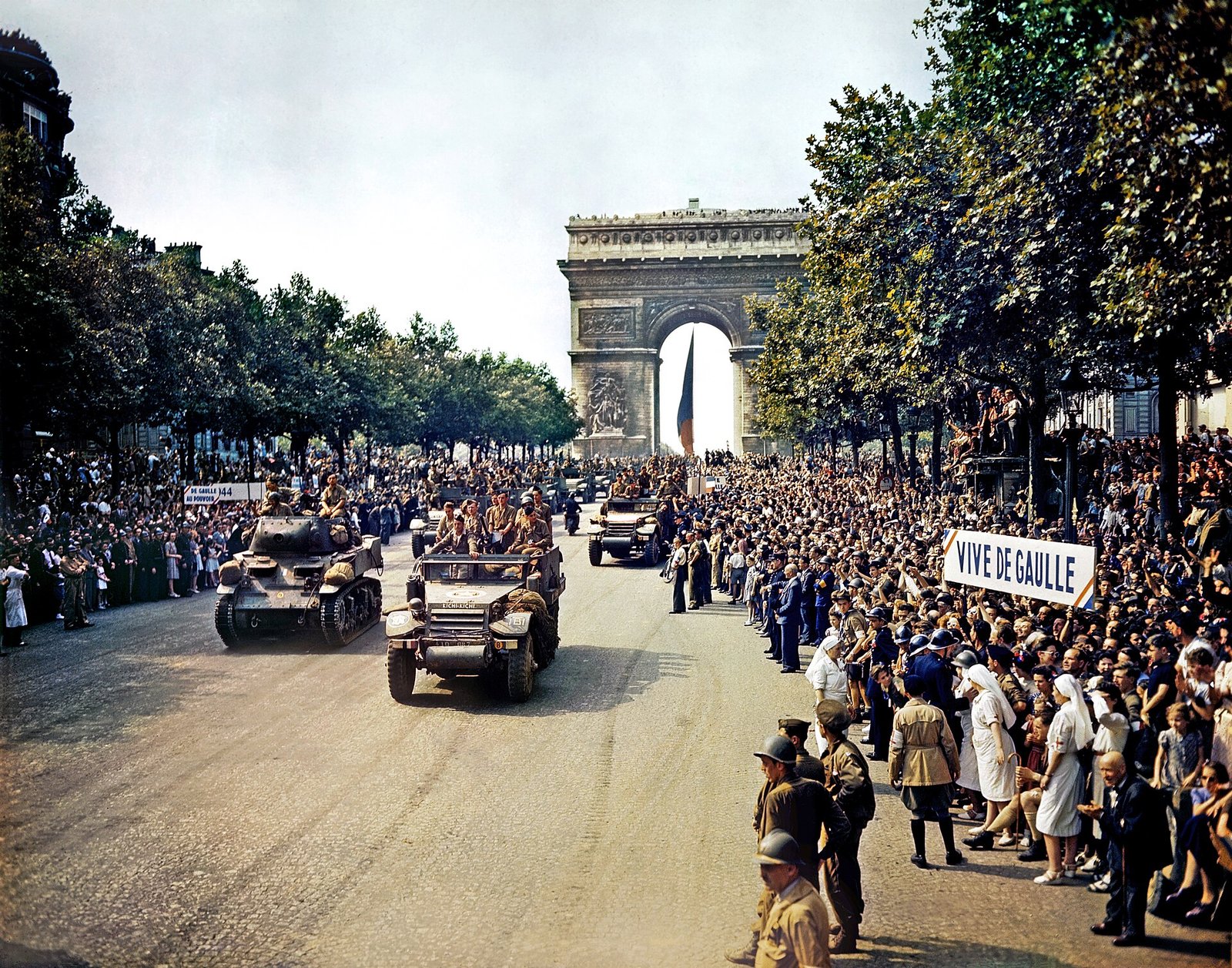
Hitler ordered that if Paris fell, nothing but rubble should be left behind. General Dietrich von Choltitz, known for his absolute obedience, refused to go down in history as “the man who destroyed Paris”.
A soldier who was a monument to absolute obedience all his life. A lieutenant in the First World War, a general in the Second. One of the commanders of the units that crushed Rotterdam and Sevastopol.
General Choltitz never disobeyed Hitler. The general, who regarded his commander-in-chief as almost sacred, had carried out every order Hitler gave to the letter. His military record, full of successes, received its first scratch in the Normandy landings, and Hitler withdrew him and sent him to Paris.
When it became certain that France would be lost, Hitler’s famous order came. If Paris was to fall into Allied hands, nothing but rubble should be left behind. The commander-in-chief, in the spirit of “If I burn, let the whole world burn with me”, ordered the city to be razed to the ground with all its beauties, the Eiffel Tower and Notre-Dame included. Towards the end of the war General Choltitz, kept awake at night by the inner voice asking “What have we done!”, answered his sacred Führer: “I do not want to go down in history as the man who destroyed the Eiffel Tower and Paris.” Although his family was threatened, General Choltitz did not destroy Paris, and he went down in history for refusing to follow a raving madman.
When he died he was buried in a ceremony attended by French soldiers, and his family spoke of him with pride. “He saved not only the city but the lives of many people”, his son said of his father. Films were made and books written about General Choltitz, who could answer Hitler’s question “Is Paris burning, Dietrich?” with “Not quite.”
The German general was, of course, not innocent.
His persecution of Jews, especially during the invasion of the Soviet Union, and his execution of young French men who had joined the Paris resistance without batting an eye, were among the shames he would later deeply regret. The crimes he had committed in the past would trouble him for the rest of his life, but neither his conscience nor his reason had allowed him to do more “just because a tyrant ordered it”. Not destroying Paris may have saved him from execution and lightened his sentence, but what he had done to the Jews and to the young French men never left him.
In the prison where he was held after the war, he expressed his remorse to his fellow inmates with the words “Those were the orders, I did it against my will.” After his release he went to Paris, the city he had saved. He even visited the hotel he had used as his headquarters. A former hotel employee recognised the commander who had not destroyed their capital. They wanted to treat him and host him, but this time it was the general’s conscience that said “Not quite.” He left at once.
Although General Choltitz went down in history as “the man who saved Paris”, neither the French nor military historians could leave his name without a question mark beside it.
The German general, like every bureaucrat of his time, became complicit in Hitler’s tyranny. In keeping with the maxim “Timely remorse saves one from eternal shame”, sooner or later he knew how to say “Not quite”, and that decision saved him from execution and his family from years of dark shame.
Göring, the famous commander of the German air force who committed suicide after being arrested at the end of the Second World War while awaiting his execution, did not say it for nothing: “We will go down in history one way or another. Either as the greatest statesmen in the world or as its greatest villains.”
The moral of the story: to go down in history as a tyrant, to be tried and to drown one’s family in dark shame is the fate of every corrupt man of power. Taking the right stand and returning to the rule of law, however late and despite the crimes committed, eases consciences as well as penalties that know no statute of limitations.
Monthly · free
Compass of the Month
PUGAT’s monthly newsletter.
Read next


What is PUGAT? A non-profit community publishing independent analysis from Europe on security, migration and society in Turkish, German and English.
Go to the homepage
